Nihal Vrana,
Helena Knopf-Marques,
Julien Barthes
Elsevier Science
e druk, 2020
9780081029060
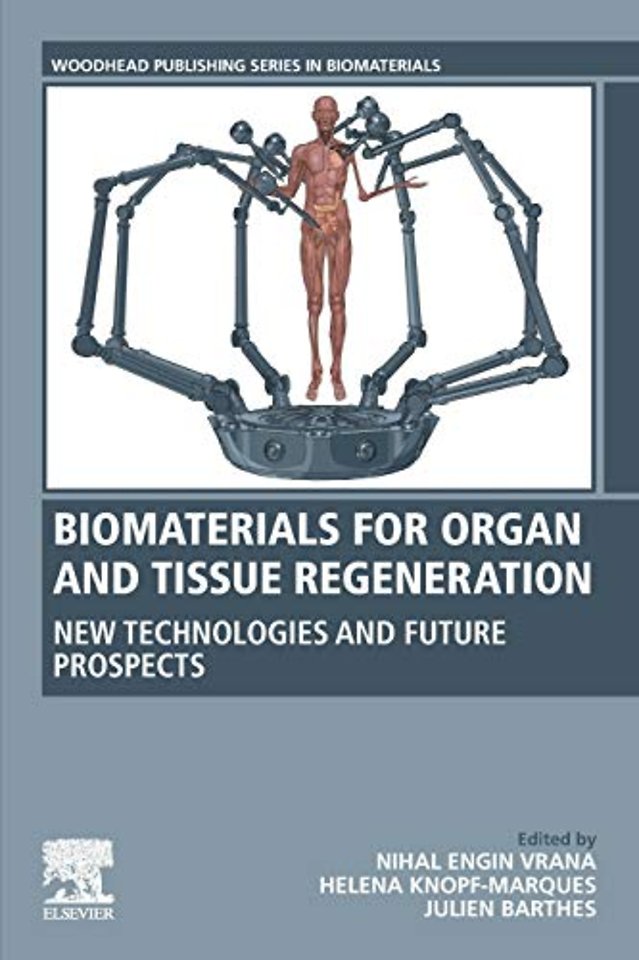
Biomaterials for Organ and Tissue Regeneration
New Technologies and Future Prospects
Specificaties
Paperback, blz.
|
Engels
Elsevier Science |
2020
ISBN13: 9780081029060
Rubricering
Onderdeel van serie
Woodhead Publishing Series in Biomaterials
Levertijd ongeveer 9 werkdagen
Gratis verzonden
Samenvatting
Biomaterials for Organ and Tissue Regeneration: New Technologies and Future Prospects examines the use of biomaterials in applications related to artificial tissues and organs. With a strong focus on fundamental and traditional tissue engineering strategies, the book also examines how emerging and enabling technologies are being developed and applied. Sections provide essential information on biomaterial, cell properties and cell types used in organ generation. A section on state-of-the-art in organ regeneration for clinical purposes is followed by a discussion on enabling technologies, such as bioprinting, on chip organ systems and in silico simulations.
Specificaties
Inhoudsopgave
1. Introduction<br><br>Section 1: Biomaterials<br>2. Classes of Biomaterials used in Tissue/Organ Regeneration<br>3. Physicochemical Properties of Biomaterials<br>4. Synthesis or Modification of Biomaterials for Regenerative Medicine Applications<br>5. Surface Modifications of Biomaterials for Tissue Engineering<br><br>Section 2: Cell microenvironment and signalling <br>6. Cell microenvironment and ECM<br>7. Cell signalling and strategies to modulate cell behaviour<br><br>Section 3: Cells<br>8. Stem cells: sources, properties and cell types<br>9. Tissue specific cells: sources, properties and cell types<br>10. Cell differentiation: sources, properties and cell types<br>11. Immune cells: sources, properties and cell types<br>12. Angiogenesis/vascular cells: sources, properties and cell types<br><br>Section 4: Organ specific Artificial tissues/Organs<br>13. Heart/Cardiovascular tissues<br>14. Respiratory system tissues <br>15. Digestive system tissues<br>16. Kidney Tissue Engineering<br>17. Liver Tissue Engineering<br>18. Pancreas Tissue Engineering <br>19. Neural Tissue Engineering<br>20. Musculoskeletal Tissue engineering<br><br>Section 5: Biotechnological approaches and Enabling technologies related to organ regeneration<br>21. Emerging biotechnological approaches with respect to organ regeneration: SiRNA, miRNA, CRISPR, CAR-T therapy, -omics approaches etc.<br>22. Bioreactors<br>23. On-chip organ systems<br>24. In vitro disease and organ models<br>25. Bioprinting<br>26. Biorobotics<br>27. Imaging techniques for biomaterials, stem cells and engineered tissues/organs<br>28. Future perspectives/Industrialisation and Up-scaling of organ regeneration technologies