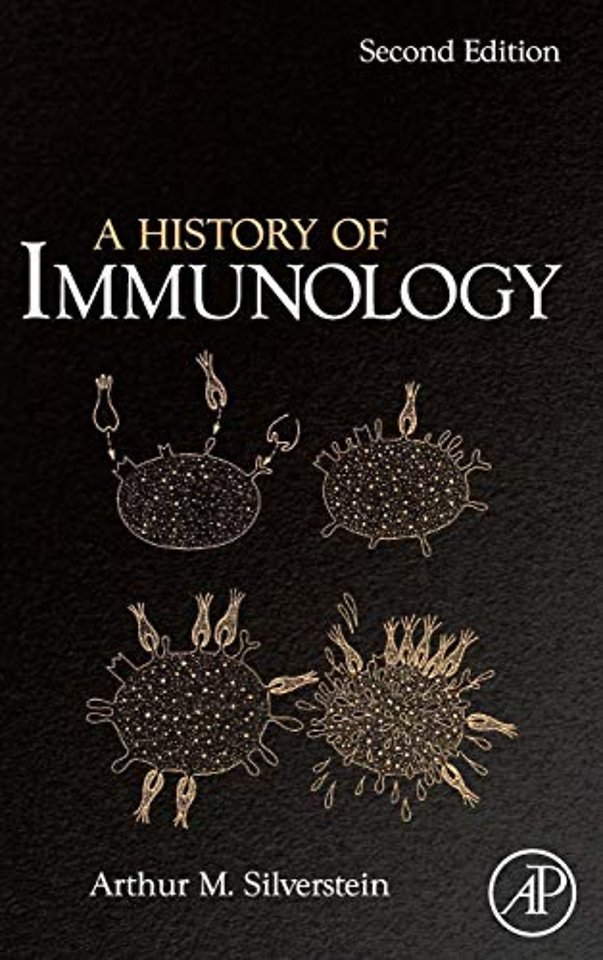
Arthur M. Silverstein
Elsevier Science
e druk, 2009
9780123705860
A History of Immunology
Specificaties
Gebonden, blz.
|
Engels
Elsevier Science |
2009
ISBN13: 9780123705860
Rubricering
Levertijd ongeveer 9 werkdagen
Gratis verzonden
Samenvatting
Written by an immunologist, A History of Immunology traces the concept of immunity from ancient times up to the present day, examining how changing concepts and technologies have affected the course of the science. It shows how the personalities of scientists and even political and social factors influenced both theory and practice in the field. With fascinating stories of scientific disputes and shifting scientific trends, each chapter examines an important facet of this discipline that has been so central to the development of modern biomedicine. With its biographical dictionary of important scientists and its lists of significant discoveries and books, this volume will provide the most complete historical reference in the field.
Specificaties
Inhoudsopgave
PART ONE: INTELLECTUAL HISTORY<br>1. Theories of Acquired Immunity<br>2. Cellular vs. Humoral Immunity <br>3. Theories of Antibody Formation<br>4. The Generation of Diversity: The Germline/Somatic Mutation Debate<br>5. The Clonal Selection Theory Challenged: The Immunological Self<br>6. The Concept of Immunologic Specificity <br>7. Specificity Continued<br>8. Horror Autotoxicus: The Concept of Autoimmunity <br>9. Allergy and Immunopathology: The "Price" of Immunity<br>10. Anti-Antibodies and Anti-Idiotypic Immunoregulation: 1899-1904 <br>11. Transplantation and Immunogenetics <br>PART TWO: SOCIAL HISTORY<br>12. Magic Bullets and Poisoned Arrows: The Uses of Antibodies<br>13. The Royal Experiment: 1721-22<br>14. The Languages of Immunologic Dispute<br>15. The Search for Cell-Bound Antibodies. On the Influence of Dogma <br>16. Natural' Antibodies and 'Virgin' Lymphocytes: The Importance of Context<br>17. The Dynamics of Conceptual Change in Immunology<br>18. Immunology in Transition 1951-1972: The Role of International Meetings and Discipline Leaders<br>19. The Origin of Subdisciplines: (Ocular Immunology; Pediatric Immunology; Immunophysiology)<br>20. Immune Hemolysis: On the Heuristic Value of an Experimental System<br>21. Darwinism and Immunology: from Metchnikoff to Burnet<br>22. The End of Immunology?<br>Appendix A1. The Calendar of Immunologic Progress<br>Appendix A2. Seminal Discoveries<br>Appendix A3. Important Books in Immunology, 1892 – 1968 <br>Appendix B. Nobel Prize Highlights in Immunology<br>Appendix C. Biographical Dictionary