,

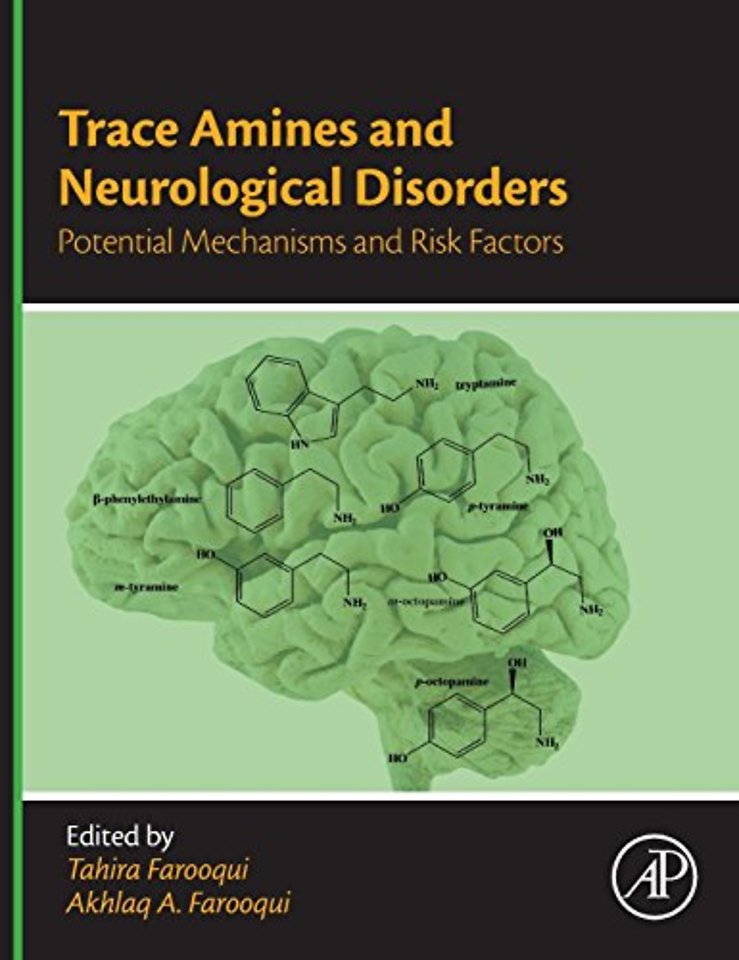
Trace Amines and Neurological Disorders

Potential Mechanisms and Risk Factors

Specificaties
Gebonden, blz. | Engels
Elsevier Science | 2016
ISBN13: 9780128036037
Rubricering
Elsevier Science e druk, 2016 9780128036037
€ 130,60
Levertijd ongeveer 9 werkdagen
Gratis verzonden

Samenvatting

Trace Amines and Neurological Disorders: Potential Mechanisms and Risk Factors explores trace amines which, under normal conditions, are present in the mammalian brain and peripheral nervous tissues at very low (nanomolar) concentrations. However, in a diverse array of human pathologies ranging from substance abuse, depression, attention deficit hyperactivity disorder, eating disorders, schizophrenia, and other neurological and neuropsychiatric diseases, the levels of trace amines are unusually high with an imbalance in their functions. Furthermore, the rapid turnover of trace amines is evidenced by their dramatic increases following treatment with monoamine oxidase inhibitors (MAOI) or deletion of the MAO genes. This suggests that the concentration of trace amines may be considerably higher at neuronal synapses than predicted by steady-state measures, implicating some pathophysiological role. Therefore, understanding molecular mechanisms and developing selective agonists and antagonists for trace amine-associated receptors (TAARs) has become a good approach for treating these diseases. Although the effects of trace amines at low physiological concentrations in mammalian species have been difficult to demonstrate, they may serve to maintain the neuronal activity of other monoamine neurotransmitters by possessing postsynaptic modulatory effects, particularly dopamine and serotonin, within defined physiological limits. Such an effect of trace amines makes them ideal candidates for the development of novel therapeutics for a wide range of human disorders. This book presents up-to-date, cutting-edge, and comprehensive information on the link between trace amines and neurological disorders.

Specificaties

ISBN13:9780128036037
Taal:Engels
Bindwijze:Gebonden

Inhoudsopgave

<p>Section I. Introduction and Description of Trace Amines and Trace Amine-Associated Receptors<br>1. Trace Amines: An Overview<br>2. Methods of Trace Amines Analysis in Mammalian Brain<br>3. Synthesis and Neurochemistry of Trace Amines<br>4. The Origin and Evolution of the Trace Amine-Associated Receptor Family in Vertebrates<br>5. Differential Modulation of Adrenergic Receptor Signaling by Octopamine, Tyramine, Phenylethylamine, and 3-Iodothyronamine<br>6. Effects of Trace Amines on the Dopaminergic Mesencephalic System<br>7. Trace Amine-Associated Receptors in the Cellular Immune System<br>8. Trace Amines and Their Receptors in the Control of Cellular Homeostasis <br>9. Trace Amine-Associated Receptor 1 Modulation of Dopamine System<br>10. Trace Amines as Intrinsic Monoaminergic Modulators of Spinal Cord Functional Systems<br>11. Trace Amine-Associated Receptors: Ligands and Putative Role in the Central Nervous System<br>12. B-Phenylethylamine Requires the Dopamine Transporter to Release Dopamine in Caenorhabditis elegans</p> <p>Section II. Trace Amines and Olfaction<br>13. Trace Amines-Mediated Olfactory Learning and Memory in Mammals and Insects: A Brief Comparative Review <br>14. Octopaminergic and Tyraminergic Signaling in the Honeybee (Apis mellifera) Brain: Behavioral, Pharmacological, and Molecular Aspects<br>15. Octopamine and Tyramine Signaling in Locusts:  Relevance to Olfactory Decision-Making</p> <p>Section III.  Trace Amines and Neurological Disorders<br>16. Neurochemical Aspects of Neurological Disorders<br>17. Trace Amines and Their Relevance to Neurological Disorders: A Commentary<br>18. Trace Amines in Neuropsychiatric Disorders<br>19. B-Phenylethylamine-Class Trace Amines in Neuropsychiatric Disorders: A Brief Historical Perspective<br>20. Involvement of So-Called D-Neuron (Trace Amine Neuron) in the Pathogenesis of Schizophrenia: D-Cell Hypothesis<br>21. 3-Iodothyronamine, a New Chapter in Thyroid Story: Implications in Learning Processes<br>22. Trace Amine Receptors and Mood Disorders<br>23. Trace Amine Associated Receptor 1: Implications for Treating Stimulant Drug Addiction<br>24. Trace Amines and Their Potential Role in Primary Headaches</p> <p>Section IV.  Perspective<br>25. Perspective and Directions for Future Research on Trace Amines and Neurological Disorders<br></p>
€ 130,60
Levertijd ongeveer 9 werkdagen
Gratis verzonden

Rubrieken

    Personen

      Trefwoorden

        Trace Amines and Neurological Disorders