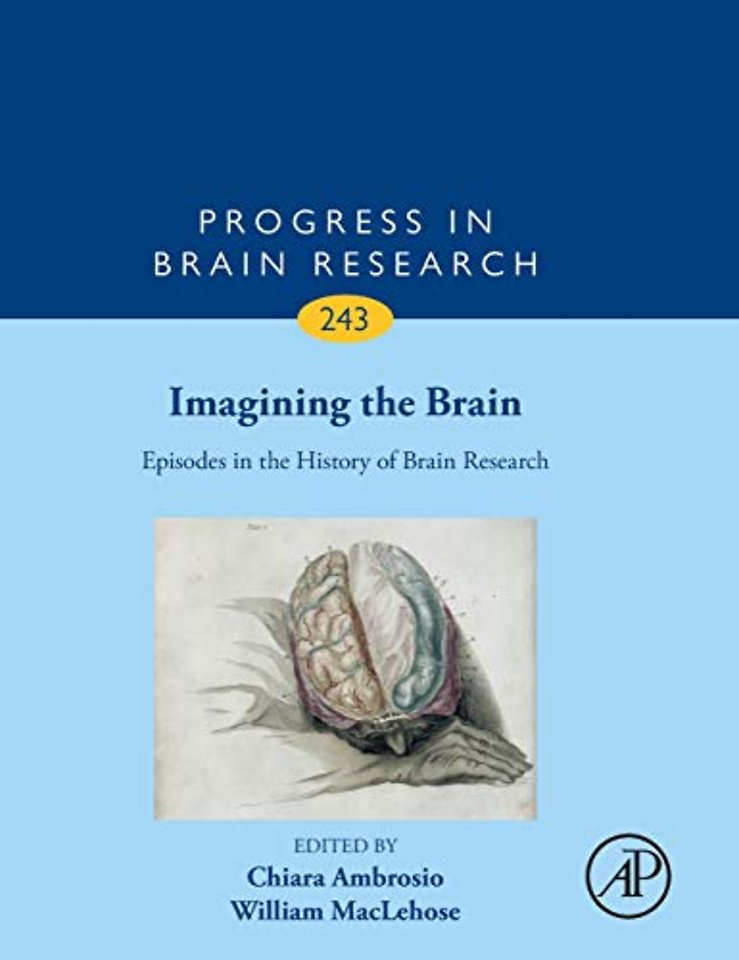

Chiara Ambrosio,
William Maclehose
Elsevier Science
e druk, 2018
9780128142578
Imagining the Brain: Episodes in the History of Brain Research
Specificaties
Gebonden, blz.
|
Engels
Elsevier Science |
2018
ISBN13: 9780128142578
Rubricering
Onderdeel van serie
Progress in Brain Research
Levertijd ongeveer 9 werkdagen
Gratis verzonden
Samenvatting
Progress in Brain Research series, highlights new advances in the field, with this new volume presenting interesting chapters. Each chapter is written by an international board of authors.
Specificaties
Inhoudsopgave
<p>Part 1. Imagining the brain between body and soul<br>1. Ventricular localization in late antiquity: The philosophical and theological roots of an enduring model of brain function<br>Jessica Wright<br>2. The pathological and the normal: Mapping the brain in medieval medicine<br>William MacLehose<br>3. Imagining the soul: Thomas Willis (1621–1675) on the anatomy of the brain and nerves<br>Alexander Wragge-Morley<br>4. Gaetano Zumbo’s anatomical wax model: From skull to cranium<br>Rose Marie San Juan</p> <p>Part 2. Representing the brain and the nervous system: Styles, media, practices<br>5. The nervous system and the anatomy of expression: Sir Charles Bell’s anatomical watercolours<br>Brendan Clarke and Chiara Ambrosio<br>6. Gertrude Stein’s modernist brain<br>Chiara Ambrosio<br>7. Imagining the brain as a book. Oskar and Cécile Vogt’s "library of brains" <br>Chantal Marazia and Heiner Fangerau<br>8. Pinpricks: Needling, numbness, and temporalities of pain<br>Lan A. Li</p> <p>Part 3. Inside the brain: Arguments and evidence in the making of the modern neurosciences<br>9. From images to physiology: A strange paradox at the origin of modern neuroscience<br>Paolo Mazzarello<br>10. One, no-one and a hundred thousand brains: J.C. Eccles, J.Z. Young and the establishment of the neurosciences (1930s–1960s)<br>Fabio De Sio<br>11. Seeing patterns in neuroimaging data<br>Jessey Andrew Kenneth Wright</p>