, , , , e.a.

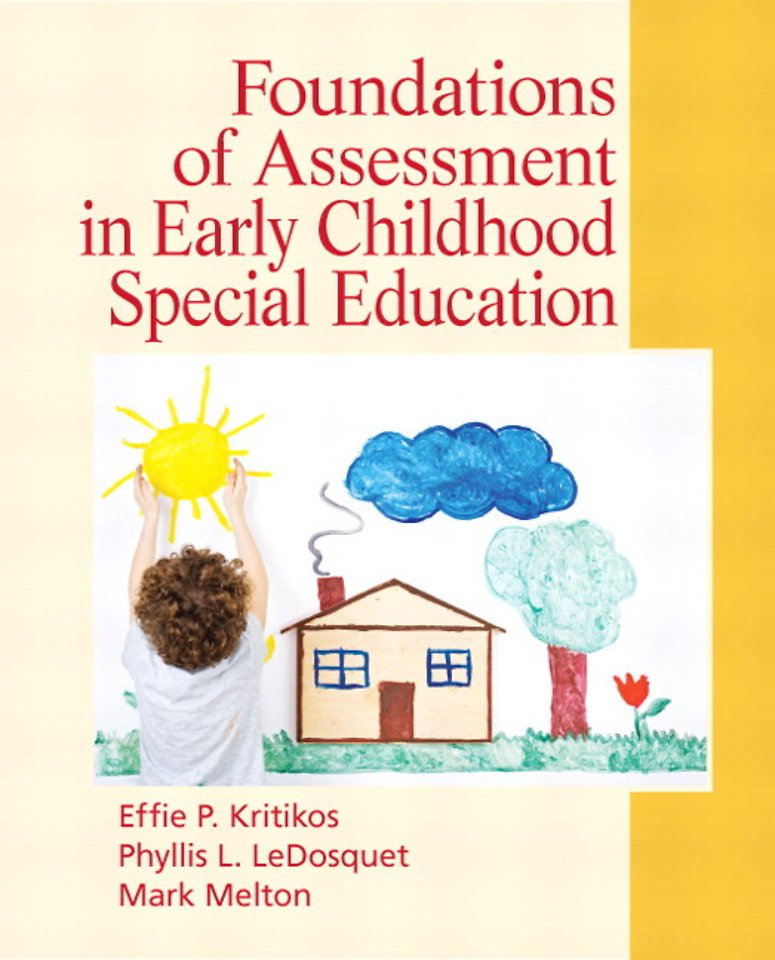
Foundations of Assessment in Early Childhood Special Education

Specificaties
Paperback, blz. | Engels
Pearson Education | 2012
ISBN13: 9780136064237
Rubricering
Pearson Education e druk, 2012 9780136064237
€ 122,14
Levertijd ongeveer 9 werkdagen
Gratis verzonden

Samenvatting

This text provides pre-service and in-service early childhood and special education teachers with clear, accessible formal and informal assessment information plus practical skills and techniques for improving services for children in home and classroom settings.

In Foundations of Assessment in Early Childhood Special Education,” pre-service and in-service early childhood and special education teachers get the formal and informal assessment information and the practical skills they need to better serve young children with exceptional learning needs and/or at risk of developmental delay. The information provided is applicable to both home and classroom settings and includes real life case studies which discuss a variety of disabilities to help readers acquire the necessary decision-making assessment skills.

This text emphasizes assessment spiral and highlights collaboration to help teachers work optimally with other professionals and family members to achieve goals. Included are break point practices, activities, web resources, and a sound research base to help readers explore assessment at a higher level of analysis.

Highlights of this Edition:

· Field-based case studies present real-life scenarios over a variety of disabilities.

· Current research and standards in the field ground each chapter’s content.

· Current legal changes, as well as the latest revisions of formal and informal assessments keep readers up to date on the topics critical to the field.

· Different types of assessment tools are discussed to help educators with ongoing assessment and the decision-making process.

· Early childhood special education standards are included at the beginning of each chapter to ground the chapter content in standards from the field.

· A variety of learning aids help to make the concepts clear: web links, key terms, breakpoint practice sections, activities, tables of relevant assessments, and more.

Specificaties

ISBN13:9780136064237
Taal:Engels
Bindwijze:Paperback

Inhoudsopgave

<p><strong>Assessing the Needs of Young Children in Early Childhood Special Education: </strong></p> <p><strong>A Focus on Best Practices for Effective Intervention and Development</strong></p> <p><strong>Part I Foundations of Assessment in Early Childhood Special Education</strong></p> <p><strong>Chapter One: Introduction to Children with Special Needs</strong></p> <p>History of Early Childhood Special Education</p> <p>History of Assessment</p> <p>Overview of Text</p> <p> Part I: Foundations of Assessment in ECSE</p> <p> Part II: Assessment Approaches and Considerations</p> <p> Part III: Developmental Domains</p> <p>Using the Text</p> <p>Conclusion</p> <p><strong>Chapter Two: Legal Issues </strong></p> <p>Chapter Objectives</p> <p>Assessing Huan</p> <p>History of Legislation</p> <p> The Public Law (P.L. 94-142)</p> <p>Breakpoint Practice</p> <p>The Individual with Disabilities Education Act</p> <p> Structure of the IDEA</p> <p> Part B Services</p> <p> Part C Services</p> <p>Breakpoint Practice</p> <p>Key Provisions of Part C Services</p> <p> Interagency Coordinating Councils</p> <p> Assessment and Eligibility</p> <p> Natural Environments</p> <p> Individualized Family Service Plan</p> <p>Breakpoint Practice</p> <p>No Child Left Behind and IDEIA</p> <p>Early Childhood Special Education Assessment and Legal Trends</p> <p>Breakpoint Practice</p> <p>Revisiting Huan</p> <p>Activities</p> <p>Websites</p> <p>Key Terms</p> <p>References</p> <p><strong>Chapter Three: Family Diversity and Assessment</strong></p> <p>Chapter Objectives</p> <p>Assessing Sarah</p> <p>Diversity in America Today</p> <p>Family Systems Theory</p> <p> Boundaries</p> <p> Roles</p> <p> Rules</p> <p> Hierarchy</p> <p> Equilibrium</p> <p>Breakpoint Practice</p> <p>Culture Defined</p> <p> Race and Ethnicity</p> <p> Gender</p> <p> Religion</p> <p> Age</p> <p> Geography</p> <p> Income</p> <p> Language</p> <p> Contextualizing Culture</p> <p>Breakpoint Practice</p> <p>Family Centered Service Delivery</p> <p>Breakpoint Practice</p> <p>Knowledge for Developing Cultural Competencies</p> <p>Breakpoint Practice</p> <p>Skills for Developing Cultural Competency</p> <p>Breakpoint Practice</p> <p>Steps for Self-Reflection</p> <p>Breakpoint Practice</p> <p>Revisiting Sarah</p> <p>Activities</p> <p>Websites</p> <p>Key Terms</p> <p>References</p> <p><strong>Chapter Four: Collaboration</strong></p> <p>Chapter Objectives</p> <p>Assessing Michelle</p> <p>Collaboration</p> <p>Breakpoint Practice</p> <p> Team Process</p> <p>Collaboration Models</p> <p> Multidisciplinary Approach</p> <p> Interdisciplinary Approach</p> <p> Transdisciplinary Approach</p> <p>Breakpoint Practice</p> <p>Best Collaboration Practice</p> <p>Breakpoint Practice</p> <p> Fostering Collaborative Assessment Relationships</p> <p>Breakpoint Practice</p> <p> Effective Communication</p> <p>Breakpoint Practice</p> <p>Revisiting Michelle</p> <p>Activities</p> <p>Websites</p> <p>Key Terms</p> <p>References</p> <p><strong>Part II Assessment Approaches and Considerations</strong></p> <p><strong>Chapter Five: Technical Aspects of Assessment</strong></p> <p>Chapter Objectives</p> <p>Assessing Judy</p> <p>Norm-Reverenced, Standardized Testing</p> <p> Application to the Classroom</p> <p>Reliability</p> <p>Breakpoint Practice </p> <p> Reliability Types</p> <p>Breakpoint Practice</p> <p>Validity</p> <p> Validity Types</p> <p>Breakpoint Practice </p> <p>Curriculum-Based Measurement and Validity and Reliability</p> <p>Curriculum-Based Assessment</p> <p>Breakpoint Practice </p> <p> Norms and Testing</p> <p>Breakpoint Practice</p> <p>Breakpoint Practice</p> <p>Breakpoint Practice</p> <p>Breakpoint Practice </p> <p>Breakpoint Practice</p> <p>Revisiting Judy</p> <p>Activities</p> <p>Websites</p> <p>Key Terms</p> <p>References</p> <p><strong>Chapter Six: Assessment Models</strong></p> <p>Chapter Objectives</p> <p>Assessing Anna</p> <p>Alternative Assessment Models</p> <p>Breakpoint Practice </p> <p> Performance-Based Assessment</p> <p> Authentic Assessment</p> <p> Judgment-Based Assessment</p> <p> Portfolio Assessment</p> <p>Breakpoint Practice</p> <p> Play-Based Assessment</p> <p> Dynamic Assessment</p> <p>Revisiting Anna</p> <p>Activities</p> <p>Websites</p> <p>Key Terms</p> <p>References</p> <p><strong>Chapter Seven: Environmental Analysis</strong></p> <p>Chapter Objectives</p> <p>Assessing Carlos</p> <p>Early Childhood Environments</p> <p> Environmental Analysis</p> <p>Breakpoint Practice</p> <p>Environmental Rating Scales</p> <p>Breakpoint Practice</p> <p>Functional Behavioral Assessment</p> <p>Breakpoint Practice</p> <p>Supporting Assessment Tools</p> <p>Breakpoint Practice</p> <p>Environmental Analysis and Curriculum</p> <p> Special Needs and the Learning Environment</p> <p> Health and Safety</p> <p> Families as Partners</p> <p> Natural Environments</p> <p> Relationships</p> <p> Inclusion</p> <p> Grouping</p> <p> Scaffolding and Mediation</p> <p> Embedded Instruction</p> <p> Positive Behavioral Supports</p> <p>Breakpoint Practice</p> <p>Reassessing Carlos</p> <p>Activities</p> <p>Websites</p> <p>Key Terms</p> <p>References</p> <p><strong>Chapter Eight: Observational Assessment</strong></p> <p>Chapter Objectives</p> <p>Assessing Athena</p> <p>Definitions</p> <p> Rubrics</p> <p>Breakpoint Practice</p> <p> Observations</p> <p>Breakpoint Practice</p> <p>ABC Procedure</p> <p>Observational Recording System</p> <p> Recording Techniques</p> <p>Breakpoint Practice </p> <p>Checklists and Rating Scales</p> <p> Checklists and Rating Scales for Autism</p> <p> Checklists and Rating Scales for Attention Deficit Hyperactivity Disorder</p> <p> Checklists and Rating Scales for Atypical Behavior</p> <p> Checklists and Rating Scales for Environmental Assessments</p> <p>Breakpoint Practice</p> <p>Revisiting Athena</p> <p>Activities</p> <p>Websites</p> <p>Key Terms</p> <p>References</p> <p><strong>Part III Developmental Domains</strong></p> <p><strong>Chapter Nine: Sensory Assessment</strong></p> <p>Chapter Objectives</p> <p>Assessing Louie</p> <p>Vision Assessment</p> <p> Visual Process</p> <p> Vision Disorders</p> <p>Breakpoint Practice</p> <p> Visual Concerns</p> <p> Functional Vision Assessment</p> <p>Breakpoint Practice</p> <p> Assessment of Visual Motor Skills</p> <p>Breakpoint Practice</p> <p> Final Considerations</p> <p>Hearing Assessment</p> <p> Physiology of Hearing</p> <p> Hearing Testing</p> <p> Types of Hearing Loss</p> <p> Etiology</p> <p> Severity</p> <p> Modes of Communication</p> <p>Breakpoint Practice</p> <p> Central Auditory Hearing Loss</p> <p>Breakpoint Practice </p> <p> Auditory Processing Tests</p> <p>Breakpoint Practice</p> <p>Assistive Technologies</p> <p> Models of Assistive Technology</p> <p> Assistive Technology Areas</p> <p>Breakpoint Practice</p> <p>Other Considerations</p> <p>Breakpoint Practice</p> <p> Sorting it Out</p> <p>Breakpoint Practice</p> <p> Failures in Self-Regulation</p> <p>Breakpoint Practice</p> <p>Revisiting Louie</p> <p>Activities</p> <p>Websites</p> <p>Key Terms</p> <p>References</p> <p><strong>Chapter Ten</strong>: <strong>Cognitive and Social-Emotional Assessment</strong></p> <p>Chapter Objectives</p> <p>Assessing Joey</p> <p>Cognition and Social-Emotional Development</p> <p>Major Theories</p> <p> Piaget</p> <p>Breakpoint Practice </p> <p> Vygotsky</p> <p>Breakpoint Practice</p> <p> Multiple Intelligences</p> <p> Social-Emotional Intelligence</p> <p>Breakpoint Practice</p> <p>Assessment of Cognition</p> <p> Standardized (Norm-Referenced) Assessments</p> <p> Criterion and Curriculum-Referenced Assessments</p> <p>Breakpoint Practice</p> <p>Assessment of Social-Emotional Development</p> <p> Assessment Tools for Social-Emotional Development</p> <p>Breakpoint Practice</p> <p>Assessment Considerations</p> <p>Breakpoint Practice</p> <p>Revisiting Joey</p> <p>Activities</p> <p>Websites</p> <p>Key Terms</p> <p>References</p> <p><strong>Chapter Eleven: Communication</strong></p> <p>Chapter Objectives</p> <p>Assessing Anita</p> <p>Definitions of Receptive and Expressive Language</p> <p> Form, Content and Use</p> <p>Breakpoint Practice</p> <p>Assessing Language</p> <p> Screening</p> <p> Screening Tools</p> <p>Breakpoint Practice</p> <p>Comprehensive Assessment</p> <p> Comprehensive Standardized Assessment Tools</p> <p> Global Testing</p> <p> General Language Tests</p> <p> Receptive Vocabulary</p> <p> Expressive Vocabulary</p> <p> Auditory Comprehension and Discrimination</p> <p> Pragmatic Language</p> <p>Breakpoint Practice</p> <p>Criterion and Curriculum Referenced Assessment</p> <p>Breakpoint Practice </p> <p>Informal Measures</p> <p> Language Samples</p> <p> Dynamic Assessment</p> <p>Breakpoint Practice</p> <p>Revisiting Anita</p> <p>Activities</p> <p>Key Terms</p> <p>Websites</p> <p>References</p> <p><strong>Chapter Twelve: Motor Development and Adaptive Skills</strong></p> <p>Chapter Objectives</p> <p>Assessing Marcus</p> <p>Motor Development</p> <p>Gross Motor Development</p> <p> Reflex Assessment</p> <p>Breakpoint Practice</p> <p> Muscle Tone</p> <p>Breakpoint Practice</p> <p> Gross Motor Milestones</p> <p>Fine Motor Development</p> <p>Breakpoint Practice</p> <p>Self-help/Adaptive Development</p> <p> Feeding</p> <p> Development of Feeding Skills</p> <p>Breakpoint Practice</p> <p> Dressing</p> <p> Grooming</p> <p> Toileting</p> <p>Breakpoint Practice</p> <p> Self-Help Skill Assessments</p> <p>Revisiting Marcus</p> <p>Websites</p> <p>Key Terms</p> <p>References</p> <p>NAME INDEX</p> <p>SUBJECT INDEX</p>
€ 122,14
Levertijd ongeveer 9 werkdagen
Gratis verzonden

Rubrieken

    Personen

      Trefwoorden

        Foundations of Assessment in Early Childhood Special Education