, , , e.a.

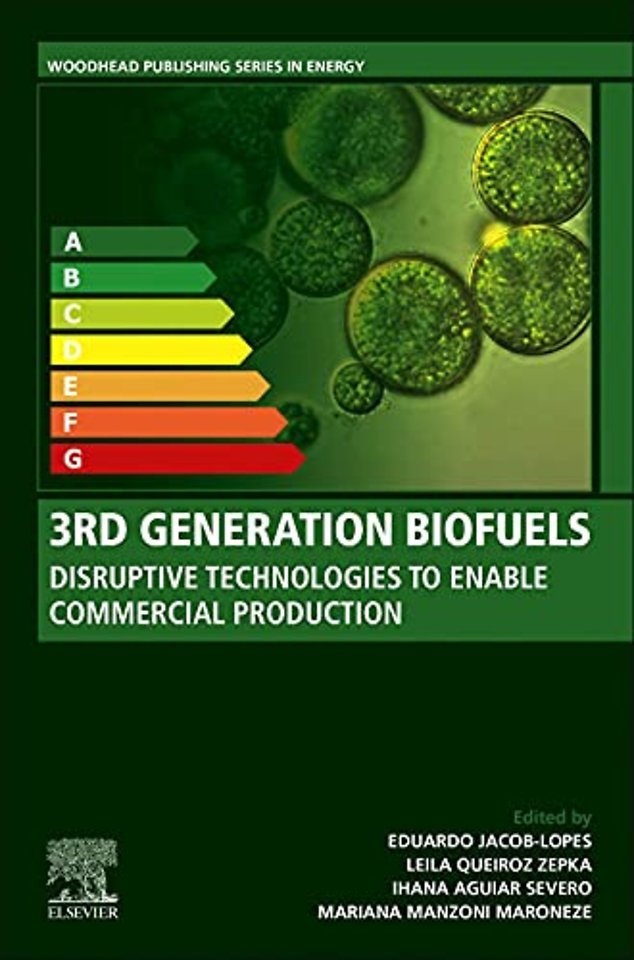
3rd Generation Biofuels

Disruptive Technologies to Enable Commercial Production

Specificaties
Paperback, blz. | Engels
Elsevier Science | 2022
ISBN13: 9780323909716
Rubricering
Elsevier Science e druk, 2022 9780323909716
€ 367,00
Levertijd ongeveer 9 werkdagen
Gratis verzonden

Samenvatting

3rd Generation Biofuels: Disruptive Technologies to Enable Commercial Production is a comprehensive volume on all aspects of algal biofuels, offering the latest advances on commercial implementation. In addition to the fundamentals, the book discusses all applied aspects of 3rd generation biofuels production, including design approaches, unit operations of the upstream and downstream biomass processing, and every potential microalgae-based energy product, including microbial fuel cells. Policy, economic, environmental, and regulatory issues are addressed in a dedicated section. Finally, the book presents pilot and demonstration-scale projects for 3rd generation biofuels production in the format of a white paper. Each chapter reviews the state of the art, discusses the disruptive technological approaches that will potentially enable large-scale production, and concludes with specific recommendations on how to achieve commercial competitiveness.

The book provides readers with an invaluable reference for researchers, graduates, and practitioners working in the areas of renewable energy, bioenergy and alternative fuels, and biotechnology.

Specificaties

ISBN13:9780323909716
Taal:Engels
Bindwijze:Paperback

Inhoudsopgave

<p>Part I – Fundamentals<br>1. The choice of algae strain for the biofuel production: Native, genetically modified or microbial consortia<br>2. Criteria for the development of culture media applied to microalgae-based fuels production<br>3. Genome editing approaches applied to microalgae-based fuels<br>4. Biochemical engineering approaches to enhance production of microalgae-based fuels</p> <p>Part II – From upstream to downstream processing<br>5. Impact of culture conditions on the microalgae-based fuels production<br>6. Strategies for process control applied to microalgae-based fuels production<br>7. Carbon dioxide capture and use to produce microalgae-based fuels<br>8. Wastewater, reclaimed water, and seawater in the production of microalga-based fuels<br>9. Unit operations applied to solid-liquid separation in microalgae-based processes<br>10. Unit operations applied to dry of microalgal biomass<br>11. Unit operations applied to cell disruption of microalgae<br>12. Process integration approaches applied to microalgal biofuels production<br>13. Process intensification techniques applied to microalgal biofuels production<br>14. Biofuels and chemicals from microalgae<br>15. Biorefinery of the microalgae-based products<br>16. Topology analysis of the 3rd generation biofuels<br>17. Nanotechnology approaches to enhance the development of biofuels from microalgae<br>18. Waste-to-energy approaches applied to microalgae-based systems</p> <p>Part III – Microalgae-based energy products<br>19. Biodiesel from microalgae<br>20. Bioethanol from microalgae<br>21. Biomethane from microalgae<br>22. Biohydrogen from microalgae<br>23. Biobutanol from microalgae<br>24. Syngas from microalgae<br>25. Volatile organic compounds from microalgae<br>26. Biochar from microalgae<br>27. Production of renewable aviation fuel from microalgae<br>28. Direct combustion of microalgae biomass to generate bioelectricity<br>29. Microalgae-microbial fuel cells</p> <p>Part IV – Policy, regulatory, economic, intellectual property, and environmental aspects<br>30. Energy policies in the context of the third-generation biofuels<br>31. Global profile and market potentials of the 3rd generation biofuels<br>32. Third-generation biofuels and food security<br>33. Bioeconomy of microalgae-based fuels<br>34. Cost-benefit analysis of third-generation biofuels<br>35. Environmental indicators of the microalgae-based fuels<br>36. Exergy analysis of the third-generation biofuels<br>37. Intellectual property and innovation in the context of the 3rd generation biofuels<br>38. Socio-economic aspects of the 3rd generation biofuels<br>39. Social acceptance of 3rd generation biofuels</p> <p>Part V – Pilot projects and demonstration-scale: Case studies for biofuels production<br>40. Production of microalgae on source separated human urine<br>41. Practical guide to algal biomass production for biofuels and what can we learn from past successes and failures?<br>42. Challenges for microalgae cultivation in sugarcane processing wastewater (vinasse) for biodiesel production: from the bench to pilot-scale<br>43. The experiences of success and failure in the hybrid photobioreactors<br>44. The experiences of success and failure in the pilot and real scale photosynthetic biogas production<br>45. Best practices for bio-crude oil production at pilot-scale using continuous flow reactors</p>
€ 367,00
Levertijd ongeveer 9 werkdagen
Gratis verzonden

Rubrieken

    Personen

      Trefwoorden

        3rd Generation Biofuels