, , , e.a.

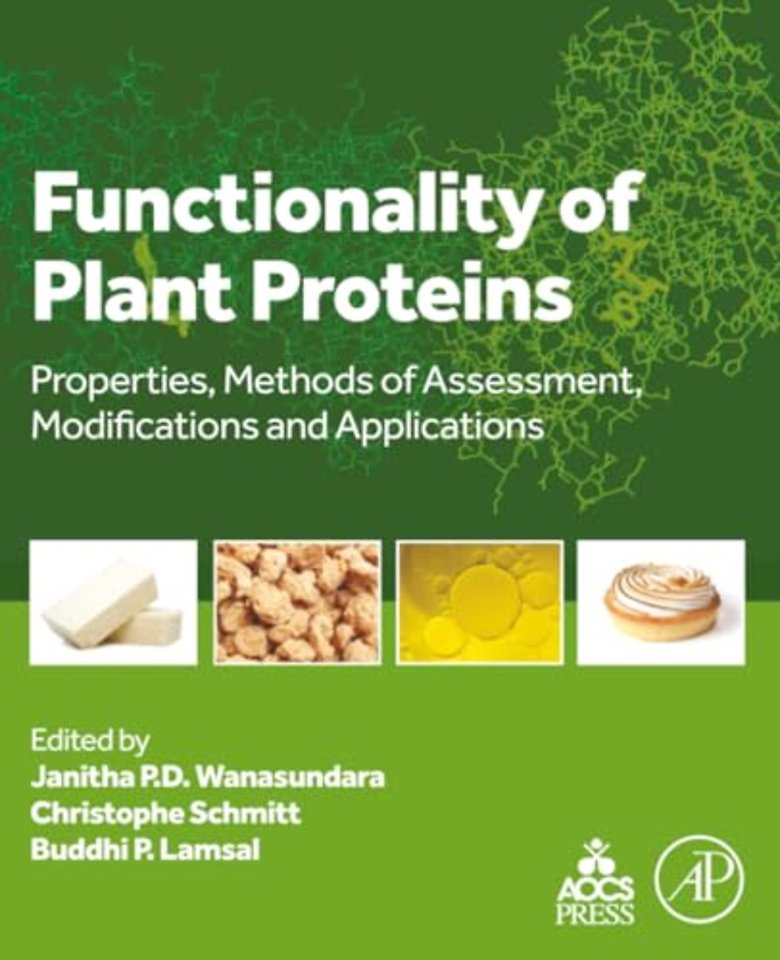
Functionality of Plant Proteins

Properties, Methods of Assessment, Modifications and Applications

Specificaties
Paperback, blz. | Engels
Elsevier Science | 2024
ISBN13: 9780323917216
Rubricering
Elsevier Science e druk, 2024 9780323917216
€ 229,00
Levertijd ongeveer 9 werkdagen
Gratis verzonden

Samenvatting

Functionality of Food Proteins: Mechanisms, Modifications, Methods of Assessment and Applications provides researchers and users of plant-based proteins with the latest developments on their functionality at the molecular and ingredient level, and in food applications. The book discusses the biological, chemical and physical principles behind the techno-functional and nutritional properties of proteins, existing methods of functionality assessment, and protein modification for functional enhancement. With market demand for protein ingredients, several lesser known sources are being utilized to develop new protein ingredients and products, with some intended to replace, partially or wholly, traditional proteins such as egg, milk, meat, soy and vital gluten.

Depending on the source and processing into ingredients, the ability of these proteins to satisfy techno-functional and nutritional requirements in the final food product may differ. Science-based knowledge is needed in the area of protein functionality for making decisions along the value chain, from production on the land to processing and formulation.

Specificaties

ISBN13:9780323917216
Taal:Engels
Bindwijze:Paperback

Inhoudsopgave

SECTION I. Proteins of plant sources and fundamentals of protein product development<br>1. Proteins of plant sources and fundamentals of protein product development<br>2. Processing of protein ingredients from plant sources<br>3. Functionality of plant proteins and importance of aggregation state<br>4. Probing structure-function relationship of proteins with molecular modeling<br>SECTION II. Methods of plant protein processing<br>5. Hydrodynamic properties I: Protein-water interactions; solubility, wettability, dispersibility, water binding/adsorption<br>6. Hydrodynamic properties II: Protein-water-Protein interaction; Viscosity and Gelation<br>7. The interfacial activity of plant proteins: theory, assessment and application in emulsion development<br>8. Hydrophobic/hydrophilic surface activity II: Foaming properties (air/water interface stabilization)<br>9. Hydrophobic/hydrophilic surface activity III: Interactions with other micro- and macro- molecules<br>10. Protein complexation with carbohydrates and lipids<br>11. Nutritional properties: Protein quality assessment parameters and methods<br>SECTION III. Functionality of proteins<br>12. Enzymatic modification of plant proteins: influence on functional properties, allergenicity, and bioactivity<br>13. Physical modification<br>SECTION IV. Protein functionality in food applications<br>14. Plant proteins for dry extruded products<br>15. Plant proteins for meat analogues<br>16. Plant proteins for dairy analogues<br>SECTION V. Challenges for plant-based protein ingredients and future path<br>17. Allergenicity of plant proteins<br>18. Anti-nutritional factors (ANFs) in protein-rich plant products: Chemistry, occurrence, nutritional implications, and their analysis<br>19. Challenges of plant protein processing and protein ingredient functionality assessment
€ 229,00
Levertijd ongeveer 9 werkdagen
Gratis verzonden

Rubrieken

    Personen

      Trefwoorden

        Functionality of Plant Proteins