
, ,

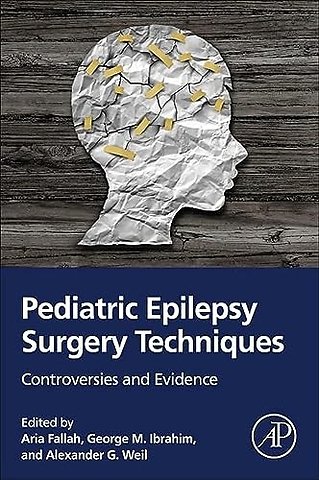
Pediatric Epilepsy Surgery Techniques

Controversies and Evidence

Specificaties
Paperback, blz. | Engels
Elsevier Science | 2024
ISBN13: 9780323959810
Rubricering
Elsevier Science e druk, 2024 9780323959810
€ 171,40
Levertijd ongeveer 9 werkdagen
Gratis verzonden

Samenvatting

Pediatric Epilepsy Surgery Techniques: Controversies and Evidence offers clinicians a roadmap for navigating the complex decision-making process involved in selecting surgical interventions for children with drug-resistant epilepsy. Over the last decade, the landscape of pediatric epilepsy surgery has undergone substantial transformation, marked by the introduction of several emerging technologies that are now supported by an expanding body of evidence, yet leading to a wide range of treatment practices. This book addresses several decision-making dichotomies in pediatric epilepsy surgery, both in terms of established and novel surgical modalities and techniques. The book explores long-standing debated topics, such as the relative benefits of disconnective compared to resective strategies, the utility of surgical adjuncts like intra-operative electrocorticography, as well as rationales for different surgical approaches, namely selective amygdalo-hippocampectomy versus anteromesial temporal lobectomy. Further, it addresses dichotomies between traditional approaches and contemporary modalities, such as microsurgical resection versus laser interstitial thermal therapy. Chapters also offer comparisons of modern technologies, such as different neuromodulation strategies, including vagus nerve stimulation, deep brain stimulation, and responsive neurostimulation.

This book provides readers with the relevant scientific literature and expert commentary to inform evidence-based approaches to surgical care in pediatric drug-resistant epilepsy.

Specificaties

ISBN13:9780323959810
Taal:Engels
Bindwijze:Paperback

Inhoudsopgave

Part 1: Evidence in pediatric epilepsy surgery<br>1. Evidence in pediatric epilepsy surgery<br>Churl-Su Kwon and Varun Ramanan Subramaniam<br>2. Controversies in the timing of pediatric epilepsy surgery—is earlier better?<br>Jarod L. Roland<br><br>Part 2: Invasive investigation<br>3. Electroencephalographic evaluation of epileptogenicity—traditional versus novel biomarkers to guide surgery<br>Eroshini Swarnalingam and Julia Jacobs<br>4. Invasive monitoring: stereoelectroencephalography (sEEG) versus subdural electrode (SDE) versus hybrid evaluation<br>Taylor J. Abel, Luis Fernandez and Joseph Garcia<br><br>Part 3: Resective or ablative surgery<br>5. Intraoperative adjuncts to optimize the surgical treatment of drug-resistant epilepsy—do new tools improve outcome?<br>Trang Tran, Frederic Leblond and Roy W.R. Dudley<br>6. Medial temporal lobe epilepsy—selective amygdalohippocampectomy versus anterior temporal lobectomy<br>Christian Dorfer<br>7. Epilepsy in eloquent cortex: resection versus responsive neurostimulation<br>Saadi Ghatan<br>8. Lesional epilepsy: lesionectomy versus ECoG-guided resection<br>Shimrit Sibony-Uliel and Jonathan Roth<br>9. Insular/perisylvian epilepsy: Open resection versus stereotactic ablation (MR-guided laser ablation/radiofrequency thermocoagulation) versus responsive neurostimulation<br>Vincent Joris, Jessica Royer and Alexander G. Weil<br><br>Part 4: Hypothalamic hamartoma<br>10. Hypothalamic hamartoma—open surgery versus endoscopic surgery versus stereotactic radiosurgery versus stereotactic ablation (MR-guided laser ablation/Radiofrequency ablation) versus MRFUS<br>Santiago Candela-Canto, Roberto Martınez Alvarez and Jose Hinojosa Mena-Bernal<br><br>Part 5: Tuberous sclerosis complex<br>11. Resective surgery in tuberous sclerosis complex-related epilepsy: tuberectomy and tuberectomy plus<br>Shuli Liang, Zhirong Wei, Jiaqi Wang and Feng Zhai<br><br>Part 6: Disconnective procedures<br>12. Functional hemispheric surgery—vertical versus lateral approach<br>Jia-Shu Chen, H. Westley Phillips and Aria Fallah<br>13. Minimally invasive hemispherotomy—endoscopic, radiofrequency and robotic techniques<br>Poodipedi Sarat Chandra and Manjari Tripathi<br>14. Lobar/multilobar epilepsy: resection versus disconnection<br>Vejay N. Vakharia and Martin M. Tisdall<br>15. Corpus callosotomy: anterior two-thirds (two-stage) versus complete (one-stage)<br>Meena Vessell and Robert J. Bollo<br><br>Part 7: Neuromodulation<br>16. Temporal lobe epilepsy with preserved function: multiple hippocampal transection versus neuromodulation (deep brain stimulation, responsive neurostimulation)<br>Logan Massman and Sean Lew<br>17. Neuromodulation: comparison of vagus nerve stimulation, deep brain stimulation, and responsive eurostimulation<br>Nebras M. Warsi, Hrishikesh Suresh and George M. Ibrahim
€ 171,40
Levertijd ongeveer 9 werkdagen
Gratis verzonden

Rubrieken

    Personen

      Trefwoorden

        Pediatric Epilepsy Surgery Techniques