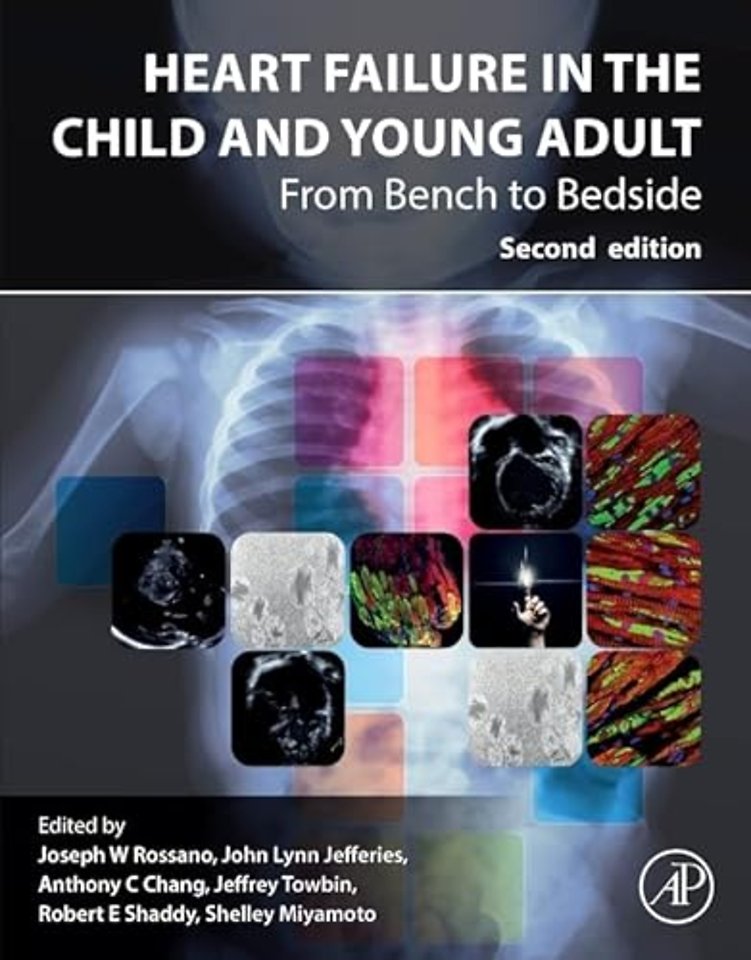
, , , , , , e.a.

Heart Failure in the Child and Young Adult

From Bench to Bedside

Specificaties
Paperback, blz. | Engels
Elsevier Science | 2025
ISBN13: 9780443132797
Rubricering
Elsevier Science e druk, 2025 9780443132797
€ 241,00
Levertijd ongeveer 9 werkdagen
Gratis verzonden

Samenvatting

Heart Failure in the Child and Young Adult: From Bench to Bedside, Second Edition highlights unique aspects of heart failure in the young. This comprehensive resource combines research from multiple contributors with current guidelines to bridge the knowledge gap for the recognition and management of heart failure in children. Coverage begins with the basic science of heart failure and then progresses through diagnosis, management, treatment, and surgery, finally concluding with advanced special topics, including genetics, self-management, and nanomedicine.

This new edition covers advancements in the field, including additional chapters and discussion on biomarkers, neuromuscular disease, quality of life, palliative care, and the impact of COVID-19 in myocarditis and multisystem inflammatory syndrome in children. It will serve as an indispensable reference to basic science researchers in cardiology, pediatrics, cardiologists, and pediatric cardiologists.

Specificaties

ISBN13:9780443132797
Taal:Engels
Bindwijze:Paperback

Inhoudsopgave

Section I Basic science of heart failure <br>1. From molecular and cellular mechanisms to models of heart failure<br>2. Cardiovascular receptors and signaling in heart failure<br>3. Heart failure in the child and young adult: From bench to bedside: Inflammatory mediators in heart failure<br>4. Transcriptional regulation, epigenetic regulation, and transcriptomics of pediatric heart failure<br>5. Mechanisms of hypertrophy in heart failure<br>6. Hemodynamic adaptive mechanisms in heart failure<br>7. Neurohormonal axis and natriuretic peptides in heart failure<br>8. Novel biomarkers in heart failure<br>9. Systolic and diastolic function<br>10. Echocardiographic quantitation of ventricular function<br>11. MRI assessment of heart failure<br>12. Assessment of heart failure by invasive methods<br>13. The lymphatic system in heart failure<br>14. Endothelial dysfunction in heart failure in the child and young adult<br>Section II Clinical diagnosis and management of pediatric heart failure <br>15. Epidemiology and economics of pediatric heart failure<br>16. Clinical recognition of heart failure in children<br>17. Classification of pediatric heart failure<br>18. Right ventricular dysfunction<br>19. Pediatric myocarditis<br>20. Dilated cardiomyopathy<br>21. Clinical features of restrictive cardiomyopathy and constrictive pericarditis<br>22. Hypertrophic cardiomyopathy<br>23. Left ventricular noncompaction cardiomyopathy<br>24. Arrhythmogenic cardiomyopathies<br>25. Valvular insufficiency and heart failure<br>26. Valvular stenosis and heart failure<br>27. Coronary artery disease in children and young adults<br>28. Chronic heart failure in congenital heart disease including single ventricle circulation<br>29. Heart failure in adults with congenital heart disease<br>30. Dysrhythmias and ventricular dysfunction and heart failure<br>31. Fetal heart failure<br>32. Heart failure in the neonate<br>33. Heart failure in pediatric pulmonary diseases<br>34. Pediatric cardiorenal syndrome<br>35. Heart failure in pediatric oncologic disease<br>36. Neuromuscular disorders<br>37. Sickle cell disease<br>38. The cardiovascular system in systemic inflammatory syndromes<br>39. Outpatient management of pediatric heart failure<br>40. Cardiac intensive care and inpatient management of heart failure<br>41.Quality of life, neurodevelopmental and psychosocial outcomes in pediatric heart failure<br>42. Palliative care<br>43. Quality metrics and quality improvement in pediatric heart failure<br>44. Nursing aspects of heart failure<br>Section III Medical treatment for pediatric heart failure <br>45. Diuretic and invasive fluid management strategies<br>46. Inotropic agents in heart failure<br>47. Phosphodiesterase inhibitors<br>48. Use of vasodilators in heart failure<br>49. Recognition and treatment of low cardiac output states in pediatric cardiac intensive care<br>50. New therapeutic strategies for heart failure<br>51. Electrophysiologic devices in heart failure<br>52.Catheter device therapies for heart failure<br>Section IV Cardiac surgery and pediatric heart failure <br>53. Posttransplant heart failure<br>54. Surgical strategies for the failing single ventricle<br>55. Valve interventions for heart failure<br>56. Principles of mechanical cardiopulmonary support<br>57. Future of mechanical circulatory support devices in children and young adults<br>58. Short-term mechanical cardiopulmo-nary support devices<br>59. Decision-making in ventricular assist device support in pediatric advanced heart failure patients<br>60. Long-term ventricular assist devices in children<br>Section V Special topics <br>61. Genetics and genomics<br>62. Genetic testing<br>63. Big data and artificial intelligence in pediatric heart failure<br>64. Outpatient monitoring and self- care<br>65. Cardiac regenerative medicine for congenital heart defects<br>66. Development of digital twin models for heart failure patient treatment<br>67. Nutritional assessment and management in pediatric heart failure<br>68. The role of wearable technology in improving the care of pediatric heart failure
€ 241,00
Levertijd ongeveer 9 werkdagen
Gratis verzonden

Rubrieken

    Personen

      Trefwoorden

        Heart Failure in the Child and Young Adult