Rotimi Sadiku,
Yskandar Hamam,
Suprakas Sinha Ray,
Oladipo Folorunso
e.a.
Elsevier Science
e druk, 2024
9780443141317
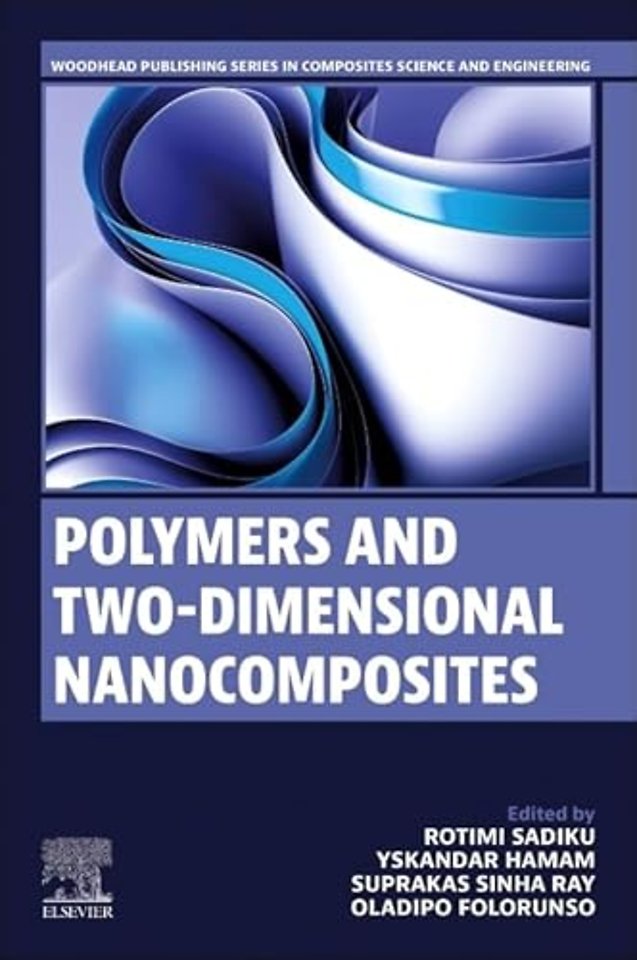
Polymers and Two-Dimensional Nanocomposites
Specificaties
Paperback, blz.
|
Engels
Elsevier Science |
2024
ISBN13: 9780443141317
Rubricering
Onderdeel van serie
Woodhead Publishing Series in Composites Science and Engineering
Levertijd ongeveer 9 werkdagen
Gratis verzonden
Samenvatting
Polymers and Two-Dimensional Nanocomposites provides a detailed review of recent progress in this important research field. The chapters cover new developments in synthesis methods, fabrication techniques, sample preparation methods, surface modification, characterization, methods of enhancing the properties of these materials and industrial applications in energy, environmental, oil and gas, sensors, corrosion, biomedical and structural applications.
The book provides a valuable reference resource for academic and industrial researchers, materials scientists and engineers working in the fields of polymer science and engineering, polymer composites and nanocomposites.
Specificaties
Inhoudsopgave
<p>1. Two-dimensional nanofillers<br>2. General overview of polymers and two-dimensional nanofiller-based nanocomposites<br>3. Bottom-up and top-down fabrication processes of polymer and two-dimensional nanocomposites<br>4. Borophene: synthesis methods, applications, challenges, and future prospects<br>5. Proper samples preparation methods for SEM, TEM, TGA, XRD, and DSC: techniques, operations, and recommendation<br>6. Surface modification of two-dimensional materials: techniques and applications<br>7. Characterization of polymer and two-dimensional nanocomposites: A molecular dynamics approach<br>8. Enhancing the mechanical and electrical properties of polymers using graphene<br>9. Enhancing the electromagnetic, piezoresistive and electrical properties of polymers using MXene<br>10. Thermal, thermomechanical and rheology properties of polymer nanocomposite<br>11. Thermal and electrical conductivity of polymer and polymer nanocomposite<br>12. Investigating the optical properties of polymer nanocomposites: synthesis, challenges, and recommendations<br>13. Recent development in polymer nanocomposites for energy storage applications especially supercapacitors<br>14. Fuel cell-based polymer based two-dimensional nanocomposites: synthesis, challenges, and prospects<br>15. Li ion batteries and polymer nanocomposite<br>16. Conductive polymers: Effective materials for heavy metal ions removal (Water treatment).<br>17. Polymer nanocomposites in the oil and gas and defence industry<br>18. Polymer and graphene sensors<br>19. Polymer nanocomposite field effect transistors<br>20. Recent development in polymer nanocomposites for corrosion treatment<br>21. Structural applications of polymer and two-dimensional nanocomposites: A critical review<br>22. Recent development in polymer nanocomposites for biomedical and antibacterial applications<br>23. Future of applications of polymer based two-dimensional nanocomposites</p>