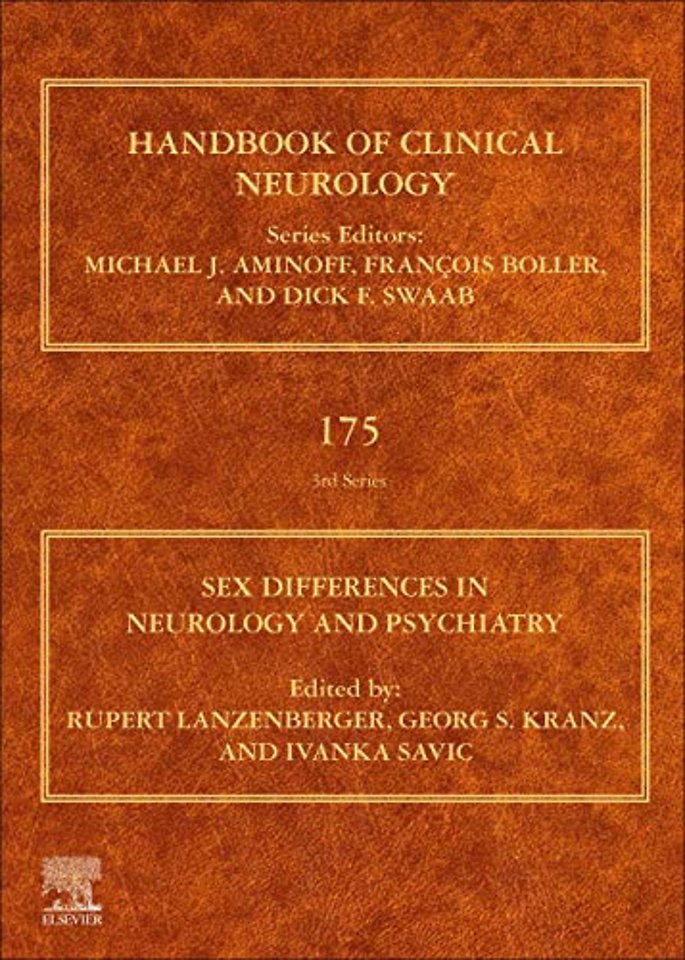
Sex Differences in Neurology and Psychiatry
Specificaties
Gebonden, blz.
|
Engels
Elsevier Science |
2020
ISBN13: 9780444641236
Rubricering
Onderdeel van serie
Handbook of Clinical Neurology
Levertijd ongeveer 9 werkdagen
Gratis verzonden
Samenvatting
Sex Differences in Neurology and Psychiatry, Volume 175, addresses this important issue by viewing major neurological and psychiatric conditions through the lens of sexual dimorphism, providing an entirely novel approach to understanding vulnerability factors, as well as potential new treatment strategies in several common neuropsychiatric disorders. The handbook comprises four major sections: (1) Introduction to sex differences in neuroanatomy and neurophysiology, (2) Description of the impact of genetic, epigenetic, sex hormonal and other environmental effects on cerebral sex dimorphism, (3) Review of sex differences in neurologic disorders, and (4) Review of sex differences in psychiatric disorders.
Specificaties
Inhoudsopgave
<p>Section I. Sex Differences in Neuroanatomy and Neurophysiology<br>1. Structural differences between male and female brains<br>2. Beyond sex differences and a male-female continuum: mosaic brains in a multidimensional space<br>3. Brain development<br>4. HPA axis, stress <br>5. Spatial skills<br>6. Gender differences in language are small but matter for disorders<br>7. Sex differences in cognition and aging and the influence of sex hormones<br>8. Sex and the serotonin system<br>9. Sex and the dopaminergic system: Insights from addiction studies<br>10. Sex and the noradrenergic system</p> <p>Section II. Genes, Hormones, and Epigenetic Mechanisms<br>11. Genetics of sex differences in neuroanatomy and function<br>12. Sex hormones and human brain function<br>13. Environmental epigenetics of sex differences in the brain</p> <p>Section III. Sex Differences in Neurologic Disorders<br>14. Brain structural and neuroendocrine basis of sex differences in epilepsy <br>15. Neuroinflammation<br>16. Sex difference in Alzheimer Disease: an updated, balanced and emerging perspective on differing vulnerabilities<br>17. Sex differences in movement disorders<br>18. Autism spectrum disorder<br>19. Sex differences in stroke</p> <p>Section IV. Sex Differences in Psychiatric Disorders<br>20. Schizophrenia spectrum and other psychotic disorders<br>21. Sex differences in stress-related disorders: major depressive disorder, bipolar disorder and posttraumatic stress disorder<br>22. The role of sex and gender in anxiety disorders: being scared ‘like a girl’?<br>23. Obsessive-compulsive and related disorders<br>24. Feeding and eating disorders<br>25. Sex differences in antisocial and aggressive disorders that onset in childhood and persist into adulthood<br>26. Addiction among women and sexual minority groups</p> <p>Section V. Gender Medicine: Towards a Gender-Specific Treatment of Neuropsychiatric Disorders<br>27. Gender medicine: towards a gender-specific treatment of neuropsychiatric disorders</p>