,

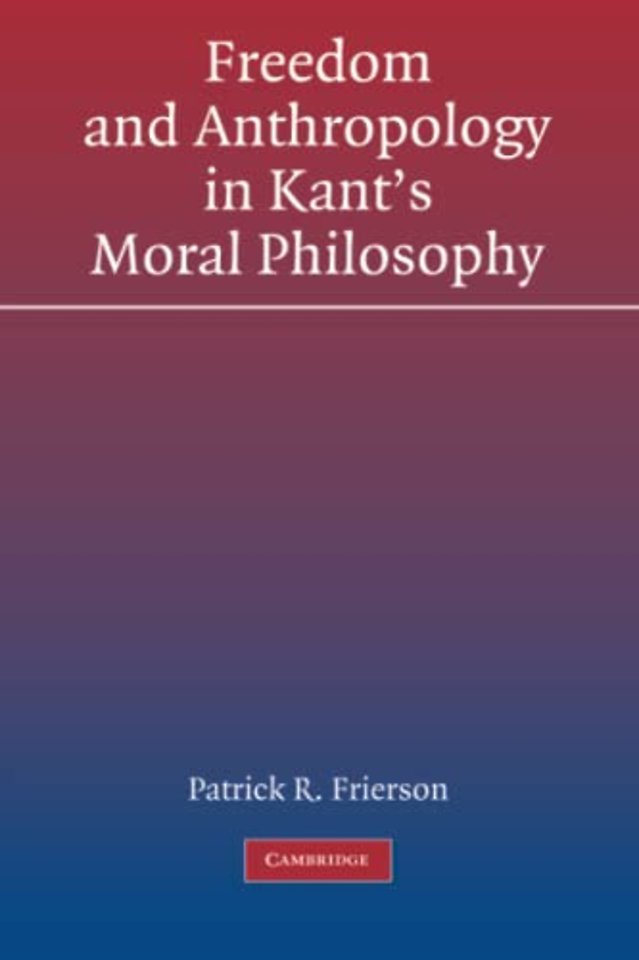
Freedom and Anthropology in Kant's Moral Philosophy

Specificaties
Paperback, 222 blz. | Engels
Cambridge University Press | 2011
ISBN13: 9780521184359
Rubricering
Cambridge University Press e druk, 2011 9780521184359
€ 55,76
Levertijd ongeveer 9 werkdagen
Gratis verzonden

Samenvatting

This book offers a comprehensive account of Kant's theory of freedom and his moral anthropology. The point of departure is the apparent conflict between three claims to which Kant is committed: that human beings are transcendentally free, that moral anthropology studies the empirical influences on human beings, and that more anthropology is morally relevant. Frierson shows why this conflict is only apparent. He draws on Kant's transcendental idealism and his theory of the will and describes how empirical influences can affect the empirical expression of one's will in a way that is morally significant but still consistent with Kant's concept of freedom. As a work which integrates Kant's anthropology with his philosophy as a whole, this book will be an unusually important source of study for all Kant scholars and advanced students of Kant.

Specificaties

ISBN13:9780521184359
Taal:Engels
Bindwijze:Paperback
Aantal pagina's:222

Inhoudsopgave

Introduction: Kant's anthropology and Schleiermacher's dilemma; Part I. The Problem: 1. The asymmetry in Kant's conception of freedom; 2. Anthropology as an empirical science; 3. The moral significance of Kant's 'pragmatic anthropology'; 4. Moral anthropology in contemporary neokantian ethics; Part II. The Solution: 5. Transcendental evil, radical evil, and moral anthropology; 6. Moral influence on others; Epilogue. Incorporating moral anthropology and defending Kantian moral philosophy.
€ 55,76
Levertijd ongeveer 9 werkdagen
Gratis verzonden

Rubrieken

    Personen

      Trefwoorden

        Freedom and Anthropology in Kant's Moral Philosophy