, , , e.a.

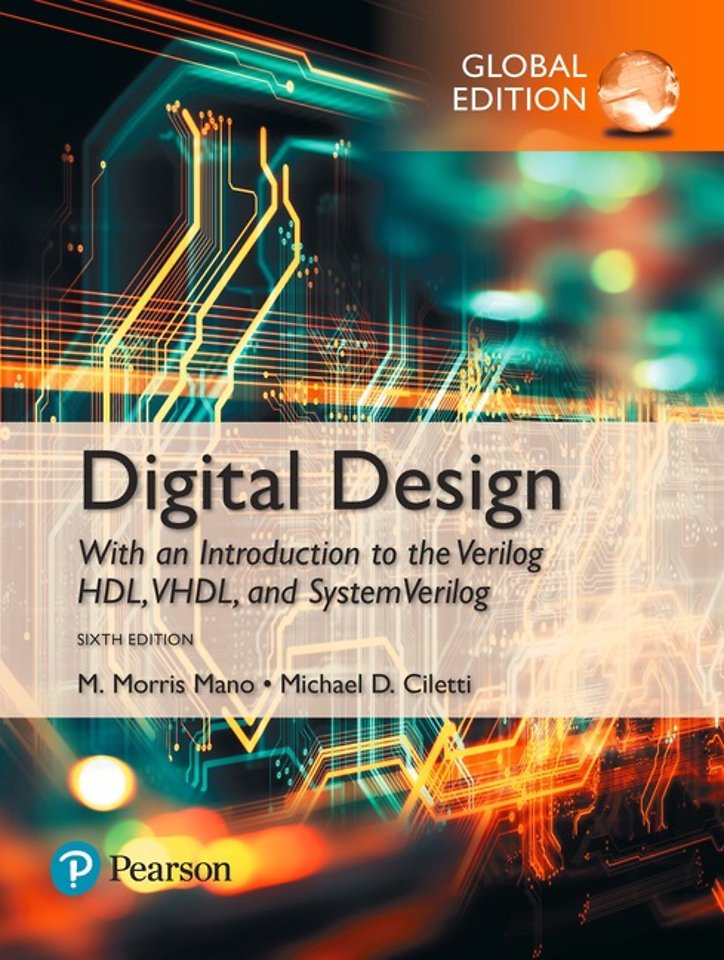
Digital Design, Global Edition

Specificaties
Paperback, blz. | Engels
Pearson Education | 2018
ISBN13: 9781292231167
Rubricering
Pearson Education e druk, 2018 9781292231167
€ 112,54
Levertijd ongeveer 9 werkdagen
Gratis verzonden

Samenvatting

For introductory courses on digital design in an Electrical Engineering, Computer Engineering, or Computer Science department.

A clear and accessible approach to teaching the basic tools, concepts, and applications of digital design.

A modern update to a classic, authoritative text, Digital Design, 6th Edition teaches the fundamental concepts of digital design in a clear, accessible manner. The text presents the basic tools for the design of digital circuits and provides procedures suitable for a variety of digital applications. Like the previous editions, this edition of Digital Design supports a multimodal approach to learning, with a focus on digital design, regardless of language. Recognizing that three public-domain languages–Verilog, VHDL, and SystemVerilog–all play a role in design flows for today’s digital devices, the 6th Edition offers parallel tracks of presentation of multiple languages, but allows concentration on a single, chosen language.

Specificaties

ISBN13:9781292231167
Taal:Engels
Bindwijze:Paperback

Inhoudsopgave

<p>Preface &nbsp; </p> <p>1&nbsp; Digital Systems and Binary Numbers &nbsp; </p> <p>1.1 &nbsp; Digital Systems&nbsp; </p> <p>1.2 &nbsp; Binary Numbers&nbsp; </p> <p>1.3 &nbsp; Number-Base Conversions </p> <p>1.4 &nbsp; Octal and Hexadecimal Numbers </p> <p>1.5 &nbsp; Complements of Numbers </p> <p>1.6 &nbsp; Signed Binary Numbers </p> <p>1.7 &nbsp; Binary Codes </p> <p>1.8 &nbsp; Binary Storage and Registers&nbsp;&nbsp; &nbsp;</p> <p>1.9 &nbsp; Binary Logic </p> <p>&nbsp;</p> <p>2&nbsp; Boolean Algebra and Logic Gates &nbsp;&nbsp; </p> <p>2.1 &nbsp; Introduction </p> <p>2.2 &nbsp; Basic Definitions </p> <p>2.3 &nbsp; Axiomatic Definition of Boolean Algebra </p> <p>2.4 &nbsp; Basic Theorems and Properties of Boolean Algebra </p> <p>2.5 &nbsp; Boolean Functions </p> <p>2.6 &nbsp; Canonical and Standard Forms </p> <p>2.7 &nbsp; Other Logic Operations </p> <p>2.8 &nbsp; Digital Logic Gates </p> <p>2.9 &nbsp; Integrated Circuits&nbsp; </p> <p>&nbsp;</p> <p>3&nbsp; Gate-Level Minimization &nbsp;&nbsp; </p> <p>3.1 &nbsp; Introduction </p> <p>3.2 &nbsp; The Map Method </p> <p>3.3 &nbsp; Four-Variable K-Map </p> <p>3.4 &nbsp; Product-of-Sums Simplification </p> <p>3.5 &nbsp; Don’t-Care Conditions </p> <p>3.6 &nbsp; NAND and NOR Implementation </p> <p>3.7 &nbsp; Other Two-Level Implementations </p> <p>3.8 &nbsp; Exclusive-OR Function </p> <p>3.9 &nbsp; Hardware Description Languages (HDLs) </p> <p>&nbsp;</p> <p>4&nbsp; Combinational Logic &nbsp;&nbsp; </p> <p>4.1 &nbsp; Introduction </p> <p>4.2 &nbsp; Combinational Circuits </p> <p>4.3 &nbsp; Analysis of Combinational Circuits </p> <p>4.4 &nbsp; Design Procedure </p> <p>4.5 &nbsp; Binary Adder—Subtractor </p> <p>4.6 &nbsp; Decimal Adder </p> <p>4.7 &nbsp; Binary Multiplier </p> <p>4.8 &nbsp; Magnitude Comparator </p> <p>4.9 &nbsp; Decoders </p> <p>4.10 &nbsp; Encoders </p> <p>4.11 &nbsp; Multiplexers </p> <p>4.12 &nbsp; HDL Models of Combinational Circuits &nbsp;&nbsp; </p> <p>&nbsp;&nbsp; </p> <p>5&nbsp; Synchronous Sequential Logic &nbsp;&nbsp; </p> <p>5.1 &nbsp; Introduction </p> <p>5.2 &nbsp; Sequential Circuits </p> <p>5.3 &nbsp; Storage Elements: Latches </p> <p>5.4 &nbsp; Storage Elements: Flip-Flops </p> <p>5.5 &nbsp; Analysis of Clocked Sequential Circuits </p> <p>5.6 &nbsp; Synthesizable HDL Models of Sequential Circuits </p> <p>5.7 &nbsp; State Reduction and Assignment </p> <p>5.8 &nbsp; Design Procedure </p> <p>&nbsp;</p> <p>6&nbsp; Registers and Counters &nbsp;&nbsp; </p> <p>6.1 &nbsp; Registers </p> <p>6.2 &nbsp; Shift Registers </p> <p>6.3 &nbsp; Ripple Counters </p> <p>6.4 &nbsp; Synchronous Counters </p> <p>6.5 &nbsp; Other Counters </p> <p>6.6 &nbsp; HDL Models of Registers and Counters&nbsp; </p> <p>&nbsp;</p> <p>7&nbsp; Memory and Programmable Logic &nbsp;&nbsp; </p> <p>7.1 &nbsp; Introduction </p> <p>7.2 &nbsp; Random-Access Memory </p> <p>7.3 &nbsp; Memory Decoding </p> <p>7.4 &nbsp; Error Detection and Correction </p> <p>7.5 &nbsp; Read-Only Memory </p> <p>7.6 &nbsp; Programmable Logic Array </p> <p>7.7 &nbsp; Programmable Array Logic </p> <p>7.8 &nbsp; Sequential Programmable Devices </p> <p>&nbsp;</p> <p>8&nbsp;&nbsp; Design at the Register Transfer Level &nbsp;&nbsp; </p> <p>8.1 &nbsp; Introduction </p> <p>8.2 &nbsp; Register Transfer Level (RTL) Notation </p> <p>8.3 &nbsp; RTL descriptions VERILOG (Edge- and Level-Sensitive Behaviors) </p> <p>8.4 &nbsp; Algorithmic State Machines (ASMs) </p> <p>8.5 &nbsp; Design Example (ASMD Chart) </p> <p>8.6 &nbsp; HDL Description of Design Example </p> <p>8.7 &nbsp; Sequential Binary Multiplier </p> <p>8.8 &nbsp; Control Logic </p> <p>8.9 &nbsp; HDL Description of Binary Multiplier </p> <p>8.10 &nbsp; Design with Multiplexers </p> <p>8.11 &nbsp; Race-Free Design (Software Race Conditions) </p> <p>8.12 &nbsp; Latch-Free Design (Why Waste Silicon?) </p> <p>8.13 &nbsp; System Verilog–An Introduction </p> <p>&nbsp;</p> <p>9&nbsp;&nbsp; Laboratory Experiments with Standard ICs and FPGAs &nbsp;&nbsp; </p> <p>9.1 &nbsp; Introduction t</p>
€ 112,54
Levertijd ongeveer 9 werkdagen
Gratis verzonden

Rubrieken

    Personen

      Trefwoorden

        Digital Design, Global Edition