
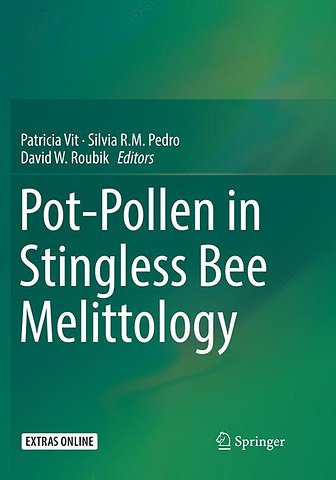
Pot-Pollen in Stingless Bee Melittology
Samenvatting
This book covers pot-pollen—the other product, besides honey, stored in cerumen pots by Meliponini. Critical assessment is given of stingless bee and pot-pollen biodiversity in the Americas, Africa, Asia and Oceania. Topics addressed include historical biogeography, cultural knowledge, bee foraging behavior, pollination, ecological interactions, health applications, microbiology, the natural history of bee nests, and chemical, bioactive and individual plant components in stored pollen. Pot-pollen maintains the livelihoods of stingless bees and provides many interesting biological products that are just now beginning to be understood. The Meliponini have developed particular nesting biologies, uses of building materials, and an architecture for pollen storage. Environmental windows provide optimal temperature and availability of pollen sources for success in plant pollination and pollen storage. Palynological composition and pollen taxonomy are used to assess stingless honey bee pollination services. Pollen processing with microorganisms in the nest modifies chemical composition and bioactivity, and confers nutraceutical benefits to the honey and pollen widely relished by native people. Humans have always used stingless bees. Yet, sustainable meliponiculture (stingless bee-keeping) projects have so far lacked a treatise on pot-pollen, which experts provide in this transdisciplinary, groundbreaking volume.
Specificaties
Inhoudsopgave
<p>Introduction</p>
<p>Acknowledgements</p>
<p> </p>
<p>SECTION 1</p>
<p>Pollen and the Evolution of Mutualism<br></p><p><br></p>
<p>1. Pot-Pollen as a Discipline. What Does it Include?</p> 1.1. Pot-Pollen and Palynology from an Ecological Point of View<p></p> 1.2. A Modern Synthesis of Bee-Pollen and Pot-Pollen Study<p></p>
<p>1.3. Plant Reproduction</p> 1.4. Pollination<p></p>
<p>1.5. Pollen Biology and Palynology</p> 1.6. Applied Pollen Taxonomy<p></p>
<p> </p>
<p>2. Are Stingless Bees a Broadly Polylectic Group? An Empirical Study of the Adjustments Required for an Improved Assessment of Pollen Diet in Bees</p>
<p>2.1. Introduction</p> 2.2. Pollen Specialization Categories in Bees<p></p>
2.3. Pollen Analysis of Samples<p></p> 2.4. Adjustment Calculations to Assess Pollen Specialization Categories in Stingless Bees<p></p>
<p>2.4.1. Modifying the Number of Foraged Resource Items: Threshold Values and Pollen Type Versus Pollen Species</p>
<p>2.4.2. Modifying the Number of Available Resources: Spatial and Temporal Adjustments</p> 2.5. The Importance of an Appropriate Assessment of Pollen Specialization in Bees: Factors Causing Low Number of Foraged Items<p></p>
2.5.1 Abundant Versus Minor Pollen Types<p></p>
<p>2.5.2 Recruitment Behaviour</p>
<p>2.5.3 Intra-nest Pollen Analysis</p>
<p>2.6. Factors Causing High Number of Available Items<</p>
<p>2.7. Polylecty, Broad Polylecty or Simply degrees of polylecty?< </p> <p></p>
<p>3. Pollen collected by stingless bees: a contribution to understand Amazonian biodiversity </p>
<p>3.1. Introduction</p>
<p>3.1.1 Origin and Evolution of Plant-Bee Interactions</p>
<p>3.2. The Use of Pollen Analysis in the Study of Bees in the Amazon Rainforest</p> 3.3. Diversity of Plants, Stingless Bees and their Interactions in Central Amazon<p></p>
3.4. Amazonian Bee Diet, Biology and Suggested Interactions Potentially Leading to Pollination<p></p> 3.5. How to Improve Meliponiculture for Sustainable Development in the Amazon<p></p>
<p>3.6. Conclusions</p> <p></p>
<p>4. The Stingless Honey Bees (Apidae, Apinae: Meliponini) in Panama, and Ecology from Pollen Analysis</p> 4.1. An Introduction to the Stingless Honey Bees and Pot-Pollen, in Panama<p></p> 4.2. Pollen niche, relative specialization, and pollen spectrum<p></p>
<p>4.2.1 Qualitative and quantitative analyses</p>
<p>4.2.2 Field bee short-term resource selection</p>
<p>4.2.3 Pollen of popular meliponines , Africanized honeybees and lesser known species</p>
<p>4.2.4 Pollination ecology and population biology</p>
4.2.5 Conclusions and ecological perspective <p></p>
<p> </p>
5. The value of plants for the Mayan stingless honey bee Melipona beecheii (Apidae: Meliponini): a pollen-based study in the Yucatán Peninsula, Mexico<p></p>
5.1. Understanding the Ecology of a Mayan Resource and Cultural Icon<p></p> 5.2. Baseline Studies of Invasive Honeybees and Native Neotropical Bees<p></p> 5.3. Fieldwork<p></p>
<p>5.4. Pollen Analysis from Pot-Pollen Samples</p>
<p>5.5. Understanding Bee Resource Use in Dynamic Natural Environments</p>
<p> </p>
6. Melittopalynological Studies of Stingless Bees from East Coast of Peninsular Malaysia<p></p>
<p>6.1. Introduction</p> ^len Collection by Heterotrigona itama in Tropical Island of Taman Tropika Kenyir, Terengganu<p></p>
<p>6.3. Pollen Collection and Abundance among Colonies of Lepidotrigona terminata from a Meliponary in Besut, Terengganu</p> 6.4. Selected Flowers Producing Pollen Preferred by Stingless Bees in Terengganu<p></p>
<p>6.5. Conclusions</p> <p></p>
7. The Contribution of Palynological Surveys to Stingless Bee Conservation: a Case Study with Melipona subnitida<p></p> 7.1. Introduction<p></p>
7.2. Floral Resources-Dynamics: Pot-Pollen versus Pollen from the Bees' Body <p></p>
<p>7.3. Melittopalynology as Tool for Restoration Strategies: Suitable Foraging Habitats</p> 7.4. Concluding Remarks and Future Steps<p></p>
<p> </p>
8. Pollen Storage by Melipona quadrifasciata anthidioides in a Protected Urban Atlantic Forest Area of Rio de Janeiro, Brazil<p></p>
8.1. Introduction<p></p>
<p>8.2. Getting Pollen Loads and Pollen Grains by M. quadrifasciata anthidioides</p> 8.3. Palynological Characteristics of Pollen Batches Collected from the Baskets of M. quadrifasciata anthidioides<p></p>
<p>8.3.1 Monofloral Pollen Loads</p>
8.3.2 Bifloral Pollen Loads<p></p>
<p>8.3.3 Heterofloral Pollen Loads</p>
<p>8.3.4 Additional Pollen Types</p>
<p>8.3.5 Additional Structured Elements</p> 8.4. Plant Families, Genera and Species Mostly Visited by M. quadrifasciata anthidioides<p></p>
<p>8.5. Conclusion</p>
<p></p>
9. Angiosperm Resources for Stingless Bees (Apidae, Meliponini): A Pot-Pollen Melittopalynological Study in the Gulf of Mexico<p></p>
<p>9.1. Introduction</p> 9.2. Background of Melittopalynological Studies in Mexico<p></p> 9.3. Methods and Study Areas<p></p>
<p>9.4. Floral Resources Foraged by Melipona beecheii in the State of Campeche</p>
<p>9.4.1 Angiosperm Resources for Melipona beecheii</p> 9.4.2 Physicochemical Analyses of Melipona beecheii Pot-Honey<p></p>
<p>9.5. Meliponiculture and Melitopalynological Study of Pot-Honey and Pot-Pollen in Veracruz</p>
<p>9.5.1 INANA’s Sustainable Meliponiculture</p>
9.5.2 Angiosperm Resources for Scaptotrigona mexicana, Plebeia sp. and Melipona beecheii in Veracruz<p></p>
<p>9.6. Analysis of the Plant Preferences of Stingless Bees in Campeche and Veracruz, Gulf of Mexico</p> 9.7. Angiosperms Recorded in Systematic Mexican Melittopalynological Studies of Stingless Bees<p></p>
<p>9.8. General Considerations</p>
<p> </p>
<p>10. Annual Foraging Patterns of the Maya Bee Melipona beecheii (Bennett, 1831) in Quintana Roo, Mexico</p>
10.1. Introduction<p></p>
<p>10.2. A case study</p>
10.2.1 Field observations: registering bees activity<p></p>
<p>10.2.2. Foraging Activity to Collect Pollen and Nectar</p>
<p>10.2.3. Stored Pot-Honey and Pot-Pollen Reserves</p>
<p>10.2.4. Offspring</p> <p>10.3. Correlations Between the Studied Factors< </p><p> </p>
<p>11. Crop Pollination by Stingless Bees</p> 11.1. Introduction<p></p>
<p>11.2. Characteristics of Stingless Bees as Pollinators</p>
<p>11.3. Field Crop Pollination by Stingless Bees</p> 11.4. Greenhouse Crop Pollination by Stingless Bees<p></p>
11.5. Stingless Bee Management under Greenhouse Conditions<p></p>
<p>11.6. Perspectives </p>
<p> </p>
12. Stingless Bees as Potential Pollinators in Agroecosystems in Argentina: Inferences from Pot-Pollen Studies in Natural Environments<p></p>
<p>12.1. Introduction</p> 12.2. Potential Pollination by Stingless Bees: Intrinsic and Extrinsic Factors<p></p>
<p>12.2.1 Advantages and Disadvantages of a Reduced-Moderate Flight Range in Stingless Bees</p>
<p>12.2.2. Pollination Using Ground Nesting Stingless Bees</p> 12.3. Pollen Spectra of Pot-Pollen in Colonies of Stingless Bees from Natural Environments<p></p>
<p>12.4. Crops Potentially Pollinated by Stingless Bees in Argentina</p> 12.5. Spatial Variation of Crops in Argentina<p></p>
<p>12.6. Temporal Variation of Flower Availability in Agroecosystems</p> 12.7. Crop and Non-Crop Flowerings Present in Agroecosystems Beneficial for the Maintenance of Permanent Stingless Bee Colonies<p></p>
<p>12.7.1. Pollinating the Target Crop</p>
12.7.2. Weeds and Edge Vegetation as Complementary Flowerings for Permanent Stingless Bee Colonies<p></p>
<p>12.7.3. Diversified Agroecosystems as Best Habitat for Stingless Bee Pollination and Colony Management</p>
<p>12.8. Case Study: Pollination of Strawberries with Plebeia catamarcensis (Holmberg) in Santa Fe, Central Argentina</p>
<p>12.8.1. Strawberry Cultivation in Argentina</p>
<p>12.8.2 The Strawberry in Santa Fe</p>
<p>12.8.3 Meliponini: Potential Pollinators in Santa Fe Strawberry Crops</p>
<p></p>
<p>SECTION 2</p> <p>Biodiversity, Behavior and Microorganisms of the Stingless Bees (Meliponini)</p>
<p> </p>
<p>13. Stingless bees (Hymenoptera: Apoidea: Meliponini) from Gabon</p>
<p>13.1. Introduction</p> 13.2. Taxonomy and Morphological Diversity of Stingless Bees in Gabon<p></p> 13.3. Distribution of Stingless Bee Fauna in Gabon<p></p>
<p>13.4. Biology, Ecology and Nesting Behavior of the Stingless Bees</p>
<p>13.5. Knowledge and Traditional Use of Stingless Bees in Gabon</p> 13.6. Conclusion<p></p>
<p></p>
14. Pushing 100 Species: Meliponines (Apidae: Meliponini) in a Parcel of Western Amazonian Forest at Yasuní Biosphere Reserve, Ecuador<p></p>
<p>14.1. Yasuní Forest and Melittological Background</p> 14.2. Discovering Meliponine Biodiversity<p></p>
14.3. Species Accounts and Frequency<p></p>
<p>14.4. Insights from Comparative Morphology and other Rich Amazonian Areas</p> 14.5. Bioprospecting for Pollination Knowledge and Sustainable Exploitation<p></p>
<p> </p>
<p>15. Diversity of Stingless Bees in Ecuador, Pot-Pollen Standards and Meliponiculture Fostering a Living Museum for Meliponini of the World</p>
15.1. Introduction<p></p>
<p>15.2. Megabiodiversity of Stingless Bees in Ecuador</p> 15.3. A Revised Ecuadorian Honey Norm and Approach to Pot-Pollen Standards<p></p> 15.4. Stingless Bee Keepers are Crucial for the Heritage and Conservation Mission<p></p>
<p>15.5. A Stingless Bee Window to Look at Climate Warming</p> 15.5. Why a Living Museum to Embrace Meliponini of the World?<p></p>
<p> </p>
<p>16. Nesting Ecology of Stingless Bees in Africa</p> 16.1. Introduction<p></p>
<p>16.2. Meliponine Origin, Dispersal and Richness</p>
16.3. Stingless Bee Species in Africa<p></p>
<p>16.4. Stingless Bee Nest Architecture </p><p>16.5. African Stingless Bee Nesting Behavior</p>
<p> </p>
17. On the Trophic Niche of Bees in Cerrado Areas of Brazil and Yeasts in their Stored Pollen<p></p>
<p>17.1. Introduction</p>
17.2. Pollen Harvested by Native Bees of the Cerrado<p></p>
<p>17.3. Yeasts in Stored Pollen: Diversity and Ecological Role</p>
<p> </p>
<p>18. A Review of the Artificial Diets Used as Pot-Pollen Substitutes</p>
<p>18.1. Introduction</p> 18.1.1 Aim of the Chapter<p></p> 18.1.2 How do Stingless Bees Harvest and Store their Food?<p></p>
<p>18.2. The Fermentation Process in Stingless Bees Storage Pots</p>
<p>18.2.1 General Characteristics of Pollen Fermentation</p>
18.2.2 Microbial fermentation and nutritional enhancement of pollen<p></p>
<p>18.2.3 Impacts of Exogenous Compounds in Pollen</p>
<p>18.3. Microorganisms Present in Pot-Pollen</p>
<p>18.3.1 Generalities of host-associated microorganisms</p>
<p>18.3.2 Bacteria</p>
18.3.3 Yeasts<p></p>
18.3.4 Filamentous Fungi<p></p> 18.4. Development of Artificial Diets <p></p>
<p> </p>
19. Yeast and Bacterial Composition in Pot-Pollen Recovered from Meliponini in Colombia: Prospects for a Promising Biological Resource <p></p> 19.1. Introduction<p></p> 19.2. General Properties of Corbicular Bee-Derived Pollen<p></p> 19.3. The Key Bacterial Assemblages Known to be Associated with Bees and Pollen<p></p>
<p>19.4. Key Features of Yeast Communities Present in Pollen Collected by Bees: Recovery and Identification of Yeasts found in Pollen Collected by Four Genera of Stingless Bees from Colombia</p>
<p>19.5 Final remarks</p>
<p></p>
<p>SECTION 3</p>
Stingless Bees in Culture and Traditions<p></p>
<p> </p>
<p>20. Cultural, Psychological and Organoleptic Factors Related to the Use of Stingless Bees by Rural Residents of Northern Misiones, Argentina </p> <p>20.1. Introduction</p>
20.2. Southernmost Atlantic Forest Ecoregion<p></p>
<p>20.3. Ethnobiological Field Work</p>
<p>20.4. Cultural, Psychological and Organoleptic Factors Context</p>
<p>20.4.1 Cultural Factors</p>
<p>20.4.2 Psychological Factors</p>
<p>20.4.3 Organoleptic Factors</p>
20.5. Context of Exploitation of Stingless Bees<p></p>
<p>20.6. Cultural and Psychological Factors Related to the Use of Stingless Bees</p>
<p>20.7. Relationships Between Pot-Honey, Pot-Pollen, and Cultural, Psychological Factors</p>
<p>20.8. Conclusions and Future Challenges</p>
<p> </p>
<p>21. The Maya Universe in a Pollen Pot Native Stingless Bees in Precolumbian Maya Art</p>
21.1. Introduction<p></p>
<p>21.2. Maya Bee Myths</p>
21.3. Small Format Modelled Sculptures<p></p>
<p>21.3.1 Small Clay Bee</p>
<p>21.3.2 Ceramic Beehive</p>
<p>21.3.3 Censers</p> ^; Bees and Stingless Bee Keeping in a Sacred Maya Book<p></p>
<p>21.4.1 Melipona beecheii in the Tro-Cortesianus Codex</p>
<p>21.4.2 Hobon</p>
<p>21.5. A World View of Humankind through a Bee Model as Told by a H-men, a Traditional Maya Priest</p> 21.6. The Maya Universe in a Pollen Pot<p></p>
21.6.1 Once upon a Time, Long, Long Ago, there were Bees….<p></p>
<p>21.7. ‘The Flower Dust’</p>
<p> </p> <p></p>
<p>SECTION 4</p>
<p>Chemical Composition, Bioactivity and Biodiversity of Pot-Pollen</p>
<p> </p>
22. Nutritional Composition of Pot-Pollen from Four Species of Stingless Bees (Meliponini) in South East Asia<p></p>
<p>22.1. Introduction</p>
<p>22.2. Shape and Volume of Stingless Bee Pollen Pots</p>
<p>22.3. Nutritional Composition</p>
<22.3.1 Macronutrients of Pot-Pollen<p></p>
<p>22.3.2 Mineral Analysis </p>
<p>22.3.3 Fatty Acid Analysis</p>
<p>22.3.4 Amino Acid Analysis</p>
<p>22.4. Botanical Origin</p> 22.5. Conclusions, Suggestion and Future Research<p></p>
<p> </p>
<p>23. Characterization of Scaptotrigona mexicana Pot-Pollen from Veracruz, Mexico</p>
<p>23.1. Introduction</p>
23.2. Traditional Values of Scaptotrigona mexicana<p></p>
<p>23.3. Importance of Pot-Pollen in Meliponiculture <</p>
<p>23.4. Palynological Analyses of Scaptotrigona mexicana Pot-pollen from Central Veracruz, Mexico</p>
<p>23.5. Chemical Parameters of Scaptotrigona mexicana Pot-Pollen from Veracruz, Mexico</p>
<p>23.6. Elemental Composition of Scaptotrigona mexicana Pot-pollen from Central Veracruz, Mexico </p><p>23.7. Conclusions and Perspectives on Scaptotrigona mexicana Pot-Pollen in Mexico</p>
<p> </p>
<p>24. Chemical Characterization and Bioactivity of Tetragonisca angustula Pot-Pollen from Mérida, Venezuela</p>
<p>24.1. Introduction</p>
<p>24.2. Proximal Analysis of Tetragonisca angustula Pot-Pollen from Mérida</p>
24.3. Methods to Quantify Flavonoids, Polyphenols, Proteins, and Antioxidant Activity in Ethanolic Extracts of Tetragonisca angustula Pot-Pollen<p></p>
<p>24.3.1 Preparation of Pot-Pollen Ethanolic Extracts</p>
<p>24.3.2 Flavonoid Content</p>
<p>24.3.3 Polyphenol Content</p>
<p>24.3.4 Protein Content</p>
24.3.5 Antioxidant Activity by the ABTS+• Method<p></p>
24.3.6 Antioxidant Activity (AOA) by Fenton-Type Reaction<p></p>
<p>24.3.7 Hydroxyl Radical Assay</p>
<p>24.4. Biochemical Components and Antioxidant Activity of Ethanolic Extracts from Tetragonisca angustula Pot-Pollen 4.1 Preparation of Pot-Pollen Ethanolic Extracts</p>
<p>24.5. Conclusions</p>
<p> </p>
<p>25. Chemical, Microbiological and Palynological composition of the ‘Samburá’ Melipona scutellaris Pot-Pollen</p>
<p>25.1. Introduction</p>
<p>25.2. The ‘Samburá’ of the True “Uruçú” Bee</p>
<p>25.3. Physicochemical Characteristics of ‘Samburá’</p>
<p>25.3.1 Moisture</p>
25.3.2 Ash<p></p>
25.3.3 Lipids<p></p>
<p>25.3.4 Protein< </p><p>25.3.5 Fiber</p>
<p>25.3.6 Carbohydrates</p>
<p>25.3.7 pH</p>
<p>25.3.8 Free Acidity</p>
<p>25.3.9 Water activity (Aw)</p>
25.3.10 Total Energy Value<p></p> 25.4. Microbiological Characteristics of ‘Samburá’<p></p>
<p>25.5. Pollen Analysis</p>
<p> </p>
<p>26. Characterization of Pot-Pollen from Southern Venezuela</p> 26.1. Introduction<p></p>
26.2. Venezuelan Stingless Bees<p></p>
<p>26.3. Botanical Origin of Venezuelan Pot-Pollen</p>
<p>26.4. Proximal Analysis of Venezuelan Pot-Pollen</p> 26.5 Bioactive Components and Antioxidant Activity of Pot-Pollen Ethanolic Extracts<p></p>
<p>26.5.1 Preparation of the Ethanolic Extracts</p>
<p>26.5.2 Bioactive components</p>
26.5.3 Flavonoids by HPLC-UV<p></p>
26.5.4 Antioxidant Activity of Venezuelan Pot-Pollen Homogenates<p></p>
<p>26.6. Conclusions</p>
<p> </p>
<p>27. Bioactivity and Botanical Origin of Austroplebeia and Tetragonula Australian Pot-Pollen</p>
<p>27.1. Introduction</p>
27.2. Nutraceutical Properties of Bee Pollen<p></p>
<p>27.3. Botanical Origin of Australian Pot-Pollen</p>
<p>27.4. Flavonoids, Polyphenols and Antioxidant Activity</p>
<p>27.5. Antibacterial Activity of Australian Pot-Pollen</p>
<p>27.6. Conclusions</p>
<p> </p>
<p>28. Antibacterial Activity of Ethanolic Extracts of Pot-Pollen from Eight Meliponine Species from Venezuela</p>
<p>28.1. Introduction</p>
<p>28.1.1 Biological Potential of Pollen Stored in Bee Nests</p> <p>28.1.2 Aim of the Chapter</p>
<p>28.2. Pot-Pollen Samples and Ethanolic Extraction</p>
<p>28.3. Well Diffusion Agar and Minimal Inhibitory Concentration Methods</p>
<p>28.4. Antibacterial Activity of Venezuelan Pot-Pollen Ethanolic Extracts</p>
28.4.1 Inhibition Zone Diameters<p></p>
<p>28.4.2 Minimal Inhibitory Concentrations</p>
<p>28.4.3 Antibacterial Activity of Pollen and Polyphenols</p>
<p>28.4. Conclusions</p>
<p> </p>
<p>29. Metabolomics of Pot-Pollen from Three Species of Australian Stingless Bees (Meliponini)</p>
<p>29.1. Introduction</p>
29.1.1 Historical Accounts of Australian Pot-Pollen<p></p>
<p>29.1.2 Health Benefits of Bee Pollen</p>
<p>29.1.3 Botanical Sources within Flight Range< </p><p>29.1.4 Food Security</p>
<p>29.1.5 Research in Australian Meliponini Bee Products</p>
<p>29.1.6 Aim of the Chapter</p>
29.2. Methods of Chromatographic Analysis of Pot-Pollen<p></p>
<p>29.2.1 Sampling Pot-Pollen from Bee Hives of Australian Meliponini</p>
<p>29.2.2 Extraction</p>
<p>29.2.3 Volatiles by HS-SPME-GC-MS</p>
<p>29.2.4 Chemical constituents by UPLC-DAD-ESI(-)-MS/MS</p>
<p>29.2.5 Targeted Analyses of Pyrrolizidine Alkaloids (PA) by ESI(+)-MS/MS</p>
29.2.6 Metabolomics of Pot-Pollen VOCs and Phenolics<p></p>
<p>29.3. Chemometrics of Australian Meliponini Pot-Pollen</p>
<p>29.3.1 Volatile Organic Compounds (VOCs)</p>
<p>29.3.2 Secondary Metabolites by LC-UV-HRMS/MS</p>
<p>29.3.3 Chemometrics Using Open Source Data</p>
<p>29.4. Future studies of Australian Pot-Pollen</p>
29.4.1 Botanical and ecological studies<p></p>
<p>29.4.2 Microbiological and Metabolomics of Australian Pot-Pollen</p>
<p>29.4.3 Recent Trends in Australian Meliponiculture</p>
<p>29.5. Conclusions</p>
<p> </p>
<p>SECTION 6</p>
<p>Marketing and Standards of Pot-Pollen</p>
<p></p>
<p>30. Rural-Urban Meliponiculture and Ecosystems in Neotropical areas. Scaptotrigona, a Resilient Stingless Bee?</p> 30.1. Introduction 30.2. Initiatives to Revitalize Stingless Bee Keeping<p></p>
<p>30.3. Traditional Knowledge Involving Scaptotrigona</p>
<p>30.4. One stingless bee, Scaptotrigona over Melipona</p>
<p>30.5. Naming Pot-Honey and Pot-Pollen in Labels of Commercial Products</p>
30.6. Future of Social Interventions in Meliponiculture<p></p> <p></p>
<p>31. Pot-Pollen “Samburá” Marketing in Brazil, and Suggested Legisation</p>
<p>31.1. Introduction</p> 31.2. Pot-Pollen is Known as ‘Samburá’ in Brazil<p></p>
<p>31.3. Meliponíne Species Used for the Production of ‘Samburá’</p>
31.4. Harvesting and Processing<p></p>
<p>31.5. Marketing of Meliponine ‘Samburá’</p> 31.6. Cultural Aspects of Pot-Pollen Consumption in Brazil<p></p>
<p>31.7. Strategies to Increase the Production of ´Samburá’</p>
<p>31.8. Seasonality of Pot-Pollen</p>
<p>31.9. Pot-Pollen Production Initiatives in Brazilian States</p>
31.10. Suggested ‘Samburá’ Standards for Pot-Pollen Legislation<p></p>
<p> </p>
<p>Appendix A</p><p>Ethnic Names of Stingless Bees</p><p><br></p><p>Appendix B</p><p>Microorganisms Associated with Stingless Bees or Used to Test Antimicrobial Activity (AM)</p><p><br></p><p>ELECTRONIC SUPPLEMENTAL MATERIAL</p><p> </p><p>Appendix C</p><p>Taxonomic Index of Bees</p><p><br></p><p>Appendix D</p><p>List of Bee Taxa</p><p><br></p><p>Appendix E</p><p>Taxonomic Index of Plant Families</p><p><br></p><p>Appendix F</p><p>List of Plant Taxa Used by Bees</p><div><br></div><div><br></div><div> <p>INDEX</p>
<p> </p></div>