,

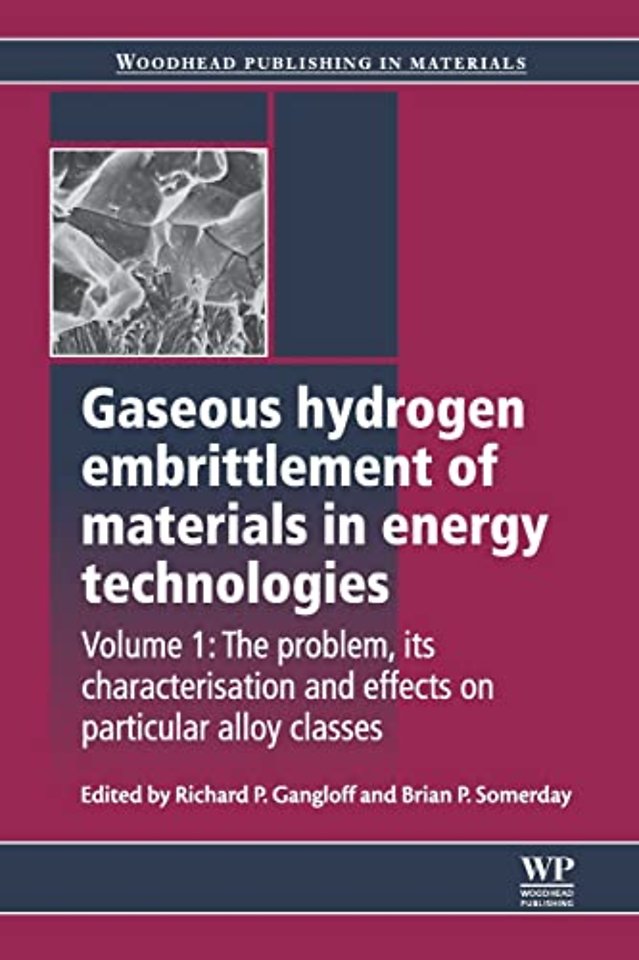
Gaseous Hydrogen Embrittlement of Materials in Energy Technologies

The Problem, its Characterisation and Effects on Particular Alloy Classes

Specificaties
Paperback, blz. | Engels
Elsevier Science | 2016
ISBN13: 9780081016237
Rubricering
Elsevier Science e druk, 2016 9780081016237
€ 319,00
Levertijd ongeveer 9 werkdagen
Gratis verzonden

Samenvatting

Many modern energy systems are reliant on the production, transportation, storage, and use of gaseous hydrogen. The safety, durability, performance and economic operation of these systems is challenged by operating-cycle dependent degradation by hydrogen of otherwise high performance materials. This important two-volume work provides a comprehensive and authoritative overview of the latest research into managing hydrogen embrittlement in energy technologies.

Volume 1 is divided into three parts, the first of which provides an overview of the hydrogen embrittlement problem in specific technologies including petrochemical refining, automotive hydrogen tanks, nuclear waste disposal and power systems, and H2 storage and distribution facilities. Part two then examines modern methods of characterization and analysis of hydrogen damage and part three focuses on the hydrogen degradation of various alloy classes

With its distinguished editors and international team of expert contributors, Volume 1 of Gaseous hydrogen embrittlement of materials in energy technologies is an invaluable reference tool for engineers, designers, materials scientists, and solid mechanicians working with safety-critical components fabricated from high performance materials required to operate in severe environments based on hydrogen. Impacted technologies include aerospace, petrochemical refining, gas transmission, power generation and transportation.

Specificaties

ISBN13:9780081016237
Taal:Engels
Bindwijze:Paperback

Inhoudsopgave

<p>Contributor contact details</p> <p>Introduction</p> <p>Part I: The hydrogen embrittlement problem</p> <p>Chapter 1: Hydrogen production and containment</p> <p>Abstract:</p> <p>1.1 Introduction</p> <p>1.2 American Society of Mechanical Engineers (ASME) stationary vessels in hydrogen service</p> <p>1.3 Department of Transportation (DOT) steel transport vessels</p> <p>1.4 Fracture mechanics method for steel hydrogen vessel design</p> <p>1.5 American Society of Mechanical Engineers (ASME) stationary composite vessels</p> <p>1.6 Composite transport vessels</p> <p>1.7 Hydrogen pipelines</p> <p>1.8 Gaseous hydrogen leakage</p> <p>1.9 Joint design and selection</p> <p>1.10 American Society of Mechanical Engineers (ASME) code leak and pressure testing</p> <p>Chapter 2: Hydrogen-induced disbonding and embrittlement of steels used in petrochemical refining</p> <p>Abstract:</p> <p>2.1 Introduction</p> <p>2.2 Petrochemical refining</p> <p>2.3 Problems during/after cooling of reactors</p> <p>2.4 Effect of hydrogen content on mechanical properties</p> <p>2.5 Conclusion</p> <p>Chapter 3: Assessing hydrogen embrittlement in automotive hydrogen tanks</p> <p>Abstract:</p> <p>3.1 Introduction</p> <p>3.2 Experimental details</p> <p>3.3 Results and discussion</p> <p>3.4 Conclusions and future trends</p> <p>Chapter 4: Gaseous hydrogen issues in nuclear waste disposal</p> <p>Abstract:</p> <p>4.1 Introduction</p> <p>4.2 Nature of nuclear wastes and their disposal environments</p> <p>4.3 Gaseous hydrogen issues in the disposal of high activity wastes</p> <p>Chapter 5: Hydrogen embrittlement in nuclear power systems</p> <p>Abstract:</p> <p>5.1 Introduction</p> <p>5.2 Experimental methods</p> <p>5.3 Environmental factors</p> <p>5.4 Metallurgical effects</p> <p>5.5 Conclusions</p> <p>5.6 Acknowledgements</p> <p>Chapter 6: Standards and codes to control hydrogen-induced cracking in pressure vessels and pipes for hydrogen gas storage and transport</p> <p>Abstract:</p> <p>6.1 Introduction</p> <p>6.2 Basic code selected for pressure vessels</p> <p>6.3 Code for piping and pipelines</p> <p>6.4 Additional code requirements for high pressure hydrogen applications</p> <p>6.5 Methods for calculating the design cyclic (fatigue) life</p> <p>6.6 Example of crack growth in a high pressure hydrogen environment</p> <p>6.7 Summary and conclusions</p> <p>Part II: Characterisation and analysis of hydrogen embrittlement</p> <p>Chapter 7: Fracture and fatigue test methods in hydrogen gas</p> <p>Abstract:</p> <p>7.1 Introduction</p> <p>7.2 General considerations for conducting tests in external hydrogen</p> <p>7.3 Test methods</p> <p>7.4 Conclusions</p> <p>7.5 Acknowledgements</p> <p>Chapter 8: Mechanics of modern test methods and quantitative-accelerated testing for hydrogen embrittlement</p> <p>Abstract:</p> <p>8.1 Introduction</p> <p>8.2 General aspects of hydrogen embrittlement (HE) testing</p> <p>8.3 Smooth specimens</p> <p>8.4 Pre-cracked specimens – the fracture mechanics (FM) approach to stress corrosion cracking (SCC)</p> <p>8.5 Limitations of the linear elastic fracture mechanics (FM) approach</p> <p>8.6 Future trends</p> <p>8.7 Conclusions</p> <p>Chapter 9: Metallographic and fractographic techniques for characterising and understanding hydrogen-assisted cracking of metals</p> <p>Abstract:</p> <p>9.1 Introduction</p> <p>9.2 Characterisation of microstructures and hydrogen distributions</p> <p>9.3 Crack paths with respect to microstructure</p> <p>9.4 Characterising fracture-surface appearance (and interpretation of features)</p> <p>9.5 Determining fracture-surface crystallography</p> <p>9.6 Characterising slip-distributions and strains around cracks</p> <p>9.7 Determining the effects of solute hydrogen on dislocation activity</p> <p>9.8 Determining the effects of adsorbed hydrogen on surfaces</p> <p>9.9 In situ transmission electron microscopy (TEM) observations of fracture in thin foils and other TEM studies</p> <p>9.10 ‘Critical’ experiments for determining mechanisms of hydrogen-assisted cracking (HAC</p> <p>9.11 Proposed mechanisms of hydrogen-assisted cracking (HAC)</p> <p>9.12 Conclusions</p> <p>9.13 Acknowledgements</p> <p>Chapter 10: Fatigue crack initiation and fatigue life of metals exposed to hydrogen</p> <p>Abstract:</p> <p>10.1 Introduction</p> <p>10.2 Effect of hydrogen on total-life fatigue testing and fatigue crack growth (FCG) threshold stress intensity range</p> <p>10.3 Mechanisms of fatigue crack initiation (FCI)</p> <p>10.4 Conclusions</p> <p>10.5 Future trends in total-life design of structural components</p> <p>Chapter 11: Effects of hydrogen on fatigue-crack propagation in steels</p> <p>Abstract:</p> <p>11.1 Introduction</p> <p>11.2 Materials and experimental methods</p> <p>11.3 Effect of hydrogen on the fatigue behavior of martensitic SCM435 Cr–Mo steel</p> <p>11.4 Effect of hydrogen on fatigue-crack growth behavior in austenitic stainless steels</p> <p>11.5 Effects of hydrogen on fatigue behavior in lower-strength bainitic/ferritic/martensitic steels</p> <p>11.6 Summary and conclusions</p> <p>11.7 Acknowledgement</p> <p>11.9 Appendix</p> <p>Part III: The hydrogen embrittlement of alloy classes</p> <p>Chapter 12: Hydrogen embrittlement of high strength steels</p> <p>Abstract:</p> <p>12.1 Introduction</p> <p>12.2 Microstructures of martensitic high strength steels</p> <p>12.3 Effects of hydrogen on crack growth</p> <p>12.4 Discussion of microstructural effects</p> <p>12.5 Conclusions</p> <p>Chapter 13: Hydrogen trapping phenomena in martensitic steels</p> <p>Abstract:</p> <p>13.1 Introduction</p> <p>13.2 Hydrogen in the normal lattice of pure iron</p> <p>13.3 Theoretical treatments for diffusion in a lattice containing trap sites</p> <p>13.4 Experimental and simulation techniques for measurement of trapping parameters</p> <p>13.5 Hydrogen trapping at lattice defects in martensitic steels</p> <p>13.6 Design of nano-sized alloy carbides as beneficial trap sites to enhance resistance to hydrogen embrittlement</p> <p>13.7 Conclusions</p> <p>Chapter 14: Hydrogen embrittlement of carbon steels and their welds</p> <p>Abstract:</p> <p>14.1 Introduction</p> <p>14.2 Hydrogen solubility and diffusivity in carbon steels</p> <p>14.3 Mechanical properties of carbon steels and their welds in high pressure hydrogen</p> <p>14.4 Important factors in hydrogen gas embrittlement</p> <p>14.5 Hydrogen embrittlement mechanisms in low strength carbon steels</p> <p>14.6 Future research needs</p> <p>14.7 Conclusions</p> <p>14.8 Sources of further information and advice</p> <p>Chapter 15: Hydrogen embrittlement of high strength, low alloy (HSLA) steels and their welds</p> <p>Abstract:</p> <p>15.1 Introduction</p> <p>15.2 The family of high strength, low alloy (HSLA) steels</p> <p>15.3 The welding of high strength, low alloy (HSLA) steels</p> <p>15.4 Mechanical effect of hydrogen on high strength, low alloy (HSLA) steels</p> <p>15.5 Conclusions</p> <p>Chapter 16: Hydrogen embrittlement of stainless steels and their welds</p> <p>Abstract:</p> <p>16.1 Introduction</p> <p>16.2 Fundamentals of austenitic stainless steels</p> <p>16.3 Hydrogen transport</p> <p>16.4 Environment test methods</p> <p>16.5 Models and mechanisms</p> <p>16.6 Observations of hydrogen-assisted fracture</p> <p>16.7 Trends in hydrogen-assisted fracture</p> <p>16.8 Conclusions and future trends</p> <p>16.9 Acknowledgments</p> <p>Chapter 17: Hydrogen embrittlement of nickel, cobalt and iron-based superalloys</p> <p>Abstract:</p> <p>17.1 Introduction</p> <p>17.2 Hydrogen transport properties in superalloys</p> <p>17.3 Hydrogen gas effects on mechanical properties of superalloys</p> <p>17.4 Important factors in hydrogen embrittlement</p> <p>17.5 Future trends</p> <p>17.6 Conclusions</p> <p>Chapter 18: Hydrogen effects in titanium alloys</p> <p>Abstract:</p> <p>18.1 Introduction</p> <p>18.2 Terminology, classification and properties of titanium alloys</p> <p>18.3 Hydrogen embrittlement behavior in different classes of titanium alloys</p> <p>18.4 Hydrogen trapping in titanium alloys</p> <p>18.5 Positive effects in titanium alloys</p> <p>18.6 Summary and conclusions</p> <p>Chapter 19: Hydrogen embrittlement of aluminum and aluminum-based alloys</p> <p>Abstract:</p> <p>19.1 Introduction: scope and objective</p> <p>19.2 Hydrogen interactions in Al alloy systems (experiment and modeling)</p> <p>19.3 Gaseous hydrogen and hydrogen environment embrittlement (HEE) in Al-based alloys</p> <p>19.4 Mechanisms of hydrogen-assisted cracking in Al-based systems</p> <p>19.5 Improvement of the hydrogen resistant Al-base alloys based on metallurgical, surface engineering or environmental chemistry modifications</p> <p>19.6 Needs, gaps and opportunities in Al-based systems</p> <p>19.7 Future trends</p> <p>19.8 Sources of further information and advice</p> <p>Chapter 20: Hydrogen-induced degradation of rubber seals</p> <p>Abstract:</p> <p>20.1 Introduction</p> <p>20.2 Example of cracking of a rubber O-ring used in a high pressure hydrogen storage vessel</p> <p>20.3 Effect of filler on blister damage to rubber sealing materials in high pressure hydrogen gas</p> <p>20.4 Influence of gaseous hydrogen on the degradation of a rubber sealing material</p> <p>20.5 Testing of the durability of a rubber O-ring by using a high pressure hydrogen durability tester</p> <p>20.6 Additional work required and future plans</p> <p>20.7 Conclusions</p> <p>20.8 Acknowledgement</p> <p>Index</p>
€ 319,00
Levertijd ongeveer 9 werkdagen
Gratis verzonden

Rubrieken

    Personen

      Trefwoorden

        Gaseous Hydrogen Embrittlement of Materials in Energy Technologies