Gilles Chiniara
Elsevier Science
e druk, 2019
9780128156575
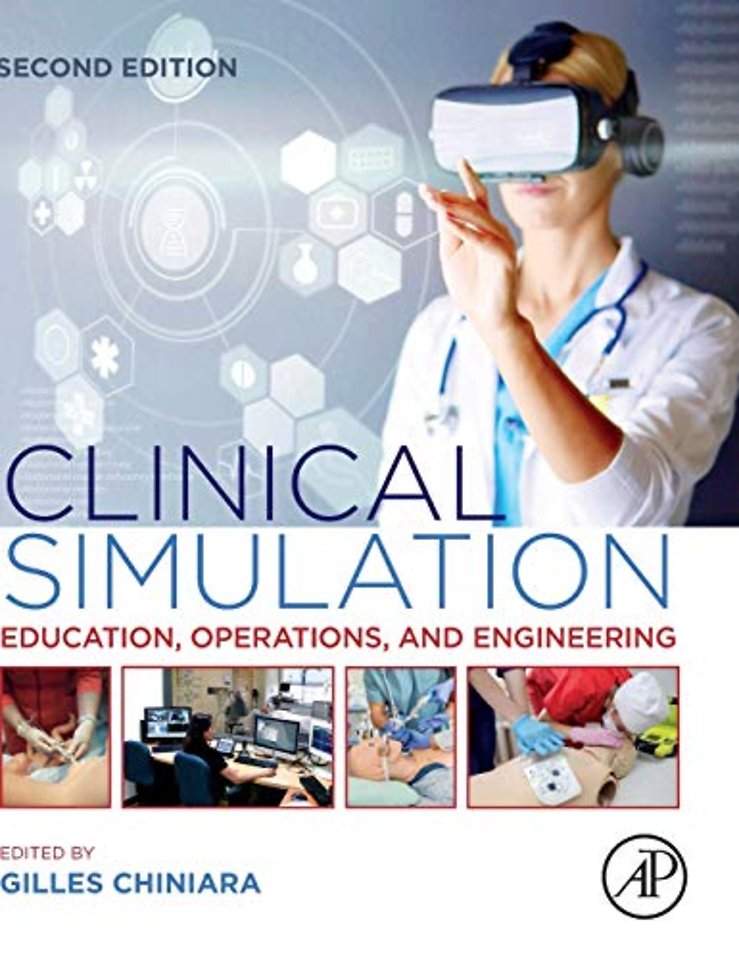
Clinical Simulation
Education, Operations and Engineering
Specificaties
Gebonden, blz.
|
Engels
Elsevier Science |
2019
ISBN13: 9780128156575
Rubricering
Levertijd ongeveer 9 werkdagen
Gratis verzonden
Samenvatting
Clinical Simulation: Education, Operations and Engineering, Second Edition, offers readers a restructured, comprehensive and updated approach to learn about simulation practices and techniques in a clinical setting. Featuring new and revised chapters from the industry’s top researchers and educators, this release gives readers the most updated data through modern pedagogy. This new edition has been restructured to highlight five major components of simulation education, including simulation scenarios as tools, student learning, faculty teaching, necessary subject matter, and the learning environment. With clear and efficient organization throughout the book, users will find this to be an ideal text for students and professionals alike.
Specificaties
Inhoudsopgave
<p>I. FOUNDATIONS IN CLINICAL SIMULATION<br>1. A Brief History of Clinical Simulation: How Did We Get Here?<br>2. The Many Faces of Simulation<br>3. Simulated and Standardized Patients<br>4. Virtual Patients and Serious Games<br>5. Physiologic Modeling for Simulators</p> <p>II FOUNDATIONS IN CLINICAL SIMULATION<br>6. Adapting Learning in a Simulated Environment<br>7. Adult Learning and Simulation-Based Education<br>8. Theory for Practice: Learning Theories for Simulation<br>9. Simulation-Based Education and the Challenge of Transfer<br>10. Using Cognitive Load Theory to Optimize Simulation Design<br>11. Motivational Dynamics in Simulation <br>12. Learning Through PlayTraining<br>13. Simulation as a Social Event: Stepping Back, Thinking About Fundamental Assumptions</p> <p>III BUILDING EFFECTIVE SIMULATION EXPERIENCES<br>14. Educational Foundations of Instructional Design Applied to Simulation-Based Education<br>15. Theory and Practice of Developing an Effective Simulation Curriculum<br>16. Creating Effective Learning Environments: The Educator’s Perspective<br>17. Assessing and Planning for Simulation Implementation: An Approach to Instructional Design to Meet Organizational Needs<br>18. When Simulation Should and Should Not Be in the Curriculum<br>19. Integrating Simulation to Existing Educational Programs<br>20. Planning and Assessing Clinical Simulation Using Task Analysis<br>21. Theoretical Underpinnings of Scenario Design<br>22. Key Issues in Scenario Design for Simulation<br>23. A Systematic Approach to Scenario Design<br>24. A Pragmatic Approach to Scenario Scripting</p> <p>IV THE GOALS AND OBJECTIVES OF LEARNING<br>25. Crisis Resource Management and Nontechnical Skills: From Individuals to Teams, From Danger to Safety<br>26. Simulation for Learning Clinical Reasoning<br>27. Simulation for Procedural Tasks<br>28. Simulation for Pediatrics and Neonatal Care<br>29. Simulation for Critical Care<br>30. Simulation for Obstetrics<br>31. Simulation for Pharmacy<br>32. Simulation for Workplace Adaptation and Organizational Change</p> <p>V IMPLEMENTING SIMULATION<br>33. Prebriefing and Briefing<br>34. Debriefing Frameworks and Methods<br>35. Debriefing for the Transfer of Learning: A Cognitive Approach<br>36. Realism and the Art of Simulation<br>37. Moving Beyond Fidelity<br>38. In Situ Simulation</p> <p>VI IMPLEMENTING SIMULATION<br>39. Simulation Facility Design 101: The Basics<br>40. Creation of Structure-Function Relationships in the Design of a Simulation Center<br>41. The One-Room Schoolhouse for Simulation<br>42. The One-Room Schoolhouse: A Practical Example<br>43. The Dedicated Clinical Simulation Suite<br>44. Simulation in Remote Areas<br>45. Simulation on a Low Budget<br>46. Funding for Simulation<br>47. Creative Procurement for Your Simulation Program<br>48. Evaluating and Choosing Patient Simulators and Equipment<br>49. Technological Infrastructure<br>50. Professional Stagecraft: Creating Simulated Clinical Environments<br>51. Governance and Administration of Simulation Programs: Providing the Structure and Strategic Foundation for Excellence<br>52. An Innovative Way to Think About a Simulation Center’s Core Administrative Functions: Comparing Managing a Simulation Facility to a Restaurant<br>53. Challenges in Simulation Implementation: A National Simulation Program in Germany</p> <p>VII IMPLEMENTING SIMULATION<br>54. Roles and Functions in a Simulation Center<br>55. Considerations on the Training of Simulation Educators<br>56. Train-the-Trainers: Creating Simulation Educators</p> <p>VIII ASSESSMENT<br>57. Simulation for Assessment<br>58. Simulation and High-Stakes Assessment<br>59. Evaluating Simulation Programs Throughout the Program Development Life Cycle<br>60. Accrediting Simulation Programs</p>