,

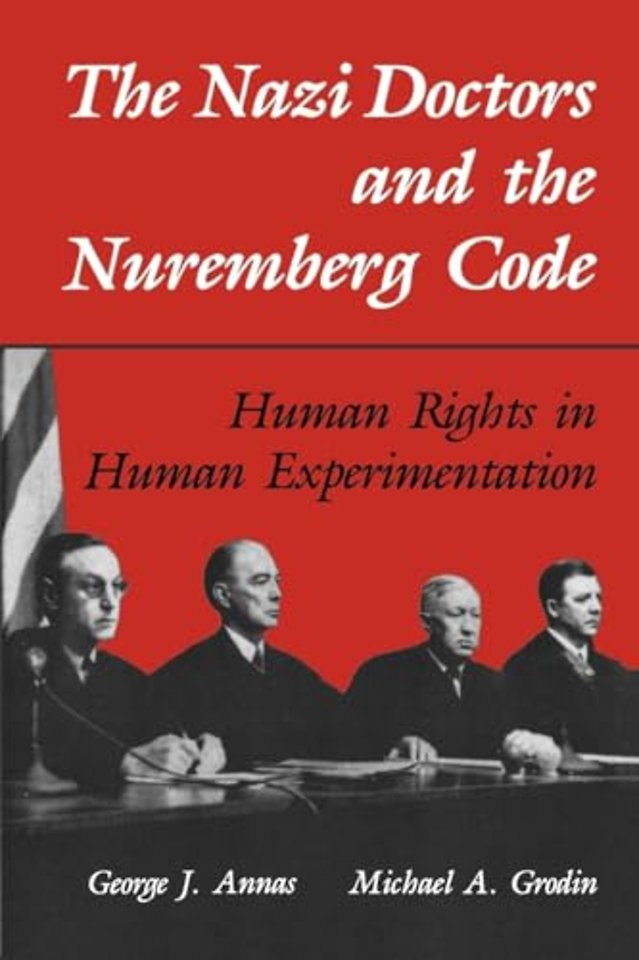
The Nazi Doctors and the Nuremberg Code

Human Rights in Human Experimentation

Specificaties
Paperback, 400 blz. | Engels
| 1995
ISBN13: 9780195101065
Rubricering
e druk, 1995 9780195101065
€ 59,71
Levertijd ongeveer 11 werkdagen
Gratis verzonden

Samenvatting

The Nazi atrocities committed by researchers and physicians during the Second World War prompted the development of the Nuremberg Code to guide the ethics of modern medical experimentation utilizing voluntary human subjects. Since its inception, the Code has been viewed as one of the cornerstones of modern bioethical thought. This book examines the nature, scope and proper place of the Nuremberg Code in medical research. The ramifications of this important document are thoroughly discussed by a distinguished group of contemporary professionals from the fields of both medicine and law.

The historical setting of the Code's creation, some modern parallels, and the current attitude of German physicians toward the crimes of the Nazi era, are discussed in early chapters. The book progresses to a powerful account of the Doctors' Trial at Nuremberg, its resulting verdict, and the Code's development. The Code's contemporary influence on both American and international law is examined in its historical context and discussed in terms of its universality: are the foundational ethics of the Code as valid today as when it was originally formed? The editors conclude with a chapter on foreseeable future developments.

Specificaties

ISBN13:9780195101065
Taal:Engels
Bindwijze:Paperback
Aantal pagina's:400

Inhoudsopgave

George J. Annas and Michael A. Grodin: Introduction and overview; PART I: THE NAZI DOCTORS AND THE MEDICAL EXPERIMENTS: Robert Proctor: Nazi doctors, racial medicine and human experimentation; Christian Pross: Nazi doctors, German medicine and the fight for historical truth; Eva Mozes-Kor: The Mengele twins and human experimentation: A personal account; PART II: THE DOCTOR'S TRIAL AND THE NUREMBERG CODE: Telford Taylor: Opening statement of the prosecution; Judgement and aftermath; Michael A. Grodin: Historical origins of the Nuremberg Code; PART III: THE ROLE OF CODES IN INTERNATIONAL AND U.S. LAW: Sharon Perley et al: The Nuremberg Code revisited: An international overview; Robert Drinan: The War Crimes trials: The Nuremberg principles as human rights protection in international law; Leonard H. Glantz: The influence of the Nuremberg Code on United States statutes and regulations; George J. Annas: The Nuremberg Code in the United States Courts: Ethics vs. expediency; PART IV: THE NUREMBERG CODE: ETHICS AND MODERN MEDICAL RESEARCH; Jay Datz: The consent principle of the Nuremberg Code: Its significance for then and now; Ruth Machlin: Universality of the Nuremberg Code: Are ethics relative to time and geography?; Arthur Caplan: No comparison: The doctor's trial and analogies to the holocaust in contemporary bioethics debates; Marcia Angell: Editorial responsibility: Protecting human rights by restricting publication of unethical research; Wendy K. Mariner: Contemporary therapeutic AIDS research and the legacy of the Nuremberg Code; Conclusion; George J. Annas and Michael A. Grodin: Where do we go from here?
€ 59,71
Levertijd ongeveer 11 werkdagen
Gratis verzonden

Rubrieken

    Personen

      Trefwoorden

        The Nazi Doctors and the Nuremberg Code