,

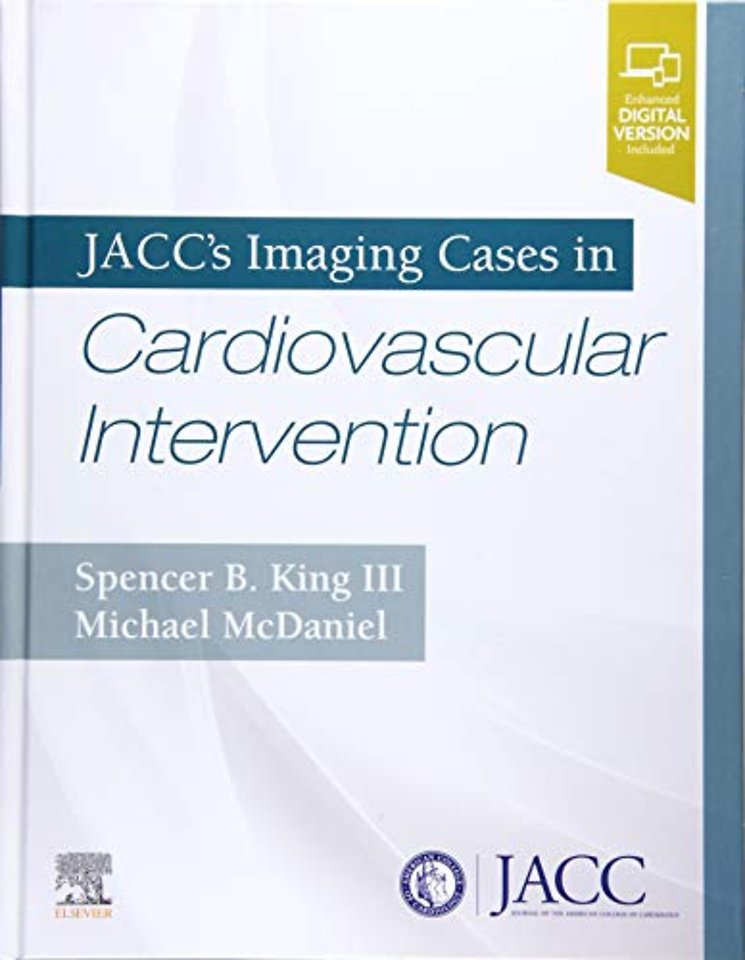
JACC's Imaging Cases in Cardiovascular Intervention

Specificaties
Gebonden, blz. | Engels
Elsevier Health Sciences | 2020
ISBN13: 9780323673716
Rubricering
Elsevier Health Sciences e druk, 2020 9780323673716
€ 185,99
Levertijd ongeveer 9 werkdagen
Gratis verzonden

Samenvatting

Here in one cohesive and educational volume are over 275 key cases from the Journal of the American College of Cardiology: Cardiovascular Intervention’s popular "Images in Intervention" column. Carefully selected and organized topically with added commentaries, this collection presents cases that are instructional, unusual, and multifaceted, ranging from the most common to very rare. The images and explanations, both in print and online, give a highly visual and informative understanding of some of the most complex interventional cases and their complications. Cases chosen by Dr. Spencer King, former editor of JACC: Cardiovascular Interventions and a leader in the field of interventional cardiology, along with colleague Dr. Michael McDaniel, covering a 10-year period in JACC: Cardiovascular Interventions.

Unique coverage spans the full range of cardiovascular interventions, including coronary anomalies, pathologic conditions and complications; structural heart disease conditions and solutions; and technical approaches to unusual clinical situations.

Each case includes one or more interventional images and a narrative explanation on best practice guidelines for insertion, placement, tips and pitfalls, and problem solving.

Cases are organized topically and indexed by diagnosis, symptoms, and complications for multiple ways of easily accessing content.

Videos offer real-time visualization of fourth dimension conditions for an improved understanding of complex and innovative approaches.

Images include high-quality angiographic, echocardiographic, optical tomographic, CT, MRI, histologic, and other images.

One-of-a-kind, highly instructive coverage of complex cases, originated by an international team of leading experts, ideally suited for interventional cardiologists, interventional radiologists, fellows, and all members of the cardiac cath lab team. Enhanced eBook version included with purchase. Your enhanced eBook allows you to access all of the text, figures, and references from the book on a variety of devices.

Specificaties

ISBN13:9780323673716
Taal:Engels
Bindwijze:Gebonden

Inhoudsopgave

<p>CHAPTER 1: CORONARY ANATOMY AND PATHOPHYSIOLOGY</p> <U> <p>Coronary Anomalies</p> </U> <p>1. A Rare Case of Anomalous Original Left Circumflex Artery Stenosis after Artificial Mitral Valve Replacement</p> <p>2. Anomalous origin of common left coronary artery from the right coronary sinus unusual anatomical variation</p> <p>3. Anomalous Acute Left Main Myocardial Infarction Due to Compression Between Pulmonary Artery and Aorta by Acute Pulmonary Thromboembolism</p> <p>4. Anomalous origin of left main coronary artery from innominate artery</p> <p>5. Anomalous Origin of the Left Internal Mammary Artery from the Aortic Arch</p> <p>6. Anomalous Origin of the 'Non-Culprit' Right Coronary Artery from The Left Anterior Descending Artery in A Patient with Anterolateral Stemi</p> <p>7. Concomitant anomalous right coronary artery and iatrogenic left circumflex artery entrapment, treated successfully with PCI</p> <p>8. Dual Anomalous Origins of the Thyrocervical Trunk and Left Internal Mammary Artery</p> <p>9. multimodality imaging of an anomalous connection of the right coronary artery with aortic intramural course</p> <p>10. Origin of right and left coronary arteries from the right sinus of Valsalva as a common coronary trunk</p> <p>11. Primary percutaneous Intervention in a Patient with Anterior and Inferior Wall Myocardial Infarction due to rare Coronary artery anomaly</p> <p>12. Right Aortic Arch with Left Sided Arteria Lusoria: A Challenge to Radial Interventionalist</p> <p>13. Right Coronary Artery with Anomalous Origin: The Role of Imaging Techniques</p> <U> <p>Coronary Aneurysms</p> </U> <p>14. A Giant Coronary Artery Aneurysm Treated with a New-Generation Drug Eluting Stent</p> <p>15. Acute myocardial infarction caused by left main coronary artery compression due to amycotic aneurysm of the sinus of Valsalva</p> <p>16. Formation of Infectious Coronary Artery Aneurysms After Percutaneous Coronary Intervention in a Patient with Acute Myocardial Infarction due to Septic Embolism</p> <p>17. Left Internal Mammary Artery Graft Decompression by Covered Stent Treatment of an Adjacent Saphenous Vein Graft Pseudoaneurysm</p> <p>   :</p> <p>18. Recurrent myocardial infarctions due to thrombosis of a coronary aneurysm in neurofibromatosis type: is antiplatelet treatment enough?</p> <p>19. Salmonella enteritidis mycotic aneurysm of stented saphenous vein graft to coronary artery</p> <p>20. Sinus of Valsalva Aneurysm Causing Extrinsic Compression of the Left Main Coronary Artery</p> <U> <p>Unusual Obstructions</p> </U> <p>21. A beating left main coronary artery</p> <p>22. A Freestyle Problem</p> <p>23. Acute coronary syndrome resulting from systolic compression of left main coronary artery secondary to aortic subvalvular aneurysm</p> <p>24. An Unusual Cause of STEMI</p> <p>25. Cancer in the LAD</p> <p>26. Chest Pain Post-Aortic Valve Surgery; Is it Serious?</p> <p>27. Five-year Follow-up after Stenting for Iatrogenic Coronary Stenosis due to Mitral Annuloplasty: Insights with Multiple Imaging Modalities</p> <p>28. Left anterior descending coronary artery occlusion during transcatheter pulmonary valve implantation: successful rescue percutaneous revascularization.</p> <p>29. Left Main Coronary Artery Compression by an Enlarged Pulmonary Artery</p> <p>30. Left Main Coronary Artery Occlusion Due to Thrombus Embolization from a Prosthetic Mitral Valve</p> <p>31. Left Main Coronary Embolization after Direct Current Cardioversion for Persistent Atrial Flutter in the Absence of Detectable Intracardiac Thrombi</p> <p>32. Percutaneous intervention of an acute left main coronary occlusion due to dissection of the aortic root</p> <p>33. Simultaneous Coronary and Pulmonary Angiography to Diagnose Critical Left Main Coronary Artery Stenosis Secondary to Dilated Pulmonary Artery</p> <p>34. Spontaneous Aortic Thrombosis Causing Left Main Coronary Occlusion in A Man with Secondary Polycythemia</p> <p>35. Intravascular Ultrasound-diagnosed Acute Aortic Dissection involving Left Main Closure</p> <p>36. Native Aortic Valve Thrombosis Leading to ST-Segment Elevation Myocardial Infarction</p> <U> <p>Coronary Spasm</p> </U> <p>37. Cocaine-induced Coronary Vasospasm Using OCT Imaging to Guide Management</p> <p>38. Grave's Disease Induced Coronary Vasospasm</p> <p>39. Severe generalized resistant spasm of Right coronary artery causing hemodynamic collapse after stenting</p> <p>40. Diffuse Coronary Spasm in a Patient with a Recent Stent</p> <U> <p>Spontaneous Dissection/Hematoma</p> </U> <p>41. 3D IV-OCT Rendering Assessment of Spontaneous Coronary Artery Dissection Concomitant with Left Main Ostial Critical Stenosis</p> <p>42. A Rare Case of Spontaneous Dissection in a Left Internal Mammary Artery Bypass Graft in Acute Coronary Syndrome</p> <p>43. Acute coronary syndrome with clear coronary artery: the case for concealed coronary hematoma</p> <p>44. Cocaine-induced coronary artery dissection</p> <p>45. Complete Healing of Spontaneous Coronary Artery Dissection Demonstrated by Optical Coherence Tomography in a Young Postpartum Female Presenting with Acute Coronary Syndrome</p> <p>46. Endovascular Imaging of Angiographically Invisible Spontaneous Coronary Artery Dissection</p> <p>47. Fibromuscular Dysplasia Presented with Spontaneous Dissection of the Left Main Artery</p> <p>48. Is this spontaneous coronary intramural hematoma or fibrotic plaque? An inconsistent finding between optical coherent tomography and intravascular ultrasound</p> <p>49. Multivessel spontaneous coronary artery dissection mimicking atherosclerosis</p> <p>50. Spontaneous coronary artery dissection: failure of the conservative strategy due to predominance of the false lumen</p> <U> <p>Coronary Pathology</p> </U> <p>51. Acute Inferior Myocardial Infarction Complicated by a Very Large Ventricular Septal Rupture and Cardiogenic Shock</p> <p>52. Plaque Erosion: In Vivo Diagnosis and Treatment Guided by Optical Coherence Tomography</p> <p>53. Recanalized Thrombus Treated with a Paclitaxel-Coated Balloon Insights from Optical Coherence Tomography</p> <p>54. Rescue Percutaneous Coronary Intervention Revealing Impending Left Ventricle Rupture</p> <p>55. Cardiovascular Interventions in the Modern Age: The Million Dollar Man</p> <p>56. Detection of Angioscopic Yellow Plaque by Intra-coronary Near-Infrared Spectroscopy</p> <p>57. Distinct Pattern of Constrictive Remodeling in Radiotherapy Induced Coronary Artery Disease</p> <p>58. Quantitative OCT tissue type imaging for lipid-core plaque detection</p> <p>599. Stiff Coronary Stenosis in a Young Female with Pseudoxanthoma Elasticum</p> <p>60. A honeycomb-like structure in the left anterior descending coronary artery: demonstration of recanalized thrombus by optical coherence tomography</p> <p>61. DVT of the Heart: A Novel Treatment for an Old Problem</p> <p>62. Thrombocytosis and Coronary Occlusion</p> <U> <p>Stent Pathology</p> </U> <p>63. In-stent Thin-cap Fibroatheroma After Drug-eluting Stent Implantation: Ex Vivo Evaluation of Optical Coherence Tomography and Intracoronary Angioscopy</p> <p>64. Biomechanical Assessment of Fully Bioresorbable Devices</p> <p>65. Coronary Artery Aneurysm after BVS-Everolimus Stent Implantation</p> <p>66. Extremely Late Catch-up Phenomenon after First-generation Sirolimus-eluting Stent in Left Main Stem: Insights from Optical Coherence Tomography</p> <p>67. Multiple Interstrut Cavities: A Potential Mechanism for Very Late Stent Thrombosis? Insights from Optical Coherence Tomography</p> <p>68. Newly onset coronary aneurism and late-acquired incomplete scaffold apposition after full polymer jacket of a chronic total occlusion with bioresorbable scaffolds</p> <p>69. OCT Findings in Very Late (4 Years) Paclitaxel-Eluting Stent Thrombosis</p> <p>70. Optical Coherence Tomography Images of a Coronary Artery Aneurysm in an Infarct Related Artery 6 Months Post Bare-Metal Stent Implantation</p> <p>71. Recurrent Neoatherosclerosis After Bioresorbable Vascular Scaffold Treatment of In-Stent Restenosis.</p> <p>CHAPTER 2: COMPLICATIONS OF CORONARY INTERVENTION </p> <U> <p>Stent Thrombosis</p></U> <p>72. Acute Stent Thrombosis: Technical Complication or Inadequate Antithrombotic Therapy? An Optical Coherence Tomography Study</p> <p>73. An unusual case of Stent in Stent thrombosis</p> <p>74. Delayed Healing of a Coronary Stent Graft</p> <p>75. Multivessel Honeycomb-Like Structure Finding in Optical Coherence Tomography</p> <p>76. Optical Coherence Tomography Assessment of Late Intra-Scaffold Dissection: A New Challenge of Bioresorbable Scaffolds</p> <p>77. Phantom Stent Thrombosis: Intracoronary Imaging Insights.</p> <p>78. Two Cases of Coronary Stent Thrombosis Very Late After Bare-Metal Stenting</p> <p>79. Very Late Stent Thrombosis 5 years After Implantation of a Sirolimus-eluting Stent Observed by Angioscopy and Optical Coherence Tomography</p> <p>80. Cross-Sectional and Longitudinal Positive remodeling after subintimal stent implantation: Multiple Late Coronary Aneurysms</p> <p>81. In-Stent Protrusion after implantation of a Drug Eluting Stent in a Honeycomb-like Coronary Artery Structure: Complete Resolution over 6 months and the Role of Optical Coherence Tomography Imaging in the Diagnosis and Follow-up</p> <U> <p>Coronary Dissections and Hematomas</p> </U> <p>82. Intramural Hematoma Appearing as a New Lesion Following Coronary Stenting </p> <p>83. Ruptured Neoatherosclerosis Presenting as a Large Intra-Stent Neontimal Dissection</p> <p>84. Acute Closure Due to Extra-medial Hematoma 3 Hours After Stenting</p> <p>85. Aortocoronary dissection with extension to the suprarenal abdominal aorta: a rare complication after percutaneous coronary intervention</p> <p>86. Catheter-Induced Stent Occlusion: Uncommon Complication during Diagnostic Angiography</p> <p>87. Extraordinary Subintimal Bleeding after Coronary Stenting</p> <p>88. Index and follow-up OCT imaging demonstrating resolution of post stent intramural hematoma managed conservatively</p> <p>89. In-stent Dissection Causes No Flow During Percutaneous Coronary Intervention</p> <p>90. Intimomedial Abrasion Complicating Coronary Thrombus Aspiration</p> <p>91. Rapid Growth of Giant Coronary Artery Aneurysm following Treatment of Stent Edge Dissection</p><U> <p>Coronary Perforations</p> </U> <p>92. Respect the Septal Perforator Septal Artery Perforation during CTO PCI Resulting in Massive Interventricular Septal Hematoma and Biventricular Cardiac Obstructive Shock</p> <p>93. Right Ventricular Free Wall Hematoma: Contemporary Multimodal Imaging</p> <p>94. Severe Intramyocardial Hematoma as a Complication of Retrograde Approach in Chronic Total Occlusion</p> <p>95. When collateral damage does matter - iatrogenic ventricular septal rupture after PCI of the LAD</p><U> <p>Complications of Diagnostic Catheterization</p> </U> <p>96. Intracoronary Bubbles: Iatrogenic Air Embolism Assessed with Optical Coherence Tomography</p> <p>97. Aortic regurgitation after cardiac catheterization</p> <U> <p>Equipment Dislodgement and Fracture</p> </U> <p>98. A Potential Procedural Complication Two Years After Percutaneous Coronary Intervention to Treat Left Anterior Descending Artery Lesions with the T-stenting and Small Protrusion Technique</p> <p>99. Accidental extraction of a stent implanted three years ago by a dislodged stent: a rare complication of PCI</p> <p>100. Frequency-Domain Optical Coherence Tomography Assessment of Stent Constriction 9-Month After Sirolimus-Eluting Stent Implantation in a Highly Calcified Plaque</p> <p>101. First Experience with Successful Percutaneous Retrieval of Retained Fractured Impella Device.</p> <p>102. Guidewire Self-extrusion after Entrapment of Distal Protection Device During Saphenous Vein Graft Angioplasty</p> <p>103. Identification of Fragmented Balloon Materials in Coronary Arteries by Optical Coherence Tomography (OCT)</p> <p>104. Impella 5.0 Fracture and Transcatheter Retrieval</p> <p>105. Late Complication: Xience V Stent Fractures with Restenosis Images in Intervention</p> <p>106. Simple solution for an undeflatable stent balloon in the left main stem</p> <p>107. Successful Retrieval of Entrapped Balloon with Optical Coherence Tomography Guidance</p> <p>108. Usefulness of Rotational Atherectomy Preventing Polymer Damage of Everolimus-Eluting Stent in Calcified Coronary Artery</p> <U> <p>Access Site Complications</p></U> <p>109. Aberrant right subclavian artery hematoma following radial catheterization</p> <p>110. Arteriovenous radial fistula: a rare and delayed complication from coronary angiography</p> <p>111. Digital Gangrene Following Trans-Radial Coronary Angiogram</p> <p>112. From Radial Artery to Embolus: A Rare Complication of Transradial Coronary Angiography</p> <p>113. Iatrogenic Subclavian artery pseudoaneurysm complicating a transradial percutaneous coronary intervention</p> <p>114. Recurrent Vasospastic Myocardial Infarctions and Hand Necrosis</p> <p>CHAPTER 3: CORONARY INTERVENTIONAL TECHNIQUES</p> <U> <p>Coronary Aneurysms</p> </U> <p>115. A giant coronary artery aneurysm treated using with multiple overlapping covered stents</p> <p>116. Endovascular coil embolization of Behet disease related giant aneurysm of the right coronary artery after failure of surgical suture</p> <p>117. Occlusion of a large expanding saphenous vein bypass graft aneurysm with percutaneously injected ethylene-vinyl alcohol copolymer (Onyx)</p> <p>118. Overlapping Stents Intervention Treatment of a Giant Right Coronary Artery Pseudoaneurysm</p> <p>119. Percutaneous Closure of a Saphenous Vein Graft Aneurysm Causing Left Internal Mammary Artery Compression and Left Ventricular Systolic Dysfunction</p> <p>120. Percutaneous Closure of Giant Saphenous Vein Graft Aneurysm</p> <p>121. Percutaneous Luminal Reconstruction of Giant Saphenous Vein Graft Aneurysm</p> <p>122. Reconstruction of right coronary artery with two giant aneurysms in series using three overlapped covered stents.</p> <U> <p>Coronary Fistulae</p></U> <p>123. Percutaneous coronary intervention for control of postoperative bleeding in patients with cardiac angiosarcoma</p> <p>124. Anterograde percutaneous coronary-cameral fistula closure employing a guide in guide technique</p> <p>125. Percutaneous closure of Left Main Coronary artery fistula using AVP II and ADO I</p> <p>126. Percutaneous Intervention to Large Left Anterior Descending Artery Fistula Post Right Ventricular Biopsy in a Transplant Recipient</p> <U> <p>Chronic Total Occlusions</p> </U> <p>127. Follow-Up Improvement of Distal Vessel Diameter After Successful Chronic Total Coronary Occlusion Recanalization</p> <p>128. Subintimal crush of an occluded stent to recanalize a chronic total occlusion due to in-stent restenosis: insights from a multimodality imaging approach</p> <U> <p>Intervention for Spontaneous Coronary Dissections</p> </U> <p>129. Successful Stenting with Optical Frequency Domain Imaging Guidance for Spontaneous Coronary Artery Dissection</p> <p>130. Successful Treatment of Spontaneous Coronary Artery Dissection with Cutting Balloon Angioplasty as Evaluated with Optical Coherence Tomography</p> <p>CHAPTER 4: STRUCTURAL HEART DISEASE: COMPLICATIONS AND TECHNIQUES</p> <U> <p>Aortic Valve</p></U> <p>131. Acute artery occlusion during transaortic valve implantation in a patient with an anomalous origin of the circunflex artery.</p> <p>132. Anterior Mitral Leaflet Perforation During Transcatheter Aortic Valve Replacement in a Patient with Mitral Annular Calcification</p> <p>133. Aortic Root Intussusception during Transcatheter Aortic Valve Replacement</p> <p>134. Conservative Management and resolution of a Contained Rupture of Aortic Annulus following Transcatheter valve replacement</p> <p>135. Coronary Ostia Stenosis Following Transcatheter Aortic Valve Implantation</p> <p>136. Cutaneopericardial Fistula After Transapical Approach for Transcatheter Aortic Valve Replacement</p> <p>137. Failed valve-in-valve TAVI</p> <p>138. Gluing of an Aortic Perforation During TAVI: An Alternative Treatment for Annular Rupture?</p> <p>139. Left Anterior Descending Coronary Artery Obstruction Associated with an Apical Suture after Transcatheter Aortic Valve Implantation</p> <p>140. Left- to- right interventricular shunt as a late complication of transapical aortic valve implantation</p> <p>141. Novel Percutaneous Apical Exclusion of a Left Ventricular Pseudoaneurysm After Complicated Transapical Transcatheter Aortic Valve Replacement</p> <p>142. Percutaneous Management of Mitral perforation during Transaortic Valve Replacement</p> <p>143. Percutaneous Treatment of Severe Aortic Insufficiency in a Patient with Left Ventricular Assist Device: Friend or Foe</p> <p>144. Perforation of Anterior Mitral Leaflet due to Mechanical Stimulation late after Transcatheter Aortic Valve Implantation</p> <p>145. Severe valve deformation following cardiopulmonary resuscitation in a patient with a transcatheter aortic valve</p> <p>146. STEMI After TAVR: Procedural Challenge and Catastrophic Outcome</p> <p>147. Stroke with Valve Tissue Embolization during Transcatheter Aortic Valve Replacement Treated with Endovascular Intervention</p> <p>148. Successful management of annulus rupture in transcatheter aortic valve implantation</p> <p>149. Valve migration into the left ventricular outflow tract managed by co-axial double-valve</p> <p>150. Vascular Injury Caused by Retrieval of Ruptured and Detached Balloon Valvuloplasty Catheter During Transcatheter Aortic Valve Implantation</p> <p>151. Very Late Thrombosis of a Transcatheter Aortic Valve-in-Valve</p> <p>152. Balloon 'Valvuloplasty' for Prosthetic Valve Dysfunction</p> <p>153. Bed-side bail-out aortic valvuloplasty</p> <p>154. First successful management of aortic valve insufficiency associated with HeartMate II LVAD support by transfemoral Corevalve implantation: The Columbus Egg?</p> <p>155. Hyperacute Valve Thrombosis after Transapical TAVI in a Patient with Polythemia Vera</p> <p>156. Left ventricular embolization of an aortic balloon-expandable bioprosthesis: balloon capture and reimpaction as an alternative to emergent conversion to open-heart surgery</p> <p>157. Transcatheter Treatment of Subaortic Stenosis via Transcaval Access</p> <p>158. Transfemoral Transcatheter Aortic Valve Implantation in the Presence of Mitral and Tricuspid Prostheses</p> <U> <p>Mitral Valve</p> </U> <p>159. Backwards Migration of MitraClip Through Patent Transeptal Orifice: The Salmon Syndrome</p> <p>160. Bioprosthetic Leaflet Erosion After Percutaneous Mitral Paravalvular Leak Closure</p> <p>161. Percutaneous Closure of a Delayed Left Ventricular Pseudoaneurysm after Transseptal Transcatheter Mitral Valve Replacement</p> <p>162. Percutaneous Transcatheter Closure for Aortic Puncture and Paravalvular Leak closure with the new Amplatzer III Device</p> <p>163. Bail-Out Alcohol Septal Ablation for Left Ventricular Outflow Tract Obstruction after Transcatheter Mitral Valve Replacement</p> <p>164. Clipping the Alfieri Stitch</p> <p>165. First-In-Human of Catheter Delivered Annuloplasty Ring to treat functional mitral regurgitation</p> <p>166. Leaflet-to-Annuloplasty Ring Clipping for Severe Mitral Regurgitation</p> <p>167. Low-dose and slow-infusion thrombolysis for prosthetic valve thrombosis after a transcatheter valve in the mitral position</p> <p>168. Needing A Helping Hand: Left Amplatz Catheter to Facilitate Anterior Leaflet Grasping in Mitraclip Procedure</p> <p>169. Novel Treatment of Residual Peri-MitraClip Regurgitation with an Amplatzer Vascular Plug II</p> <p>170. Re-do mitral valve clipping after partial clip detachment.</p> <p>171. Transjugular Balloon Mitral Valvotomy in a patient with Inferior Vena Caval Interruption</p> <p>172. Transeptal anchored vascular plug closure of mitral valve perforation</p> <U> <p>Aitra (LAA/ASD/PFO)</p></U> <p>173. Thromboembolic risk reduction via transseptal thrombus aspiration in a patient with spontaneous left atrial thrombus and stroke</p> <p>174. A marble in the heart</p> <p>175. A Novel Mechanism of Atrioventricular Block Following Transcatheter Closure of an Atrial Septal Defect </p> <p>176. A Double-Snare Technique for Safe Retrieval of Embolized Left Atrial Appendage Occluders</p> <p>177. Acute Heart Failure Caused by Dislocation of a Watchman Left Atrial Appendage Occluder</p> <p>178. Amplatzer Septal Occluder Sealed the Complicating Aortic Root Perforation During Transeptal Procedure</p> <p>179. Early anterior mitral valve leaflet mechanical erosion following left atrial appendage occluder implantation</p> <p>180. Embolization of left atrial appendage thrombus during transcatheter aortic valve replacement - a potential mechanism of periprocedural stroke</p> <p>181. Run with the Hare and Hunt with the Hounds: Watchman Device Surgical Resection in the Setting of Recurrent Device Related Thrombi in a Patient With Bleeding Diathesis</p> <p>182. A Novel Wire-Assisted Technique for Closing Large Atrial Septal Defects</p> <p>183. Integrated 3D Echo-X-Ray Navigation Guided Transcatheter Closure of Complex Multiple Atrial Septal Defects</p> <p>184. Transcatheter closure of the aorta to right atrial fistula caused by Erosion of Amplatzer septal occlude</p> <p>185. Transcatheter Left Atrial Appendage Closure after Incomplete Surgical Ligation</p> <p>186. Transseptal Puncture through Amplatzer Atrial Septal Occluder for Left Atrial Appendage Closure</p> <U> <p>Ventricles (LV/RV/VSD)</p></U> <p>187. A man with three lives: Long-term follow-up following percutaneous closure of left ventricular pseudoaneurysm neck</p> <p>188. Complete Percutaneous Obliteration of a Postinfarction Left Ventricle Inferior Wall Pseudoaneurysm</p> <p>189. Percutaneous Angioplasty of Stenotic Outflow Graft Anastomosis of HeartMate II</p> <p>190. Percutaneous Closure of Left Ventricular Pseudoaneursym with Septal Occluder Device and Coils: A Multimodality Imaging Approach</p> <p>191. Transseptal Closure of Left Ventricular Pseudoaneurysm post Transapical Transcatheter Aortic Valve Implantation</p> <p>192. Transcatheter closure of a post-myocardial infarction ventricular septal rupture using a Parachute device</p> <p>193. Transapical transcatheter closure of the pseudoaneurysm in the left ventricular outflow tract after aortic valve replacement</p> <p>194. Alcohol ablation of right ventricular outflow tract obstruction</p> <p>195. Percutaneous Closure of Right Ventricular Pseudoaneurysm</p> <p>196. Percutaneous Pulmonary Valve Implantation in a Native Outflow Tract 3D DynaCT Rotational Angiographic Reconstruction and 3D Printed Model</p> <p>197. Not Your Typical Hole-In-The-Wall: Percutaneous Closure of an Acquired Post-Myocardial Infarction Ventriculoatrial Gerbode Defect</p> <p>198. Utility of the Gore Septal Occluder in Transcatheter Closure of Post Myocardial Infarct Ventricular Septal Defect - Initial Experience</p> <U> <p>Tricuspid Valve</p> </U> <p>199. Sustained Reduction of Tricuspid Regurgitation After Percutaneous Repair with the MitraClip System in a Patient with a Dual Chamber Pacemaker</p> <p>200. TV Replacement: Transfemoral Valve-In-Ring Approach</p> <p>CHAPTER 5: VASCULAR, CONGENITAL, AND OTHER ANATOMY AND PATHOPHYSIOLOGY</p><U> </U> <p>201. Hemodynamic Findings of Effusive-Constrictive Pericarditis</p> <p>202. Hypoxemia Due to Patent Foramen Ovale in the Setting of New Right Hemidiaphragmatic Paralysis</p> <p>203. Aortoarteritis with chronic total occlusion of all neck vessels: Percutaneous Stenting to Salvage Intractable Syncope</p> <p>204. Intraluminal Fibrous Webs in Brachial Artery Fibromuscular Dysplasia</p> <p>205. A Rare Radial Artery Anatomic Variant: Look for the pulse on the dorsum of the wrist!</p> <p>206. Chronic Total Coronary Occlusion with Bronchocoronary Collateral Circulation Failed to Visualize by Conventional Angiography</p> <p>207. Corkscrew intravascular channels within chronic common carotid artery occlusions in Takayasu arteritis that disappear after angioplasty</p> <p>208. Extreme Brachial Loop</p> <p>209. Internal Thoracic Artery Dissection: A Proposed Mechanistic Explanation</p> <p>210. Occlusion of Balloon-Expandable Stent in the Common Iliac Artery Due to Compression by a Spinal Spur</p> <p>211. Radial artery graft string sign due to lumen obliteration by neointima: insight from optical coherence tomography</p> <p>212. Tension Pneumopericardium Secondary to Gastro-Pericardial Fistula Presenting as Acute Pericarditis with Cardiac Tamponade Physiology</p> <p>213. The Striking Interplay of Hiccup and Patent Foramen Ovale</p> <p>214. Spontaneous Giant Ascending Aortic Pseudoaneurysm in a Previously Healthy Man</p> <p>CHAPTER 6: VASCULAR, CONGENITAL, AND OTHER INTERVENTIONAL COMPLICATIONS</p> <p>215. A Dual Snare Percutaneous Retrieval of Venous Stent Embolization to the Right Heart. Sharma: Venous stent embolization</p> <p>216. A Unique Case of May-Thurner Syndrome: Extrinsic Compression of the Common Iliac Vein Following Iliac Artery Stenting</p> <p>217. Acute pseudoaneurysm following carotid artery stenting</p> <p>218. An Unusual Cause of Iatrogenic Hypertension</p> <p>219. Bail-out Technique for Pulmonary Artery Rupture with a Covered Stent in Balloon Pulmonary Angioplasty for Chronic Thromboembolic Pulmonary Hypertension</p> <p>220. Case of Percutaneous Extra-corporeal Femoro-femoral Bypass for Acute Limb Ischemia from Large Bore Access</p> <p>221. Crushed stent with acute occlusion in superficial femoral artery after enhanced external counter-pulsation</p> <p>222. Cutaneous Radiation Injury Following Complex Coronary Intervention</p> <p>223. Delayed Displacement of Aortic Coarctation Stent</p> <p>224. Delayed Left Main Coronary Artery Obstruction After Radiofrequency-Induced Coronary Dissection and Spasm: Insights from Optical Frequency-Domain Imaging and Intravascular Ultrasound Imaging</p> <p>225. Downstream Panniculitis Secondary to Drug-Eluting Balloon Angioplasty</p> <p>226. Left Ventricular Perforation During Ventriculogram Using an Optitorque Tiger Catheter</p> <p>227. Massive Left Pulmonary Artery Pseudoaneurysm in a Young Child</p> <p>228. Severe Renal Artery Stenosis after Renal Sympathetic Denervation</p> <p>229. Successful Coronary Angioplasty via the Radial Approach After Sealing a Radial Perforation</p> <p>230. Successful Percutaneous Device Closure of Right Ventricular Perforation During Pericardiocentesis</p> <p>231. Unravelling a Knot in the Heart: Tackling an Unanticipated Complication</p> <p>232. Thrombus in the aorta: Late complication after percutaneous closure of ruptured sinus of Valsalva aneurysm</p> <p>CHAPTER 7: VASCULAR, CONGENITAL, AND OTHER INTERVENTIONAL TECHNIQUES</p> <p>233. A Magic Port-A-Cath</p> <p>234. A New Tool to Manage Side-Branch Occlusion After Covered-stent Implantation for Vascular Complications: the Neocarina Reconstruction Technique</p> <p>235. Ascending aorta to main pulmonary artery fistula following orthotopic heart transplantation: Successful percutaneous closure employing an Amplatzer Duct Occluder</p> <p>236. Embolotherapy in giant pulmonary arteriovenous malformations: Blocking the exit reducing the risk of periinterventional stoke?</p> <p>237. Endovascular Repair of Ruptured Pseudoaneurysm of Left Internal Mammary Graft Following Redo-Aortic Valve Replacement and Coronary Artery Bypass Grafting</p> <p>238. Endovascular Stenting of Suture Line Supravalvular Pulmonic Stenosis Following Orthotopic Heart Transplant Utilizing Rapid Pacing Stabilization</p> <p>239. Extravasation from an Accessory Renal Artery: A Critical Complication Associated with Percutaneous Coronary Intervention</p> <p>240. Iatrogenic aortocoronary arteriovenous fistula: Percutaneous Management of a surgical complication.</p> <p>241. Percutaneous plugging of an ascending aortic pseudoaneurysm</p> <p>242. Inferior Vena Cava Filter Thrombosis and Suprarenal Caval Stenosis A Double Whammy</p> <p>243. Neurovascular Rescue for Thrombus-Related Embolic Stroke During Transcatheter Aortic Valve Implantation</p> <p>244. Percutaneous closure of a large ascending aorta pseudoaneurysm due to mediastinitis using an Amplatzer occluder device.</p> <p>245. Percutaneous Closure of a Pulmonary Arteriovenous Malformation in Young Patient with Cryptogenic Stroke</p> <p>246. Percutaneous palliation of right ventricular outflow tract obstruction caused by metastatic malignancy</p> <p>247. Percutaneous Recanalization of Occluded Brachiocephalic Vein-Superior Vena Cava Connection After Resection of Mediastinal Mass</p> <p>248. Percutaneous Transluminal Pulmonary Angioplasty for Central-type Chronic Thromboembolic Pulmonary Hypertension</p> <p>249. Percutaneous Treatment of Chronic Distal Aortic Occlusion: A Viable Option</p> <p>250. Short-cut under pressure: stenting the tortuous neonatal duct involves induced spasm</p> <p>251. Stenting for Juxta-renal Abdominal Aortic Occlusion</p> <p>252. Successful balloon mitral valvotomy in a case of inferior vena cava obstruction: Where there is will there is a way</p> <p>253. A New Method for Hemostasis of a Pseudoaneurysm Using Autologous Blood</p> <p>254. Protruding myocardium as a target for percutaneous transluminal septal myocardial ablation in a case of hypertrophic obstructive cardiomyopathy</p> <p>255. Angioseal TM Assisted Closure of Iatrogenic Refractory Femoral Arterial Pseudoaneurysm: A Novel Technique</p> <p>256. Endovascular Repair for Pulmonary Artery and Aortic Dissection Associated with Patent Ductus Arteriosus</p> <p>257. Mesenteric Ischemia Secondary to Paroxysmal Atrial Fibrillation: Percutaneous Recanalization of Superior Mesenteric Artery via Simultaneous Stenting and Inflated Jailed Balloon for Ileal Branch Protection</p> <p>258. Mini-Chimney Technique for Subclavian Artery Iatrogenic Bleeding</p> <p>259. Percutaneous Coronary Intervention for Treatment of Paraganglioma With Coronary Vascularisation</p> <p>260. Retrograde Approach in Balloon Pulmonary Angioplasty: Useful Novel Strategy for CTO Lesions in Pulmonary Arteries</p> <p>261. Ultrasound-Assisted Catheter-Directed Thrombolysis in Pulmonary Embolism In-Transit</p> <p>262. Vertebral Artery Rupture Treated by Transcatheter Arterial Embolization</p> <p>263. Aorta to Right Atrial Tunnel - Prenatal diagnosis and transcatheter management in a Neonate</p> <p>264. Closure of Ascending Aorta Pseudoaneurysm to Right Atrium Fistula</p> <p>265. Percutaneous closure of a fistula between left atrium and aortic root after surgery for infective endocarditis</p>
€ 185,99
Levertijd ongeveer 9 werkdagen
Gratis verzonden

Rubrieken

    Personen

      Trefwoorden

        JACC's Imaging Cases in Cardiovascular Intervention