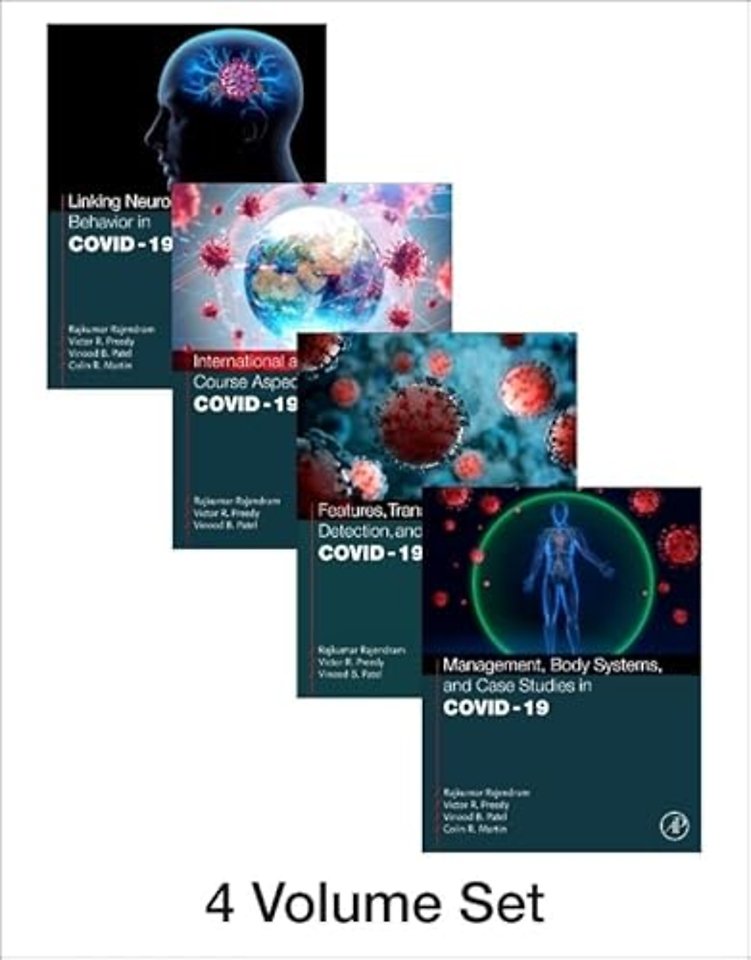
Features, Transmission, Detection, and Case Studies in COVID-19<br> <br>Preface<br><br>Section A: SARS-CoV-2 and COVID-19: Introductory chapters and setting the scene<br><br>1. Coronavirus disease 2019 (COVID-19) pandemic in context: Systemic effects<br><br>2. Early warning of SARS-CoV-2 infection<br><br>3. Mobile phones and their use to study dynamics of the COVID-19 pandemic<br><br>Section B: Structure, transmission and avoidance<br><br>4. Cis regulatory elements: A novel communication route between the host cell and the SARS-CoV-2 genome<br><br>5. SARS-CoV-2 ORF8: Structure, evolution, molecular function, and its contribution to the<br>pathogenicity of the virus<br><br>6. SARS-CoV-2 spike protein binding ligands and its application in COVID-19 therapeutics<br><br>7. SARS-CoV-2 bulldozes the autophagy pathway and unhinges mitochondrial quality control<br>thereby driving neurodegeneration—A hypothesis<br><br>8. The Omicron variant of SARS-CoV-2<br><br>9. Monitoring SARS-CoV-2 spread in hospitals<br><br>10. Computational analysis of mutations in SARS-CoV-2 variants spike protein and protein<br>interactions<br><br>11. Airborne transmission of SARS-CoV-2<br><br>12. Reducing transmission of SARS-CoV-2 with face masks: Its potential protective effects<br><br>13. Digital twin of ventilation system against COVID-19 transmission and infection risk<br><br>14. Pets and SARS-CoV-2: What is their role in the epidemiology of the disease?<br><br>15. SARS-CoV-2 transmission in dental practice<br><br>16. SARS-CoV-2 compared with influenza and respiratory syncytial virus in terms of vertical<br>transmission<br><br>17. Reducing droplets and aerosols in the surgical setting and applications to the COVID-19<br>pandemic<br><br>18. SARS-CoV motion dynamics: Linking in droplet size<br><br>19. Ventilation and airborne particles in classrooms: Implications for the COVID-19 pandemic<br><br>20. Indoor transmission of the SARS-CoV-2 virus through aerosols emitted by e-cigarettes<br><br>Section C: Impact and effects<br><br>21. The Impact of COVID-19 on first responders<br><br>22. COVID-19 and suspected drug-induced liver injury<br><br>23. Pulmonary fibrosis in COVID-19<br><br>24. The effect of SARS-CoV-2 infection on cancer: Clinical correlation and<br>potential pathological mechanism<br><br>25. Severe SARS-CoV-2, plateletendothelium interactions, and cardiovascular injury<br><br>26. Cardiometabolic syndrome and COVID-19: Pathophysiological aspects<br><br>27. COVID-19 and type 1 and 2 diabetes: An overview<br><br>28. COVID-19 and older adults: An overview<br><br>29. COVID-19 and male fertility<br><br>30. COVID-19 and obesity: An overview<br><br>Section D: Treatments, strategies, and vaccines<br><br>31. COVD-19 vaccines and their impact: An overview<br><br>32. Exploring the promise of COVID-19 vaccines: A review of preclinical studies<br><br>33. Drugs actively being investigated for use in COVID-19<br><br>34. The biology of neutralizing antibody therapy with REGEN-COV<br><br>35. The intensive care unit and percutaneous tracheostomy in patients with coronavirus disease<br>2019<br><br>36. Cardiac effects of drugs and vaccines used to treat and prevent COVID-19<br><br>37. COVID-19 pandemic and isolation: Impact on sleep<br><br>38. Strategies in the COVID-19 pandemic: Disinfection of gloved hands<br><br>39. In silico studies on established antivirals on SARS-CoV-2 RNAdependent RNA polymerase<br><br>40. The COVID-19 cytokine storm and its immunomodulatory treatment<br><br>41. Safety and efficacy of nebulization for reducing the intensity of viral load and clinical manifestations in patients with COVID-19<br><br>Section E: Detection and biomarkers<br><br>42. Bronchoalveolar lavage (BAL) and use in detection of SARS-CoV-2<br><br>43. SARS-CoV-2 testing and vaccination among people who use drugs<br><br>44. Homocysteine as a biomarker in COVID-19<br><br>45. Assessment of smell and taste in COVID-19<br><br>46. S-gene analysis: RT-PCR and Sanger sequencing applied to SARS-CoV-2 virus<br><br>47. False-negative results in screening for SARS-CoV-2<br><br>48. Sample pooling and SARS-CoV-2 assays<br><br>49. Biomarkers of invasive mechanical ventilation in obesity and metabolic syndrome in patients<br>with COVID-19<br><br>Section F: Case studies with mini review<br><br>50. Hypoxia and heart-lung interactions in COVID-19: The significance of right heart dysfunction and shunt<br><br>51. Ulnar nerve dysfunction as COVID-19 sequelae<br><br>52. Case study: Coronavirus disease 2019 and acute kidney injury<br><br>53. Case study: The detection and treatment of a pneumothorax in a patient with coronavirus disease 2019 pneumonia<br><br>54. Proposal and demonstration of a survey method for the prevention of airborne transmission: Case studies in healthcare and welfare facilities<br><br>Section G: Resources<br><br>55. Recommended resources for the features, transmission, and detection of coronavirus disease<br>2019 (COVID-19)<br> <br><br> <br>International and Life Course Aspects of COVID-19<br> <br>Preface<br><br>Section A: Introductory chapters and setting the scene<br><br>1. COVID-19 and mortality in children<br><br>2. Congenital and perinatal COVID-19: Diagnostic challenges, current management, and<br>outcomes<br><br>3. COVID-19 vaccine strategies<br><br>4. Social and community responses to public health and social measures for COVID-19: Community engagement for risk preparedness<br><br>Section B: International aspects<br><br>5. The COVID-19 pandemic in Italy: Ecological background and epidemiological dynamics<br><br>6 COVID-19 pandemic in Nigeria<br><br>7. A bird’s eye view of the COVID-19 pandemic in India: The past, present, and future<br><br>8. COVID-19 pandemic in Europe Małgorzata Gruchoła and Małgorzata<br><br>9. COVID-19 in Latin America and the Caribbean (LAC)<br><br>10. COVID-19 in Sudan: A multiperspective review<br><br>11. Asymptomatic infection by SARSCoV-2 at the beginning of the epidemic in Cuba: Evidence from<br>case series<br><br>12. Stress and anxiety due to COVID-19 in India<br><br>13. COVID-19 pandemic in Korea: A focus on medical management<br><br>14. Stigma experienced by healthcare workers during the COVID-19 pandemic: Global and Egyptian<br>perspectives<br><br>Section C: Reproduction, pregnancy and new-borns<br><br>15. The COVID-19 pandemic and breastfeeding<br><br>16. Impact of SARS-CoV-2 infection on female fertility<br><br>17. Fetal death due to maternal COVID-19<br><br>18. The COVID-19 pandemic and identification of SARS-CoV-2 in the prostate<br><br>19. COVID-19 in pregnant women: Clinical course, treatment, and maternal/fetal outcome of vaccination during pregnancy<br><br>20. Impact of the COVID-19 pandemic: SARS-CoV-2-specific IgG antibodies and their vertical<br>transfer<br><br>21. COVID-19 vaccination during lactation<br><br>22. Being pregnant during the COVID-19 pandemic: Impact of the trimester of gestation and measures of maternal mental health<br><br>23. COVID-19 related maternal mortality and SARS-CoV-2 variants<br><br>24. COVID-19-associated complications in pregnant women and neonates<br><br>25. SARS-CoV-2 and its impact on the developing fetal neurologic system<br><br>26. Impact of maternal SARS-CoV-2 infection in the placenta<br><br>Section D: Children and adolescents<br><br>27. T cells and their subsets in children with COVID-19<br><br>28. Pediatric inflammatory multisystem syndrome and SARS-CoV-2<br><br>29. Impact of COVID-19 pandemic on nutritional status of children<br><br>30. COVID-19 in children: Nutrition care<br><br>31. Eating disorders in children during the COVID-19 pandemic<br><br>32. Body composition in children with SARS-CoV-2 infection: Short and long term consequences<br><br>33. Risk of SARS-CoV-2 infection and childhood obesity<br><br>34. The impact of the COVID-19 pandemic during the lockdown and the post-COVID-19 effects on<br>the family system of children with disabilities<br><br>35. The impact of the COVID-19 pandemic on ordinary vaccination programs for very young children: BCG, MMR, poliomyelitis, and beyond<br><br>36. Immune responses to SARS-CoV-2 infection and vaccination in children<br><br>37. The impact of the COVID-19 pandemic: How physical fitness changes in children<br><br>38. The COVID-19 pandemic and children: Impact on physical activity<br><br>39. The COVID-19 pandemic and stress related to schooling<br><br>40. Suicidal thoughts and behaviors among adolescents during the COVID-19 pandemic<br><br>41. The COVID-19 pandemic: Attending to hand hygiene measures in young people<br>(a review of different studies)<br><br>42. Child and adolescent COVID-19 vaccination: Trends, hesitancy, and strategies for increasing vaccination<br><br>43. Social distancing behavior and mental health in US adolescents during the COVID-19 pandemic<br><br>44. Thrombotic complications in children and adolescents with SARS-CoV-2 infection<br><br>45. Features of SARS-CoV-2 infection and vaccination in children: A focus on magnetic resonance imaging of the heart<br><br>46. SARS-CoV-2 infection and the cytokine levels and pathway in children: An updated narrative<br><br>Section E: Older adults<br><br>47. Risk factors related to COVID-19 among older adults<br><br>48. Reducing loneliness and social isolation among the elderly during the COVID-19 pandemic<br><br>49. Features and measures of depression in the elderly and the impact of the COVID-19<br>pandemic: Linking in preexisting mental health<br><br>50. Experiences of disabled older adults in adult day care centers during the COVID-19 pandemic<br><br>51. Using single-cell analysis to investigate disease severity in elderly patients with COVID-19<br><br>52. COVID-19 and older adult food practices: A social determinants of health perspective<br><br>53. Older subjects and immunogenicity of mRNA COVID-19 vaccines<br><br>54. Noninvasive respiratory support in octogenarian patients with COVID-19<br><br>Section F: Case studies with mini review<br><br>55. Case study: COVID-19 severity in diabetic patients with and without seizure<br><br>56. Case study: Nonpharmaceutical interventions for COVID-19 and their social impact in Japan<br><br>57. Case study: Factors affecting vaccine uptake—Australian perspectives<br><br>58. The impact of the COVID-19 pandemic on an older disabled person<br><br>59. COVID-19 in the newborn: Clinical course and effects of maternal vaccination in pregnancy<br><br>Section G: Resources<br><br>60. Recommended resources for the international and life course aspects of coronavirus disease 2019 (COVID-19)<br> <br> <br><br> <br>Linking Neuroscience and Behavior in COVID-19<br> <br>Preface<br><br>Section A: Introductory chapters and setting the scene<br><br>1. The historical aspects of the SARS-CoV-2 virus and the ensuing pandemic<br><br>2. Different variants of SARS-CoV-2<br><br>3. Lateral flow assay for SARS-CoV-2 infection: Uses and limitations<br><br>4. Linking community participation, mobility disabilities, and the COVID-19 pandemic<br><br>5. Influence of the sources used to obtain information on COVID-19 and their impact on mental health<br><br>Section B: Impact on behavior and psychology<br><br>6. The psychological experiences and distress of defined populations in the COVID-19 pandemic: Doctors<br><br>7. Impact of COVID-19 on behavior in autism spectrum disorder<br><br>8. Prepandemic stressors in mental health responses to the COVID-19 pandemic: Early life adversities and beyond<br><br>9. Compulsive hoarding in the COVID-19 pandemic<br><br>10. The psychological experiences and distress in Japan and Sweden during the COVID-19 pandemic<br><br>11. The COVID-19 pandemic, mental health, and sleep: Linking depression, anxiety, and perceived<br>stress<br><br>12. The Covid-19 pandemic and the occupational overload of health professionals: Indicators of<br>burnout<br><br>13. Neurocognitive sequelae of SARS-CoV-2 infection: Pathogenesis, risk factors, assessment, and implications<br><br>14. Acute neurocognitive disorder as a presenting manifestation of COVID-19<br><br>15. Mental health and the impact of confinement<br><br>16. Cannabis use in the COVID-19 pandemic: Changes in different populations and implications<br>for policy<br><br>17. Impact of COVID-19 on mental health in women: Socioeconomic groups and global aspects<br><br>18. Quality of life assessment of patients after COVID-19<br><br>19. COVID-19 pandemic and remote working: Toward a new way of working<br><br>20. Long COVID and its persistence: A focus on mental health<br><br>21. The impact of the COVID-19 pandemic on behavioral and psychological features of vulnerable groups: Patients with multiple sclerosis and their quality of life<br><br>Section C: Effects on neurological structures and mechanisms<br><br>23. Linking pediatric COVID-19 with basal ganglia and dentate nucleus<br><br>24. Sensory disorders, neuroinflammation, and COVID-19<br><br>25. The effects of COVID-19 isolations on nonmotor features of Parkinson’s disease<br><br>26. Myelitis following COVID-19: The road so far<br><br>27. The corpus callosum: Effects due to SARS-CoV-2 infection and the mRNA vaccine<br><br>28. Assessing the impact of prenatal SARS-CoV-2 exposure on infants’ neurodevelopment: A comprehensive analysis of current evidence<br><br>29. Electroencephalographic features with COVID-19<br><br>30. Survivors of COVID-19 and clinical neuropsychological domain characteristics<br><br>31. Neuroinflammation following SARS-CoV-2 infection<br><br>32. Functional magnetic resonance imaging and depressive symptoms in subjects with COVID-19<br><br>33. Impact of COVID-19 on the brain: Antibodies against brain stem antigens<br><br>34. The kynurenine pathway and role in mental health of post-COVID-19 patients<br><br>Section D: Management, support and treatments<br><br>35. Management of brain tumors in the COVID-19 pandemic<br><br>36. The impact of the COVID-19 pandemic on ischemic stroke management: From hyperacute to chronic phase<br><br>37. Long COVID and the potential use of palmitoylethanolamide<br><br>38. Cognitive assessments in post-COVID syndrome: A focus on the neuropsychological tests and<br>protocols<br><br>39. Supporting individuals with intellectual and developmental disabilities during the COVID-19<br>pandemic<br><br>40. Preserving well-being and quality of life through school-based interventions focused on physical<br>activity during the COVID-19 pandemic<br><br>41. Hesitancy in using COVID 19 prevention behaviors among African Americans: Strategies to<br>build confidence<br><br>42. New strategies for psychological well-being at work<br><br>43. Mitigating mental health changes with virtual reality technology during Covid-19: A narrative<br><br>44. Music therapy for patients with neurological disorders during COVID-19 pandemic<br><br>45. Mental health and the modulating effects of receiving the COVID-19 vaccination<br><br>46. Personalized cognitive behavioral therapy on patients with obesity in COVID-19 pandemic<br><br>47. Social anxiety disorder and Covid 19: Treatment with cognitive behavioral therapy<br><br>48. Burnout during the COVID-19 pandemic: Modulating role of mindfulness<br><br>Section E: Case studies with mini review<br><br>49. Case study: Evaluation of a long Covid assessment service (LCAS)<br><br>50. Case study: Navigating youth mental health and addictions care in the context of the COVID-19 pandemic<br><br>51. Case study: Restless leg syndrome associated with COVID-19<br><br>Section F: Resources<br><br>52. Recommended resources for linking neuroscience and behavior in coronavirus disease<br>(COVID-19)<br> <br> <br><br> <br>Management, Body Systems, and Case Studies in COVID-19<br> <br>Preface<br><br>Section A: Introductory chapters and setting the scene<br><br>1. Hand hygiene strategies<br><br>2. Approved vaccines for the COVID-19 pandemic: Linking in future perspectives<br><br>3. Molecular methods for SARS-CoV-2 variant detection<br><br>Section B: Management<br><br>4. Systematic patient assessment for acute respiratory tract ailments (SPARTA): A simple tool to improve outcomes from COVID-19<br><br>5. Point of care ultrasound for coronavirus disease 2019: The multiorgan approach to COVID-19<br><br>6. COVID-19 in patients with inflammatory bowel diseases: Features and guidelines<br><br>7. Management of COVID-19 and clinical nutrition<br><br>8. The management of head and neck cancer in COVID-19<br><br>9. The COVID-19 pandemic: Inventory management and allocation of personal protective<br>equipment<br><br>10. Clinical management in the COVID-19 pandemic: Rheumatic disease<br><br>11. Managing migraines during the COVID-19 pandemic: An Italian experience<br><br>12. Managing acute ischemic stroke in the SARS-CoV-2 pandemic<br><br>13. Impact of the coronavirus disease 2019 pandemic on patients with hypertension<br><br>14. Neurosurgical trauma management during COVID-19 restrictions<br><br>15. The COVID-19 pandemic and management of weight gain: Implications for obesity<br><br>16. COVID-19 and the management of heart failure using telemedicine<br><br>Section C: Guidelines for different treatment clinics<br><br>17. Guidelines for breast imaging in the COVID-19 pandemic<br><br>18. Vaccine-induced (immune) thrombotic thrombocytopenia (VITT): Diagnosis, guidelines,<br>and reporting<br><br>19. Lung cancer in the era of COVID-19<br><br>20. Multisystem inflammatory syndrome in children/pediatric inflammatory multisystem<br>syndrome: Clinical guidelines<br><br>Section D: Impact on the respiratory system<br><br>21. Ground-glass nodules in the lungs of COVID-19 patients<br><br>22. Cardiothoracic imaging in patients affected by COVID-19<br><br>23. Cystic fibrosis and bronchial epithelial cells in SARS-CoV-2 infection<br><br>24. Biomechanics and mechanobiology of the lung parenchyma following SARS-CoV-2 infection<br><br>25. Long noncoding RNA profiling in respiratory specimens from COVID-19 patients<br><br>26. COVID-19 and acute pulmonary embolism<br><br>27. The usefulness of the alveolar-arteriolar gradient during the COVID-19 pandemic<br><br>Section E: Effects on cardiovascular and hematological systems<br><br>28. Cardiac manifestations of COVID-19: An overview<br><br>29. Limb ischemia and COVID-19<br><br>30. Thrombosis and coagulopathy in COVID-19: A new narrative<br><br>31. COVID-19 myocarditis: Features of echocardiography<br><br>32. COVID-19 lockdown and impact on arrhythmias<br><br>33. Cardiometabolic disease and COVID-19: A new narrative<br><br>34. Postrecovery COVID-19 and interlinking diabetes and cardiovascular events<br><br>35. COVID-19 patients and extracorporeal membrane oxygenation<br><br>36. Sars-CoV-2 infection in different hematological patients<br><br>Section F: Effects on body systems<br><br>37. Dermatological reactions associated with personal protective equipment use during<br>the COVID-19 pandemic<br><br>38. Hemodialysis patients, effects of infections by SARS-CoV-2 and vaccine response<br><br>39. Coinfections with COVID-19: A focus on tuberculosis (TB)<br><br>40. Patients with autoimmune liver disease and the impact of Sars-COV-2 infection<br><br>41. COVID-19 severity and nonalcoholic fatty liver disease<br><br>42. Changes in obesity and diabetes severity during the COVID-19 pandemic at Virginia<br>Commonwealth University health system<br><br>43. The diabetic patient and concomitant conditions rhinoorbital-cerebral mucormycosis<br>and COVID-19<br><br>44. Tissue location of SARS-CoV-2 RNA: A focus on bone and implications for skeletal health<br><br>45. Linking between gastrointestinal tract effects of COVID-19 and tryptophan metabolism<br><br>46. Organ damage in SARS-CoV-2 infection in children: A focus on acute kidney injury<br><br>47. Obesity, COVID-19 severity, and mortality<br><br>48. Upper and lower gastrointestinal symptoms and manifestations of COVID-19<br><br>49. The COVID-19 survivors: Impact on skeletal muscle strength<br><br>Section G: Case studies with mini review<br><br>50. A case report: COVID-19 meningoencephalitis and intracranial hemorrhage<br><br>51. Case study: Oral mucosal lesions in patients with COVID-19<br><br>52. Case study: COVID-19 pneumonia presented with cavitary lesions<br><br>53. Case study: Optic neuritis in SARS-CoV-2 infection<br><br>Section H: Resources<br><br>54. Recommended resources relevant to the body systems involvement<br>and management of COVID-19