,

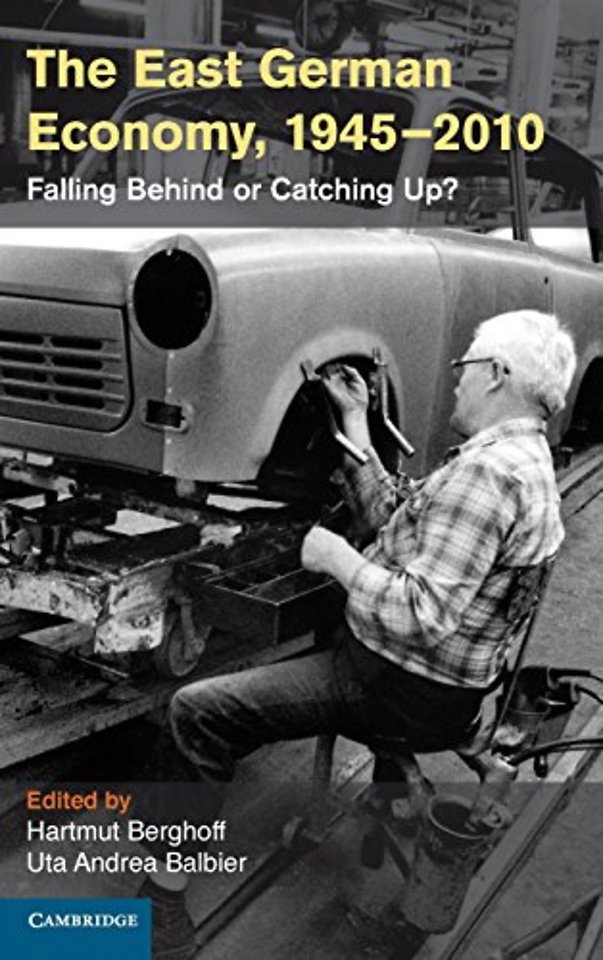
The East German Economy, 1945–2010

Falling Behind or Catching Up?

Specificaties
Gebonden, 260 blz. | Engels
Cambridge University Press | 2013
ISBN13: 9781107030138
Rubricering
Cambridge University Press e druk, 2013 9781107030138
Onderdeel van serie Publications of the
€ 103,34
Levertijd ongeveer 9 werkdagen
Gratis verzonden

Samenvatting

By many measures, the German Democratic Republic (GDR) had the strongest economy in the Eastern bloc and was one of the most important industrial nations worldwide. Nonetheless, the economic history of the GDR has been primarily discussed as a failure when compared with the economic success of the Federal Republic and is often cited as one of the pre-eminent examples of central planning's deficiencies. This volume analyzes both the successes and failures of the East German economy. The contributors consider the economic history of East Germany within its broader political, cultural and social contexts. Rather than limit their perspective to the period of the GDR's existence, the essays additionally consider the decades before 1945 and the post-1990 era. Contributors also trace the present and future of the East German economy and suggest possible outcomes.

Specificaties

ISBN13:9781107030138
Taal:Engels
Bindwijze:Gebonden
Aantal pagina's:260

Inhoudsopgave

Part I. Introduction: 1. From centrally planned economy to capitalist avant-garde? The creation, collapse, and transformation of a socialist economy Harmut Berghoff and Uta Balbier; 2. From the Soviet occupation zone to the new Eastern states: a survey André Steiner; Part II. Beginnings, Crises, and Reforms: The Planned Economy, 1945–71: 3. Winner takes all: the Soviet Union and the beginnings of central planning in Eastern Germany, 1945–9 Burghard Ciesla; 4. National socialist autarky projects and postwar industrial landscape Rainer Kalsch; 5. Innovation and ideology: Werner Hartmann and the failure of the East German electronics industry Dolores L. Augustine; 6. East German workers and the dark side of Eigensinn: divisive shop-floor practices and the failed revolution of June 17, 1953: the political and economic effects of shop-floor practices, 1945 Andrew I. Port; Part III. Living Beyond One's Means: The Long Decline, 1971–89: 7. From schadenfreude to going-out-of-business sale: East Germany and the oil crises of the 1970s Ray Stokes; 8. Innovation in a centrally planned economy: the case of the Filmfabrik Wolfen Silke Fengler; 9. Debt, cooperation, and collapse: East German foreign trade in the Hoenecker years Ralf Ahrens; 10. Ulbricht's and Hoenecker's Volksstaat? The common economic history of militarized regimes Jeffrey Kopstein; Part IV. Transformation, Subvention, and Renewal, 1989–2010: 11. The East German economy in the twenty-first century Michael C. Burda; 12. The social policy of unification and its consequences for the transformation of the economy in the new Eastern states Gerhard A. Ritter; 13. German economic unification: a view through the lens of the postwar recovery Holger C. Wolf.
€ 103,34
Levertijd ongeveer 9 werkdagen
Gratis verzonden

Rubrieken

    Personen

      Trefwoorden

        The East German Economy, 1945–2010