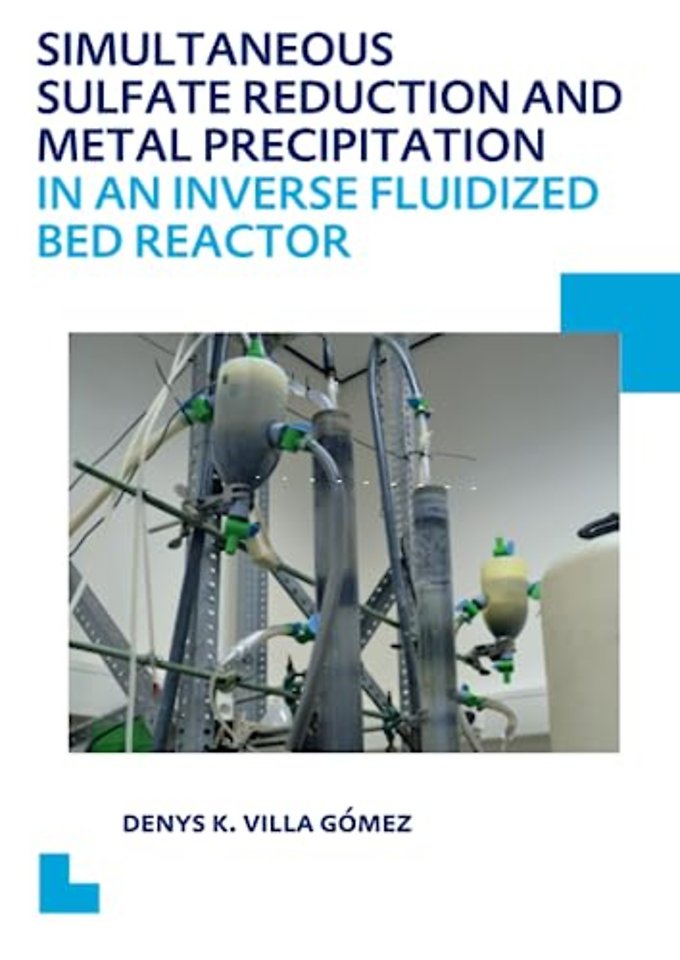
Simultaneous Sulfate Reduction and Metal Precipitation in an Inverse Fluidized Bed Reactor
UNESCO-IHE PhD Thesis
Samenvatting
Industrial activities like textile processing and mining are typical sources of heavy metal-rich wastewaters. The sulfate reducing process has become an attractive method for the production of sulfide to precipitate metals since most of these streams also contain sulfate, which is the electron acceptor and, in less common cases, chemical oxygen demand which is the electron donor of sulfate reducing bacteria. The inverse fluidized bed (IFB) reactor is a system for the production of biogenic sulfide and metal precipitation in the same unit due to its configuration: the biomass floats on top of the reactor, whereas metal sulfide precipitates settle and thus can be recovered at the bottom.
The main objective of this thesis was to elucidate the factors affecting simultaneous sulfate reduction and precipitation of heavy metals in an IFB reactor in order to optimize the metal recovery from wastewaters such as acid mine drainage. Therefore, this thesis focused on varying different operational conditions to study their effect on the solid-liquid separation and purity of the metal sulfide precipitates as well as on their effect on the sulfate reducing process. Furthermore, one chapter was focused on the study of strategies for sulfide control in the IFB reactor. In addition, recommendations for further research to improve the recovery of the metal sulfides in bioreactors are given.