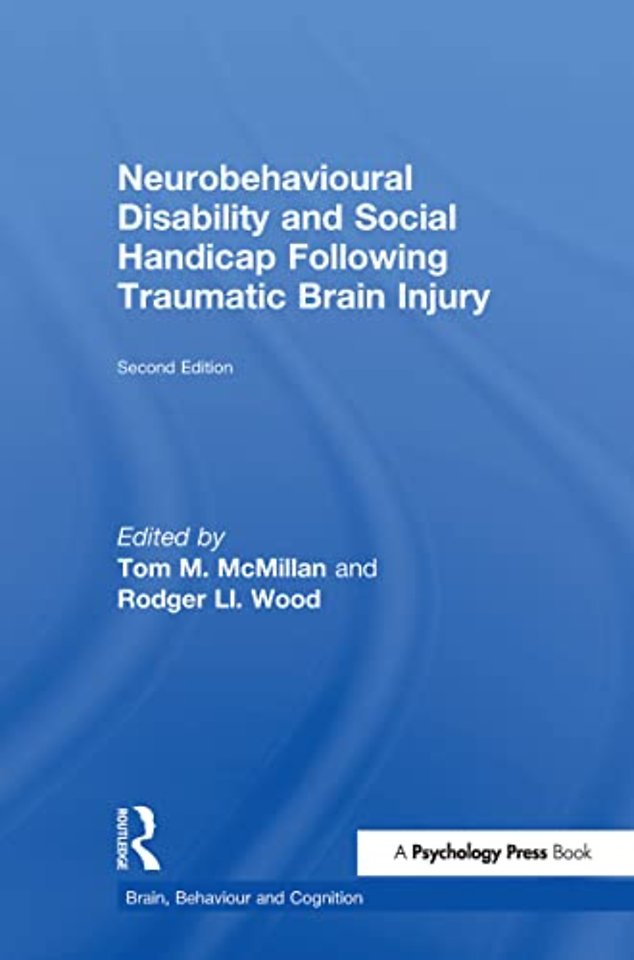
Neurobehavioural Disability and Social Handicap Following Traumatic Brain Injury
Second edition
Samenvatting
Neurobehavioural disability (NBD) follows many forms of serious brain injury and is a major constraint on social independence. This book brings together a group of leading academics and practising clinicians to provide an overview of the nature of NBD, considering how it translates into social handicap, and what can be done to address associated problems, through social and behavioural rehabilitation, vocational training and family education.
This fully revised edition takes into account advances in the field, exploring the range of cognitive, emotional, and behavioural effects of brain damage most commonly associated with damage to the frontal and associated structures of the brain that govern social behaviour. This edition also features increased emphasis on psychological interventions, as well as new chapters on brain imaging, pharmacotherapy and assistive technology for disability.
Neurobehavioural Disability and Social Handicap Following Traumatic Brain Injury is essential reading for clinical psychologists, psychiatrists and neurologists working in brain injury rehabilitation. The book will also be of interest to relatives of those with brain injury seeking better knowledge to understand neurobehavioural disability, as well as the growing number of therapy care assistants, case managers, support workers, and social workers responsible for the day to day care of brain injured people in the community.
Specificaties
Anderen die dit kochten, kochten ook
-
 Hugo Reitsma€ 21,99
 -
Glenn de Randamie (Typhoon)€ 22,99
-
Jos de Groot€ 24,99
-
Marianne Heemskerk€ 29,95
-
Bram Schaper€ 24,99
-
John Macionis€ 66,95