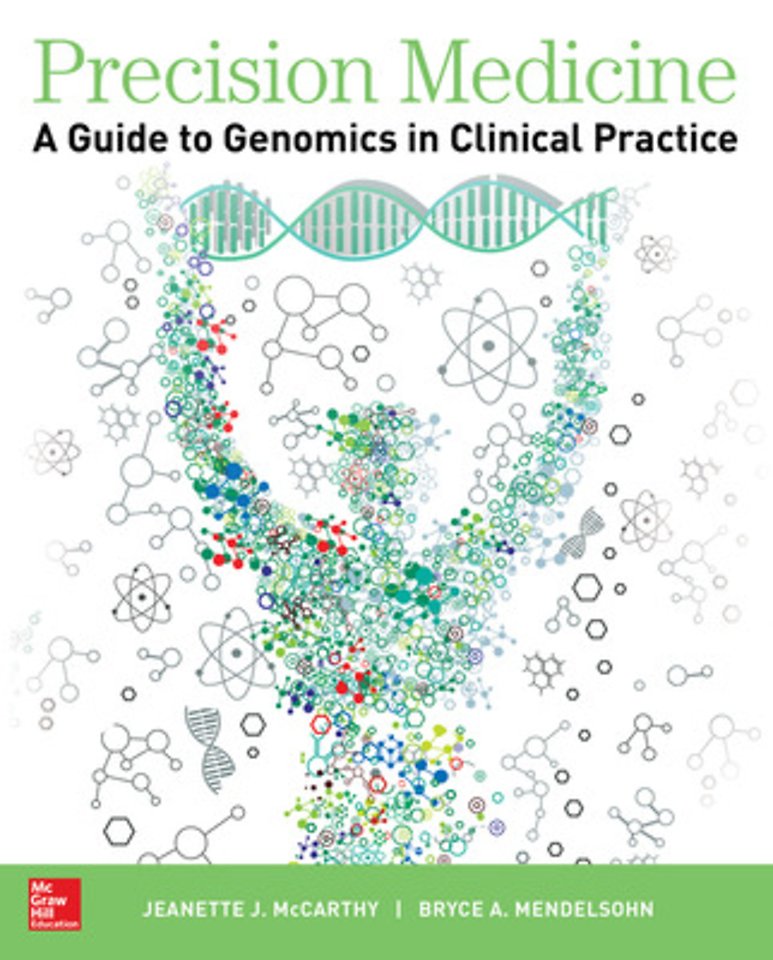
<p><B><span>Chapters 1-4: Pregnancy and childhood</SPAN></B></P><p><B><span>Chapter 1: Preconception</SPAN></B></P><p><span>What are the applications of precision medicine in the preconception period?</SPAN></P><UL style="MARGIN-TOP: 0in" type=disc><LI style="MARGIN: 3pt 0in"><span>Infertility</SPAN><LI style="MARGIN: 3pt 0in"><span>Carrier screening – traditional and expanded</SPAN><LI style="MARGIN: 3pt 0in"><span>Genetic counselling, reimbursement, where to get tested</SPAN><LI style="MARGIN: 3pt 0in"><span>Future prospects: Preimplantation genetic testing</SPAN></LI></UL><p><B><span>Chapter 2: Pregnancy</SPAN></B></P><p><span>What are the applications of precision medicine during pregnancy?</SPAN></P><UL style="MARGIN-TOP: 0in" type=disc><LI style="MARGIN: 3pt 0in"><span>Triple/quad screening</SPAN><LI style="MARGIN: 3pt 0in"><span>Amniocentesis/CVS</SPAN><LI style="MARGIN: 3pt 0in"><span>Trisomy testing using non-invasive (cfDNA) methods </SPAN><LI style="MARGIN: 3pt 0in"><span>Future prospects: expanded uses of cfDNA testing during pregnancy</SPAN></LI></UL><p><B><span>Chapter 3: The Newborn </SPAN></B></P><p><span>What are the applications of precision medicine in the newborn period? What are the situations when a clinician should consider a genetic diagnosis, what tests are commonly used, what evaluation can be performed by the non-specialist versus when to refer to a specialist.</SPAN></P><UL style="MARGIN-TOP: 0in" type=disc><LI style="MARGIN: 3pt 0in"><span>Mandatory newborn screening</SPAN><LI style="MARGIN: 3pt 0in"><span>Broad classification and evaluation of birth defects</SPAN><LI style="MARGIN: 3pt 0in"><span>Broad classification and evaluation of metabolic disease</SPAN><LI style="MARGIN: 3pt 0in"><span>Future prospects: Sequencing from birth</SPAN></LI></UL><p><B><span>Chapter 4: Childhood and Adolescence</SPAN></B></P><p><span>What are the applications of precision medicine during childhood and adolescence?</SPAN></P><UL style="MARGIN-TOP: 0in" type=disc><LI style="MARGIN: 3pt 0in"><span>Autism and Developmental delay</SPAN><LI style="MARGIN: 3pt 0in"><span>Childhood cancer (hereditary cancer)</SPAN><LI style="MARGIN: 3pt 0in"><span>Rare diseases and diagnostic sequencing</SPAN><LI style="MARGIN: 3pt 0in"><span>Support and advocacy for rare diseases</SPAN></LI></UL><p><B><span>Chapters 5-9: Adulthood</SPAN></B></P><p><B><span>Chapter 5: Pharmacogenetics</SPAN></B></P><p><span>What pharmacogenetic tests are available? How valid and useful are they?</SPAN></P><UL style="MARGIN-TOP: 0in" type=disc><LI style="MARGIN: 3pt 0in"><span>Types of pharmacogenetic markers</SPAN><UL style="MARGIN-TOP: 0in" type=circle><LI style="MARGIN: 3pt 0in"><span>Efficacy-based, companion diagnostics</SPAN><LI style="MARGIN: 3pt 0in"><span>Safety-based, avoiding severe adverse events</SPAN><LI style="MARGIN: 3pt 0in"><span>Dosing-based</SPAN></LI></UL><LI style="MARGIN: 3pt 0in"><span>Understanding CYP450 alleles</SPAN><LI style="MARGIN: 3pt 0in"><span>Sources of information about pharmacogenetic tests</SPAN><UL style="MARGIN-TOP: 0in" type=circle><LI style="MARGIN: 3pt 0in"><span>Drug labels</SPAN><LI style="MARGIN: 3pt 0in"><span>Evidence guidelines</SPAN><LI style="MARGIN: 3pt 0in"><span>PharmGKB, Dutch group</SPAN></LI></UL></LI></UL><p><B><span>Chapter 6: Heart Disease</SPAN></B></P><p><span>How is precision medicine being applied in heart disease?</SPAN></P><UL style="MARGIN-TOP: 0in" type=disc><LI style="MARGIN: 3pt 0in"><span>Predisposition/diagnostic testing for myocardial infarction, thrombosis risk, arrhythmias</SPAN><LI style="MARGIN: 3pt 0in"><span>The utility of prognostic markers (e.g. CardioDx test)</SPAN><LI style="MARGIN: 3pt 0in"><span>Managing dose, efficacy and side effects of cardiovascular drugs using pharmacogenomics</SPAN><UL style="MARGIN-TOP: 0in" type=circle><LI style="MARGIN: 3pt 0in"><span>Clopidogrel, Warfarin, Simvastatin</SPAN></LI></UL></LI></UL><p><B><span>Chapter 7: Infectious disease</SPAN></B></P><p><span>How is precision medicine being applied in infectious disease?</SPAN></P><UL style="MARGIN-TOP: 0in" type=disc><LI style="MARGIN: 3pt 0in; LINE-HEIGHT: normal"><span>Managing dose, efficacy and side effects of ID drugs using pharmacogenomics</SPAN></LI></UL><p><span><SPAN>·<span> </SPAN></SPAN></SPAN><span>Tracking outbreaks, pathogen discovery</SPAN></P><p><span><SPAN>·<span> </SPAN></SPAN></SPAN><span>Future prospects: diagnostic sequencing</SPAN></P><p><B><span>Chapter 8: Cancer</SPAN></B></P><p><span>How is precision medicine being applied in cancer?</SPAN></P><UL style="MARGIN-TOP: 0in" type=disc><LI style="MARGIN: 3pt 0in"><span>Diagnostic/predisposition testing for Hereditary cancers</SPAN><UL style="MARGIN-TOP: 0in" type=circle><LI style="MARGIN: 3pt 0in"><span>HBOC, Lynch Syndrome, rare hereditary cancer syndromes</SPAN></LI></UL><LI style="MARGIN: 3pt 0in"><span>Managing dose, efficacy and side effects of cancer drugs using pharmacogenetics</SPAN><UL style="MARGIN-TOP: 0in" type=circle><LI style="MARGIN: 3pt 0in"><span>Irinotecan, Belinostat, Azothioprine, Capecitaban, Tamoxifen, Oliparib</SPAN></LI></UL><LI style="MARGIN: 3pt 0in"><span>The genetic landscape of tumors</SPAN><LI style="MARGIN: 3pt 0in"><span>Prognostic markers</SPAN><LI style="MARGIN: 3pt 0in"><span>Targeted treatment and companion diagnostics</SPAN><LI style="MARGIN: 3pt 0in"><span>Tumor profiling and expanded treatment options</SPAN><LI style="MARGIN: 3pt 0in"><span>Future prospects: cfDNA for screening, diagnosing and monitoring cancer</SPAN></LI></UL><p><B><span>Chapter 9: The Brain - Mental Health and Neurodegeneration</SPAN></B></P><p><span>How is precision medicine being applied in mental health and neurodegenerative disease?</SPAN></P><UL style="MARGIN-TOP: 0in" type=disc><LI style="MARGIN: 3pt 0in"><span>Predisposition/diagnostic testing for epilepsies, Alzheimer, Parkinson diseases</SPAN><LI style="MARGIN: 3pt 0in"><span>Managing dose, efficacy and side effects of antidepressant, antipsychotic, anti-seizure drugs using pharmacogenomics</SPAN></LI></UL><p></P><B><span><BR style="PAGE-BREAK-BEFORE: always" clear=all></SPAN></B><p><B></B></P><p><B><span>Appendices. Conceptual framework for understanding genomic and precision medicine</SPAN></B></P><p><B><span>Appendix 1: Genome variation</SPAN></B></P><p><span>Describes the structure and organization of the human genome and the different types of variation, their consequences and distribution in different populations</SPAN></P><UL style="MARGIN-TOP: 0in" type=disc><LI style="MARGIN: 3pt 0in"><span>DNA, RNA, Protein variation</SPAN><LI style="MARGIN: 3pt 0in"><span>Origin and types of genetic (DNA) variation (from big to small)</SPAN><LI style="MARGIN: 3pt 0in"><span>Consequences of genetic variation </SPAN><LI style="MARGIN: 3pt 0in"><span>Patterns of genetic variation across populations and ancestry</SPAN></LI></UL><p><B><span>Appendix 2: Laboratory methods to detect genome variation</SPAN></B></P><p><span>A roadmap of different testing methods that a practitioner may come across, what they can measure, and what are their limitations. <I>Includes sample test requisitions and reports with graphical interpretation</I>.</SPAN></P><UL style="MARGIN-TOP: 0in" type=disc><LI style="MARGIN: 3pt 0in"><span>DNA variation (aCGH, karyotyping, FISH,Targeted genotyping, SNP arrays, Sanger and next-gen sequencing -whole genome, whole exome, panel)</SPAN><LI style="MARGIN: 3pt 0in"><span>The unique mitochondrial genome</SPAN><LI style="MARGIN: 3pt 0in"><span>RNA variation (QrtPCR, Transcript arrays, next-gen sequencing)</SPAN><LI style="MARGIN: 3pt 0in"><span>Protein variation (IHC, mass spectrometry)</SPAN><LI style="MARGIN: 3pt 0in"><span>Epigenome variation (Bisulfite sequencing)</SPAN><LI style="MARGIN: 3pt 0in"><span>How to find a testing laboratory (general information, specifics discussed within each disease type)</SPAN></LI></UL><p><B><span>Appendix 3: Genetic variation and disease</SPAN></B></P><p><span>How is genetic variation related to disease? </SPAN></P><UL style="MARGIN-TOP: 0in" type=disc><LI style="MARGIN: 3pt 0in"><span>Inheritance patterns</SPAN><LI style="MARGIN: 3pt 0in"><span>Penetrance, expressivity, environmental influences</SPAN><LI style="MARGIN: 3pt 0in"><span>Family history: why it still matters</SPAN></LI></UL><p><B><span>Appendix 4: Evidence base </SPAN></B></P><p><span>How do we know if a gene-trait association is valid or clinically useful?</SPAN></P><p><span><SPAN>·<span> </SPAN></SPAN></SPAN><span>Evaluating the evidence</SPAN></P><p><span><SPAN>o<span> </SPAN></SPAN></SPAN><span>Establishing the role of the gene in disease</SPAN></P><p><span><SPAN>·<span> </SPAN></SPAN></SPAN><span>Clinical validity (PPV, NPV)</SPAN></P><p><span><SPAN>·<span> </SPAN></SPAN></SPAN><span>Clinical utility (cost effectiveness, comparative effectiveness)</SPAN></P><p><span><SPAN>·<span> </SPAN></SPAN></SPAN><span>Where to find evidence, information and practice guidelines</SPAN></P><p><span>How do we determine pathogenicity of variants in a diagnostic setting?</SPAN></P><p><span><SPAN>·<span> </SPAN></SPAN></SPAN><span>Different types of evidence used in variant classification</SPAN></P><p><span><SPAN>·<span> </SPAN></SPAN></SPAN><span>ACMG framework for variant classification</SPAN></P><p><span><SPAN>·<span> </SPAN></SPAN></SPAN><span>Clinvar and other variant databases</SPAN></P><p><B><span>Appendix 5: Regulation and reimbursement</SPAN></B></P><p><span>How do regulation and reimbursement play a role in the delivery of precision medicine?</SPAN></P><UL style="MARGIN-TOP: 0in" type=disc><LI style="MARGIN: 3pt 0in"><span>US FDA and genetic testing</SPAN><LI style="MARGIN: 3pt 0in"><span>Insurance coverage of genomic tests in the US</SPAN></LI></UL><p><span><SPAN>·<span> </SPAN></SPAN></SPAN><span>Access to genetic testing</SPAN></P><p><B><span>Appendix 6: Cross-cutting ethical issues</SPAN></B></P><p><span>What key ethical issues to be aware of
with genetic testing?</SPAN></P><UL style="MARGIN-TOP: 0in" type=disc><LI style="MARGIN: 3pt 0in"><span>Secondary/incidental findings</SPAN><LI style="MARGIN: 3pt 0in"><span>Discrimination and GINA</SPAN><LI style="MARGIN: 3pt 0in"><span>Privacy and sharing</SPAN><LI style="MARGIN: 3pt 0in"><span>Testing minors</SPAN><LI style="MARGIN: 3pt 0in"><span>Population screening</SPAN><LI style="MARGIN: 3pt 0in"><span>Eugenics and disability rights</SPAN><LI style="MARGIN: 3pt 0in"><span>How to gather appropriate informed consent</SPAN></LI></UL>