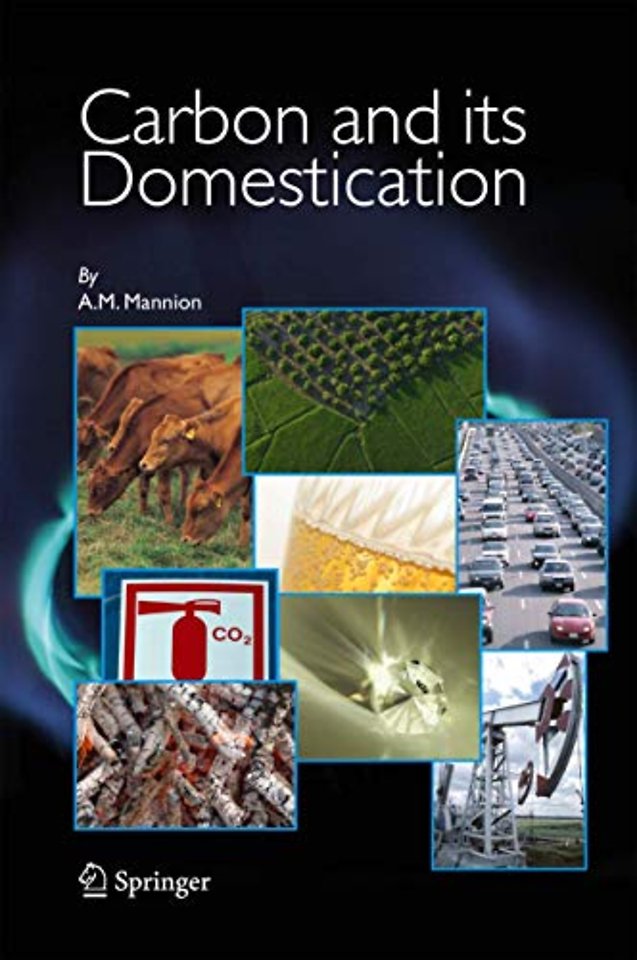
A.M. Mannion
Springer Netherlands
2006e druk, 2006
9781402039560
Carbon and Its Domestication
Specificaties
Gebonden, 320 blz.
|
Engels
Springer Netherlands |
2006e druk, 2006
ISBN13: 9781402039560
Rubricering
Levertijd ongeveer 9 werkdagen
Gratis verzonden
Samenvatting
Carbon is a vital component of environmental and economic systems. Its unique chemistry makes it important biologically, geologically, and climatically. Its domestication in time and space has many manifestations, including the control of fire, development of agriculture, fossil-fuel use and biotechnology. All have exacted an environmental price. Many agencies exist to manage carbon through conservation, etc. Carbon management is now a highly charged international political issue in which energy provision is a primary factor. This cross-disciplinary text focuses on the pivotal role of carbon in society and in the environment.
Specificaties
ISBN13:9781402039560
Taal:Engels
Bindwijze:gebonden
Aantal pagina's:320
Uitgever:Springer Netherlands
Druk:2006
Inhoudsopgave
List of Figures. List of Tables. Preface. Acknowledgements.
1 Introduction. 1.1 What is carbon? 1.2 Why is carbon so important? 1.3 Carbon and climate. 1.4 Carbon and the environment in the last 3 million years. 1.5 Carbon and technology through prehistory and history. 1.6 Carbon and development. 1.7 Carbon and the future.-
2 The Chemistry Of Carbon. 2.1 The mineral world. 2.2 Organic compounds. 2.3 The biogeochemistry of carbon.-
3 The Biology Of Carbon. 3.1 The web of life. 3.2 Domain Archaea. 3.3 Domain Bacteria. 3.4 Domain Eukaryote. 3.5 Viruses etc. 3.6 Vital processes. 3.7 Food chains and food webs.-
4 The Geology Of Carbon. 4.1 Carbon, life and climate: the last 5 x 10⁹ years. 4.2 Sedimentary rocks. 4.3 Coal. 4.4 Oil (petroleum) and natural gas. 4.5 Wetlands.-
5 The History And Consequences Of Carbon Domestication. 5.1 The harnessing of fire. 5.2 The origins and spread of agriculture. 5.3 Carbon exchanges during the Holocene. 5.4 History of fossil-fuel use and industrialization. 5.5 Pollution history. 5.6 Biotechnology.-
6 The Geography Of Carbon. 6.1 World ecosystems. 6.2 Marine ecosystems. 6.3 The alteration of the world’s biomes. 6.4 Measures of human impact.-
7 The Politicization Of Carbon. 7.1 Initiatives 1860 to 1939. 7.2 Initiatives 1945 to the early 1970s. 7.3 Green politics. 7.4 Petropolitics and oil crises. 7.5 NGOs. 7.6 UN, UNEP, international agreements and the Earth Charter. 7.7 International initiatives on atmosphere/climate. 7.8 The politics of biodiversity. 7.9 Trade.-
8 Conclusion And Prospect. 8.1 Conclusion. 8.2 Prospect. 8.3 Envoi. 8.4 Addendum.
References. Index.
1 Introduction. 1.1 What is carbon? 1.2 Why is carbon so important? 1.3 Carbon and climate. 1.4 Carbon and the environment in the last 3 million years. 1.5 Carbon and technology through prehistory and history. 1.6 Carbon and development. 1.7 Carbon and the future.-
2 The Chemistry Of Carbon. 2.1 The mineral world. 2.2 Organic compounds. 2.3 The biogeochemistry of carbon.-
3 The Biology Of Carbon. 3.1 The web of life. 3.2 Domain Archaea. 3.3 Domain Bacteria. 3.4 Domain Eukaryote. 3.5 Viruses etc. 3.6 Vital processes. 3.7 Food chains and food webs.-
4 The Geology Of Carbon. 4.1 Carbon, life and climate: the last 5 x 10⁹ years. 4.2 Sedimentary rocks. 4.3 Coal. 4.4 Oil (petroleum) and natural gas. 4.5 Wetlands.-
5 The History And Consequences Of Carbon Domestication. 5.1 The harnessing of fire. 5.2 The origins and spread of agriculture. 5.3 Carbon exchanges during the Holocene. 5.4 History of fossil-fuel use and industrialization. 5.5 Pollution history. 5.6 Biotechnology.-
6 The Geography Of Carbon. 6.1 World ecosystems. 6.2 Marine ecosystems. 6.3 The alteration of the world’s biomes. 6.4 Measures of human impact.-
7 The Politicization Of Carbon. 7.1 Initiatives 1860 to 1939. 7.2 Initiatives 1945 to the early 1970s. 7.3 Green politics. 7.4 Petropolitics and oil crises. 7.5 NGOs. 7.6 UN, UNEP, international agreements and the Earth Charter. 7.7 International initiatives on atmosphere/climate. 7.8 The politics of biodiversity. 7.9 Trade.-
8 Conclusion And Prospect. 8.1 Conclusion. 8.2 Prospect. 8.3 Envoi. 8.4 Addendum.
References. Index.