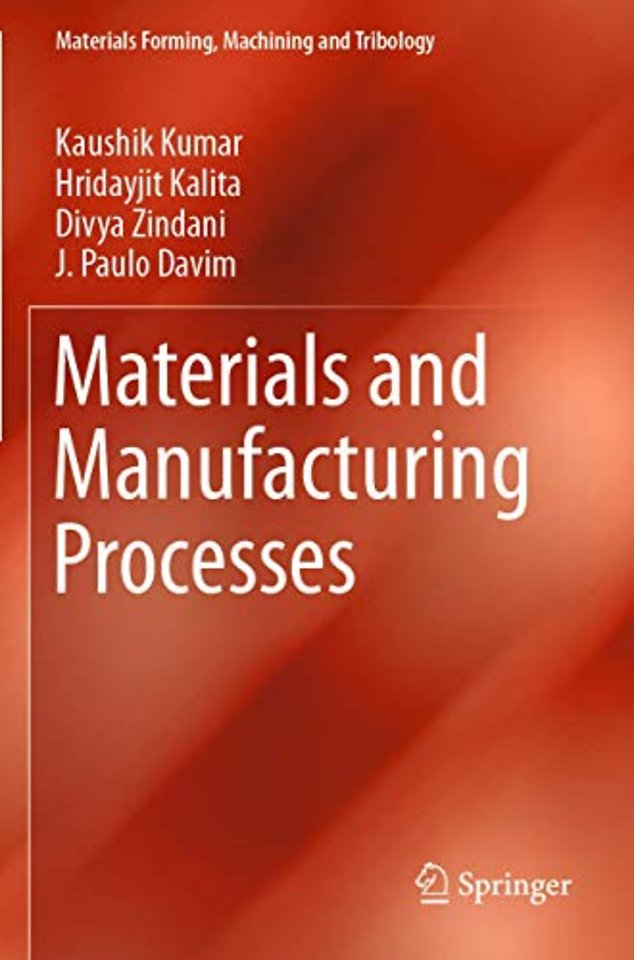
Kaushik Kumar,
Hridayjit Kalita,
Divya Zindani,
J. Paulo Davim
e.a.
Springer International Publishing
e druk, 2020
9783030210687
Materials and Manufacturing Processes
Specificaties
Paperback, blz.
|
Engels
Springer International Publishing |
2020
ISBN13: 9783030210687
Rubricering
Onderdeel van serie
Materials Forming, Machining and Tribology
Levertijd ongeveer 9 werkdagen
Gratis verzonden
Samenvatting
This book introduces the materials and traditional processes involved in the manufacturing industry. It discusses the properties and application of different engineering materials as well as the performance of failure tests. The book lists both destructible and non-destructible processes in detail. The design associated with each manufacturing processes, such Casting, Forming, Welding and Machining, are also covered.
Specificaties
ISBN13:9783030210687
Taal:Engels
Bindwijze:paperback
Uitgever:Springer International Publishing
Inhoudsopgave
<p>Section I: ENGINEERING MATERIALS</p>
<p> I. Materials</p>
<p>1. Introduction</p>
2. Scope <p></p>
<p>3. Ferrous Metals</p>
<p>Ø Structure</p>
<p>Ø Properties</p>
<p>Ø Processes</p>
<p>· Heat treatment process</p>
<p>· Production </p>
<p>Ø Application</p>
<p>4. Non Ferrous Metals</p>
<p>Ø Types</p>
<p>Ø Properties</p>
<p>Ø Applications</p>
<p>5. Ceramic</p>
<p>6. Graphite, Diamonds</p>
<p>7. Composites</p>
<p>8. Polymers</p>
9. Summary <p></p>
<p> II. Mechanical Behaviour of materials</p>
<p>1. Introduction</p>
<p>2. Scope</p>
<p>3. Destructible tests</p>
Ø Tension<p></p>
<p>Ø Compression</p>
<p>Ø Hardness</p>
Ø Fatigue <p></p>
<p>Ø Creep</p>
<p>Ø Impact</p>
4. Non destructible tests<p></p>
<p>Ø Visual inspection</p>
<p>Ø Radiography </p>
<p>Ø Ultrasonic inspection</p>
<p>Ø Magnetic Particles</p>
<p>Ø Eddy current testing</p>
<p>Ø Liquid (Dye) Penetration method</p>
<p>Ø Acoustic method</p>
<p>5. Failure characteristics in materials</p>
<p>Ø Definition</p>
<p>Ø Failure types</p>
<p>· Ductile failure</p>
<p>· Brittle failure</p>
<p>Ø Plastic deformation responses</p>
<p>· Residual stresses</p>
<p>· Heat and Temperature responses</p>
6. Summary<p></p>
<p>Section II: CONVENTIONAL MANUFACTURING</p>
III. Casting<p></p>
1. Introduction<p></p>
<p>2. Scope</p>
<p>3. Fundamentals of Casting </p>
<p>4. Sand Mould Casting Processes</p>
Ø Pattern Making<p></p>
<p>Ø Mould Making</p>
<p>Ø Core making</p>
Ø Casting<p></p>
<p>5. Metal mould Casting Processes</p>
<p>Ø Slush Casting</p>
Ø Die Casting<p></p>
<p>Ø Centrifugal Casting</p>
<p>Ø Continuous Casting</p>
6. Investment Casting<p></p>
<p>7. Plaster mould casting</p>
<p>8. Ceramic mould casting</p>
<p>9. Design of Casting</p>
10. Summary <p></p>
<p> IV. Forming</p>
<p>1. Introduction</p>
<p>2. Scope</p>
3. Hot working and Cold working<p></p>
<p>4. Types of Forming</p>
<p>Ø Bulk Forming</p>
<p>· Rolling</p>
<p>· Extrusion</p>
<p>· Drawing</p>
<p>· Forging </p>
Ø Sheet Metal Forming<p></p>
<p>· Shearing</p>
<p>· Bending</p>
· Spinning<p></p>
<p>· Deep drawing</p>
<p>· Embossing </p>
5. Summary <p></p>
<p> V. Welding </p>
<p>1. Introduction</p>
<p>2. Scope</p>
<p>3. Welding Processes</p>
Ø Gas Welding<p></p>
<p>· Oxy-acetylene Welding</p>
<p>· Air acetylene Welding</p>
· Oxy hydrogen welding<p></p>
<p>Ø Arc Welding</p>
<p>· Arc welding with consumable electrodes</p>
v Metal arc welding<p></p>
<p>v Metal inert gas welding</p>
<p>v Submerged arc welding</p>
v Electro gas welding<p></p>
<p>· Arc welding with non consumable electrodes</p>
<p>v Gas tungsten arc welding</p>
v Carbon arc welding<p></p>
<p>v Plasma arc welding</p>
<p>Ø Resistance Welding</p>
Ø Laser beam welding<p></p>
<p>Ø Friction welding</p>
<p>Ø Cold welding</p>
Ø Brazing<p></p>
<p>Ø Soldering</p>
<p>Ø Mechanical Fastener joining</p>
4. Summary<p></p>
<p>Section III: CONVENTIONAL MACHINING</p>
VI. Machining<p></p>
1. Introduction<p></p>
<p>2. Scope</p>
<p>3. Mechanics of Metal Cutting</p>
<p>4. Machines involved</p>
Ø Lathe Machine<p></p>
<p>Ø Milling Machine</p>
<p>Ø Drilling Machine</p>
5. Traditional Machining processes<p></p>
<p>Ø Turning</p>
<p>Ø Milling </p>
<p>Ø Boring</p>
<p>Ø Drilling</p>
<p>Ø Reaming</p>
<p>Ø Planning and Shaping</p>
<p>Ø Sawing </p>
<p>Ø Filing</p>
<p>Ø Broaching </p>
<p> I. Materials</p>
<p>1. Introduction</p>
2. Scope <p></p>
<p>3. Ferrous Metals</p>
<p>Ø Structure</p>
<p>Ø Properties</p>
<p>Ø Processes</p>
<p>· Heat treatment process</p>
<p>· Production </p>
<p>Ø Application</p>
<p>4. Non Ferrous Metals</p>
<p>Ø Types</p>
<p>Ø Properties</p>
<p>Ø Applications</p>
<p>5. Ceramic</p>
<p>6. Graphite, Diamonds</p>
<p>7. Composites</p>
<p>8. Polymers</p>
9. Summary <p></p>
<p> II. Mechanical Behaviour of materials</p>
<p>1. Introduction</p>
<p>2. Scope</p>
<p>3. Destructible tests</p>
Ø Tension<p></p>
<p>Ø Compression</p>
<p>Ø Hardness</p>
Ø Fatigue <p></p>
<p>Ø Creep</p>
<p>Ø Impact</p>
4. Non destructible tests<p></p>
<p>Ø Visual inspection</p>
<p>Ø Radiography </p>
<p>Ø Ultrasonic inspection</p>
<p>Ø Magnetic Particles</p>
<p>Ø Eddy current testing</p>
<p>Ø Liquid (Dye) Penetration method</p>
<p>Ø Acoustic method</p>
<p>5. Failure characteristics in materials</p>
<p>Ø Definition</p>
<p>Ø Failure types</p>
<p>· Ductile failure</p>
<p>· Brittle failure</p>
<p>Ø Plastic deformation responses</p>
<p>· Residual stresses</p>
<p>· Heat and Temperature responses</p>
6. Summary<p></p>
<p>Section II: CONVENTIONAL MANUFACTURING</p>
III. Casting<p></p>
1. Introduction<p></p>
<p>2. Scope</p>
<p>3. Fundamentals of Casting </p>
<p>4. Sand Mould Casting Processes</p>
Ø Pattern Making<p></p>
<p>Ø Mould Making</p>
<p>Ø Core making</p>
Ø Casting<p></p>
<p>5. Metal mould Casting Processes</p>
<p>Ø Slush Casting</p>
Ø Die Casting<p></p>
<p>Ø Centrifugal Casting</p>
<p>Ø Continuous Casting</p>
6. Investment Casting<p></p>
<p>7. Plaster mould casting</p>
<p>8. Ceramic mould casting</p>
<p>9. Design of Casting</p>
10. Summary <p></p>
<p> IV. Forming</p>
<p>1. Introduction</p>
<p>2. Scope</p>
3. Hot working and Cold working<p></p>
<p>4. Types of Forming</p>
<p>Ø Bulk Forming</p>
<p>· Rolling</p>
<p>· Extrusion</p>
<p>· Drawing</p>
<p>· Forging </p>
Ø Sheet Metal Forming<p></p>
<p>· Shearing</p>
<p>· Bending</p>
· Spinning<p></p>
<p>· Deep drawing</p>
<p>· Embossing </p>
5. Summary <p></p>
<p> V. Welding </p>
<p>1. Introduction</p>
<p>2. Scope</p>
<p>3. Welding Processes</p>
Ø Gas Welding<p></p>
<p>· Oxy-acetylene Welding</p>
<p>· Air acetylene Welding</p>
· Oxy hydrogen welding<p></p>
<p>Ø Arc Welding</p>
<p>· Arc welding with consumable electrodes</p>
v Metal arc welding<p></p>
<p>v Metal inert gas welding</p>
<p>v Submerged arc welding</p>
v Electro gas welding<p></p>
<p>· Arc welding with non consumable electrodes</p>
<p>v Gas tungsten arc welding</p>
v Carbon arc welding<p></p>
<p>v Plasma arc welding</p>
<p>Ø Resistance Welding</p>
Ø Laser beam welding<p></p>
<p>Ø Friction welding</p>
<p>Ø Cold welding</p>
Ø Brazing<p></p>
<p>Ø Soldering</p>
<p>Ø Mechanical Fastener joining</p>
4. Summary<p></p>
<p>Section III: CONVENTIONAL MACHINING</p>
VI. Machining<p></p>
1. Introduction<p></p>
<p>2. Scope</p>
<p>3. Mechanics of Metal Cutting</p>
<p>4. Machines involved</p>
Ø Lathe Machine<p></p>
<p>Ø Milling Machine</p>
<p>Ø Drilling Machine</p>
5. Traditional Machining processes<p></p>
<p>Ø Turning</p>
<p>Ø Milling </p>
<p>Ø Boring</p>
<p>Ø Drilling</p>
<p>Ø Reaming</p>
<p>Ø Planning and Shaping</p>
<p>Ø Sawing </p>
<p>Ø Filing</p>
<p>Ø Broaching </p>