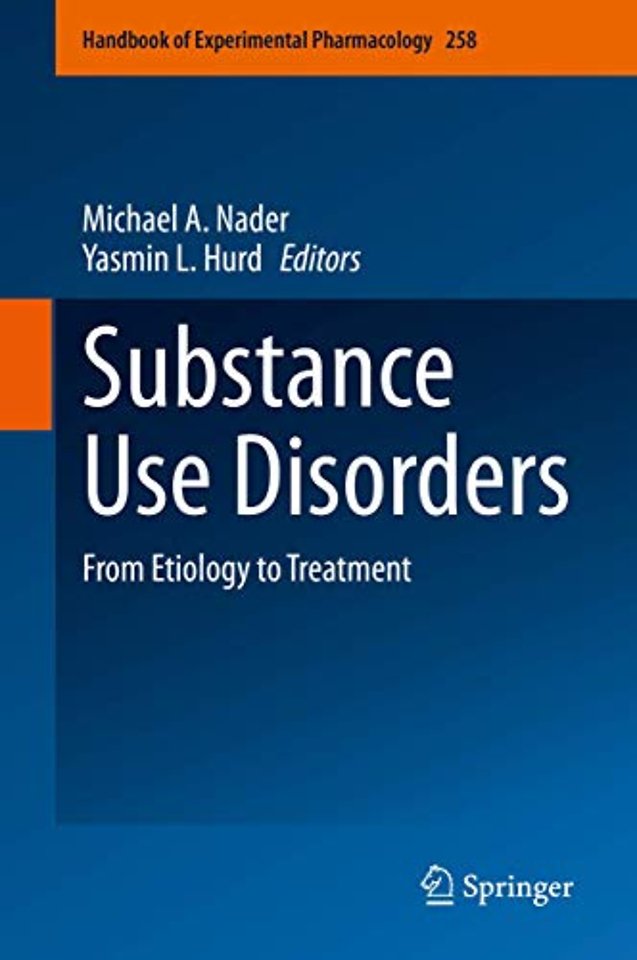
Michael A. Nader,
Yasmin L. Hurd
Springer International Publishing
e druk, 2020
9783030336783
Substance Use Disorders
From Etiology to Treatment
Specificaties
Gebonden, blz.
|
Engels
Springer International Publishing |
2020
ISBN13: 9783030336783
Rubricering
Onderdeel van serie
Handbook of Experimental Pharmacology
Levertijd ongeveer 9 werkdagen
Gratis verzonden
Samenvatting
The purpose of this book is to provide a broad scope of substance use disorder research and how these findings can impact treatment outcomes. The research and outcomes described in this book represent important principles related to identifying and understanding factors related to substance use disorders. The first section is dedicated to methodology including population-based surveys, basic neuroanatomy, chemistry, molecular biology, behavioral models and brain imaging. The second section utilizes this methodology in research related to opioids, cocaine, marijuana, alcohol and nicotine. The book is aimed at both professionals (academics, clinicians, practitioners) and students or trainees.
Specificaties
ISBN13:9783030336783
Taal:Engels
Bindwijze:gebonden
Uitgever:Springer International Publishing
Inhoudsopgave
<p>1. Methods for Population Research on Substance Use and Consequences</p>
<p>Mark Wolfson, Kimberly G. Wagoner, Eunyoung Y. Song, Melinda Pankratz, Sunday Azagba</p>
<p> 2. Translational Molecular Approaches in Substance Abuse Research</p>
<p> Sasha L. Fulton and Ian Maze</p>
<p>3. Small Molecule Neuropeptide-S and Melanocortin Receptor Ligands As Potential Treatments for Substance Use Disorders</p>
<p>Bruce Blough and Ojas Namjoshi </p>
<p>4. Emerging Insights into Mu Opioid Pharmacology</p>
<p> Gavril W. Pasternak, Steven R. Childers, and Ying-Xian Pan</p>
<p>5. Behavioral Pharmacology of Drugs Acting at Mu Opioid Receptors</p>
<p> Lisa R. Gerak, David R. Maguire, and Charles P. France</p>
<p>6. The Rise and Fall of Kappa-Opioid Receptors in Drug Abuse Research</p>
<p> Matthew L. Banks</p>
<p>7. Clinical Trials for Opioid Use Disorder</p>
<p> Esther Blessing, Sanya Virani, and John Rotrosen</p>
<p>8. Modelling Differential Vulnerability to Substance Use Disorder in Rodents: Neurobiological Mechanisms</p>
<p> Bianca Jupp, Jolyon A. Jones, and Jeffrey W. Dalley</p>
<p>9. Activity-Dependent Epigenetic Remodeling in Cocaine Use Disorder</p>
<p> Alberto J. López, Cody A. Siciliano, and Erin S. Calipari</p>
<p>10. Molecular Mechanisms of Amphetamines</p>
<p> Maarten E. A. Reith and Margaret E. Gnegy</p>
<p>11. Clinical Trials for Stimulant Use Disorders: Addressing Heterogeneities That May Undermine Treatment Outcomes</p>
Paul S. Regier, Kyle M. Kampman, and Anna Rose Childress<p></p>
<p>12. Molecular Mechanism and Cannabinoid Pharmacology</p>
<p> Lesley D. Schurman, Dai Lu, Debra A. Kendall, Allyn C. Howlett, 3 and Aron H. Lichtman</p>
<p>13. Pharmacotherapies for Cannabis Use Disorders: Clinical Challenges and Promising Therapeutic Agents</p>
<p>Suzanne Nielsen, Pamela Sabioni, Linda Gowing, and Bernard Le Foll</p>
<p>14. Molecular Mechanisms Associated with Nicotine Pharmacology and Dependence</p>
<p>Christie D. Fowler, Jill R. Turner, and M. Imad Damaj</p>
<p>15. Randomized Clinical Trials Investigating Innovative Interventions for Smoking Cessation in the Last Decade</p>
<p>Marie N. S. Gendy, Christine Ibrahim, Matthew E. Sloan, and Bernard Le Foll</p>
<p> </p>
<p>16. Adolescent Vulnerability to Alcohol Use Disorder: Neurophysiological Mechanisms from Preclinical Studies</p>
<p>Brian A. McCool and Molly M. McGinnis</p>
17. Medication Development for Alcohol Use Disorder: A Focus on Clinical Studies<p></p>
<p>Lorenzo Leggio, Daniel E. Falk, Megan L. Ryan, Joanne Fertig, 3 and Raye Z. Litten</p>
<p>18. Newly Emerging Drugs of Abuse</p>
<p>Kenichi Tamama and Michael J. Lynch</p>
<p>Mark Wolfson, Kimberly G. Wagoner, Eunyoung Y. Song, Melinda Pankratz, Sunday Azagba</p>
<p> 2. Translational Molecular Approaches in Substance Abuse Research</p>
<p> Sasha L. Fulton and Ian Maze</p>
<p>3. Small Molecule Neuropeptide-S and Melanocortin Receptor Ligands As Potential Treatments for Substance Use Disorders</p>
<p>Bruce Blough and Ojas Namjoshi </p>
<p>4. Emerging Insights into Mu Opioid Pharmacology</p>
<p> Gavril W. Pasternak, Steven R. Childers, and Ying-Xian Pan</p>
<p>5. Behavioral Pharmacology of Drugs Acting at Mu Opioid Receptors</p>
<p> Lisa R. Gerak, David R. Maguire, and Charles P. France</p>
<p>6. The Rise and Fall of Kappa-Opioid Receptors in Drug Abuse Research</p>
<p> Matthew L. Banks</p>
<p>7. Clinical Trials for Opioid Use Disorder</p>
<p> Esther Blessing, Sanya Virani, and John Rotrosen</p>
<p>8. Modelling Differential Vulnerability to Substance Use Disorder in Rodents: Neurobiological Mechanisms</p>
<p> Bianca Jupp, Jolyon A. Jones, and Jeffrey W. Dalley</p>
<p>9. Activity-Dependent Epigenetic Remodeling in Cocaine Use Disorder</p>
<p> Alberto J. López, Cody A. Siciliano, and Erin S. Calipari</p>
<p>10. Molecular Mechanisms of Amphetamines</p>
<p> Maarten E. A. Reith and Margaret E. Gnegy</p>
<p>11. Clinical Trials for Stimulant Use Disorders: Addressing Heterogeneities That May Undermine Treatment Outcomes</p>
Paul S. Regier, Kyle M. Kampman, and Anna Rose Childress<p></p>
<p>12. Molecular Mechanism and Cannabinoid Pharmacology</p>
<p> Lesley D. Schurman, Dai Lu, Debra A. Kendall, Allyn C. Howlett, 3 and Aron H. Lichtman</p>
<p>13. Pharmacotherapies for Cannabis Use Disorders: Clinical Challenges and Promising Therapeutic Agents</p>
<p>Suzanne Nielsen, Pamela Sabioni, Linda Gowing, and Bernard Le Foll</p>
<p>14. Molecular Mechanisms Associated with Nicotine Pharmacology and Dependence</p>
<p>Christie D. Fowler, Jill R. Turner, and M. Imad Damaj</p>
<p>15. Randomized Clinical Trials Investigating Innovative Interventions for Smoking Cessation in the Last Decade</p>
<p>Marie N. S. Gendy, Christine Ibrahim, Matthew E. Sloan, and Bernard Le Foll</p>
<p> </p>
<p>16. Adolescent Vulnerability to Alcohol Use Disorder: Neurophysiological Mechanisms from Preclinical Studies</p>
<p>Brian A. McCool and Molly M. McGinnis</p>
17. Medication Development for Alcohol Use Disorder: A Focus on Clinical Studies<p></p>
<p>Lorenzo Leggio, Daniel E. Falk, Megan L. Ryan, Joanne Fertig, 3 and Raye Z. Litten</p>
<p>18. Newly Emerging Drugs of Abuse</p>
<p>Kenichi Tamama and Michael J. Lynch</p>