,

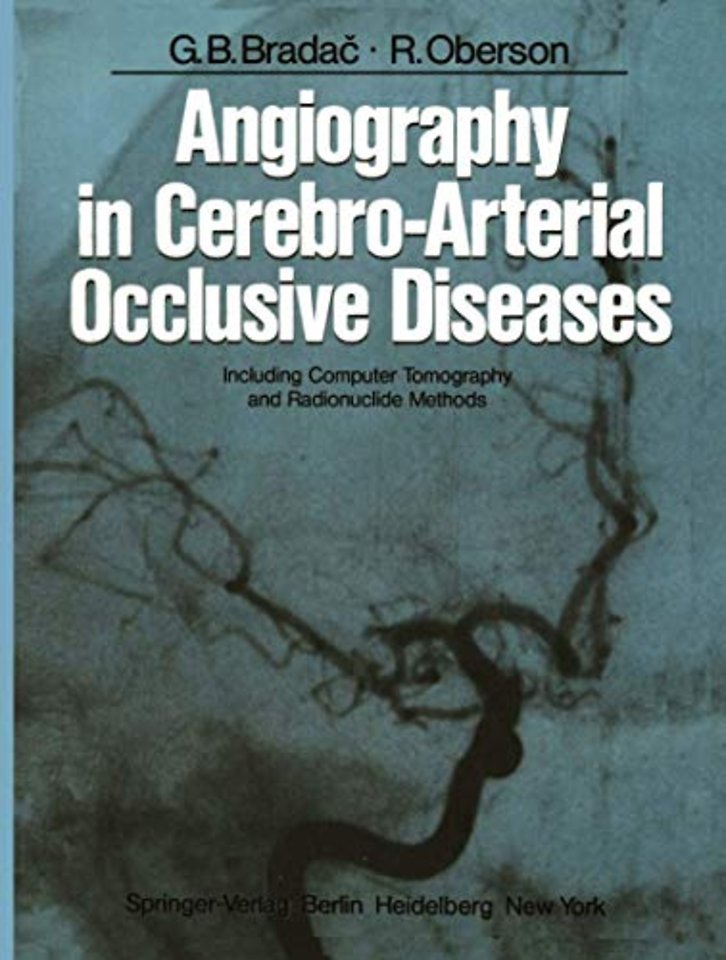
Angiography in Cerebro-Arterial Occlusive Diseases

Including Computer Tomography and Radionuclide Methods

Specificaties
Paperback, 228 blz. | Engels
Springer Berlin Heidelberg | 2012
ISBN13: 9783642964763
Rubricering
Springer Berlin Heidelberg 0e druk, 2012 9783642964763
€ 122,99
Levertijd ongeveer 9 werkdagen
Gratis verzonden

Samenvatting

Although it may seem a rash, even ill-conceived, undertaking to devote a mono­ graph to cerebral angiography at a time when CT seems to be the most important neuroradiologic procedure, this is definitely not the case. Moreover, the authors are aware of the necessity of taking these new techniques into account. Cerebro-arterial occlusive diseases are frequently the cause of acute and chro­ nic neurologic disturbances. The authors' aim in preparing this book was to demonstrate the value of neuroradiology in the diagnosis of these conditions. They have accomplished their purpose, and above all, they have succeeded in demonstrating how angiography and CT complement each other. They point out the absolute necessity of high quality in angiographic imaging; indeed, arterial occlusive diseases may have a very capricious and unexpected evolution that can be followed-up by iterative CT examinations - for instance once a week - but angiography, which is performed only once, must be as perfect and informative as possible. Both authors received part of their training in the Neuroradiologic Depart­ ment of the University Hospital in Strasbourg. I am thus very pleased to find in this book both the perfection I was accustomed to seeing in G. B. BRADAc's iconography and the sound judgement I always appreciated in R. OBERSON. Therefore, it is with great satisfaction that I write this foreword. It is my wish that both authors achieve the recognition they rightfully deserve in the Univer­ sities of Berlin and of Lausanne.

Specificaties

ISBN13:9783642964763
Taal:Engels
Bindwijze:paperback
Aantal pagina's:228
Uitgever:Springer Berlin Heidelberg
Druk:0

Inhoudsopgave

First Part.- 1 Etiopathology.- 1.1 Atherosclerosis.- 1.2 Lesions not due to Atherosclerosis.- 1.2.1 Arteritis.- 1.2.1.1 Arteritis in Infectious Processes.- 1.2.1.2 Necrotizing Angiitis.- 1.2.1.3 Thromboangiitis Obliterans and Takayasu’s Arteritis.- 1.2.1.4 Moyamoya Disease.- 1.2.1.5 Arteritis in Collagenous Diseases.- 1.2.1.6 Arteritis in Neurocutaneous Diseases.- 1.2.1.7 Arteritis in Blood Diseases.- 1.2.1.8 Arteritis in Metabolic Diseases.- 1.2.1.9 Arteritis from Drug Abuse.- 1.2.1.10 Miscellaneous.- 1.2.2 Fibromuscular Hyperplasia (FMH).- 1.2.3 Occlusions in Cardiac Diseases and Lesions in Hypertensive Patients.- 1.2.4 Cases of Unclear Etiology.- 2 Angiography.- 2.1 Indications.- 2.2 Hazards.- 2.3 Technique.- 3 Angiographic Findings.- 3.1 Normal Arteriocerebral Angiograms.- 3.2 Lesions of the Extracranial Segments of the Cerebral Arteries.- 3.2.1 Atherosclerotic Lesions of the Carotid Artery.- 3.2.1.1 Stenotic and Ulcerative Lesions.- 3.2.1.2 Occlusive Lesions.- 3.2.2 Atherosclerotic Lesions of the Vertebrobasilar System.- 3.2.2.1 Lesions of the Vertebral Artery.- 3.2.2.2 Lesions of the Subclavian and Innominate Arteries.- 3.2.3 Generalized Atherosclerosis Without Stenosis or Occlusion.- 3.2.4 Multiple Atherosclerotic Lesions.- 3.2.5 Tortuosity.- 3.2.6 Lesions not due to Atherosclerosis.- 3.3 Lesions of the Carotid Siphon.- 3.3.1 Lesions in Young Patients and Children.- 3.3.2 Lesions in Older Patients.- 3.4 Lesions in the Region of the Middle Cerebral Artery.- 3.4.1 Lesions of the Main Trunk.- 3.4.1.1 Occlusive Lesions.- 3.4.1.2 Stenotic Lesions.- 3.4.2 Lesions of the Peripheral Branches.- 3.4.3 A Vessel-Poor Area.- 3.4.4 Blush and Early Venous Filling.- 3.4.5 Generalized Lesions.- 3.5 Lesions of the Posterior Cerebral and Basilar Arteries.- 3.5.1 Lesions in the Region of the Posterior Cerebral Artery (p.c.a.).- 3.5.2 Lesions of the Basilar Artery.- 3.6 Other Pathologic Findings in the Vertebrobasilar System.- 3.6.1 Tortuosity of Vessels.- 3.6.2 Occlusion or Stenosis of Minor Branches of the Basilar and Intracranial Vertebral Arteries.- 3.7 Lesions in the Region of the Anterior Cerebral Artery (a.c.a.).- 3.8 Lesions in the Region of the Anterior Choroidal Artery.- 3.9 Lesions in the Region of the Lenticulostriate Arteries.- 3.10 Rare Lesions of the Intracranial Vessels.- 3.11 Collateral Flow.- 3.12 The Negative Angiogram.- 3.13 Indication and Modalities of Surgical Therapy.- 4 Computed Tomography in the Diagnosis of Cerebrovascular Diseases.- 4.1 Patients with Transient Ischemic Attacks (TIA).- 4.2 Patients with Completed Stroke.- 4.2.1 Appearance of Infarction in CT.- 4.2.2 Midline Shift in Infarction.- 4.2.3 Contrast Medium in Infarction.- 4.2.4 Correlation Between Angiography and CT in Patients with Infarction.- 4.2.5 Intracerebral Hematoma.- 4.2.6 Hemorrhagic Infarction.- 5 Radionuchde Brain Scan in the Diagnosis of Cerebrovascular Diseases.- 5.1 Method.- 5.1.1 Dynamic Study.- 5.1.2 Static Study.- 5.2 Results.- 5.2.1 Dynamic Study.- 5.2.2 Static Study.- 5.3 Characteristic Appearances.- 5.4 Regional Cerebral Blood Flow Measurements.- References.- Second Part Illustrations.
€ 122,99
Levertijd ongeveer 9 werkdagen
Gratis verzonden

Rubrieken

    Personen

      Trefwoorden

        Angiography in Cerebro-Arterial Occlusive Diseases