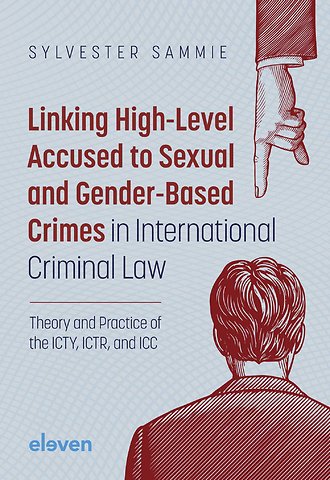
Linking High-Level Accused to Sexual and Gender-Based Crimes in International Criminal Law
Theory and Practice of the ICTY, ICTR, and ICC
Samenvatting
Linking High-level Accused to Sexual and Gender-Based Crimes in International Criminal Law focuses on the theoretical and practical perspectives taken by the ICTY, ICTR, and ICC. It seeks to answer the question of how high-level officials can and should be investigated and prosecuted for their role in the commission of sexual and gender-based crimes.
The author examines the forms, types, and amount of evidence used to prove the role of these high-level accused in the commission of crimes by rank-and-file soldiers. As the accused are usually not present on the crime scene, the international criminal courts and tribunals must rely on individual criminal liability theories enshrined in Article 7 ICTY Statute, Article 6 ICTR Statute, and Articles 25 & 28 Rome Statute to connect them to the atrocities committed on the ground.
100 individual cases from the ICTY, ICTR, and ICC are examined and reveal that in most cases there was sufficient evidence to prove that sexual and gender-based crimes were committed. It was however much more difficult for the prosecutor to prove the role and responsibility of the high-ranked accused and the modes of liability harged.
The author gives concrete recommendations on how to gather linkage evidence effectively, and to use the modes of liability accurately to prove the connection between the committed crimes, the broader context and the accused’s role.
Trefwoorden
Specificaties
Inhoudsopgave
I The Investigation and Prosecution of Sexual and Gender-Based Crimes 1
1 General Introduction 1
2 Definitions and Concepts of the Different Forms of Sexual and Gender-Based Crimes 6
2.1 What Are Sexual and Gender-Based Crimes? 6
2.2 The Incidence and Prevalence of Sexual and Gender-Based Crimes 9
2.3 Impact of Sexual and Gender-Based Crimes on Victims and Societies 13
3 The Criminalization of Sexual and Gender-Based Crimes 15
4 The Need to Investigate and Prosecute High-level Officials for Sexual and Gender-Based Crimes 20
5 Overview of the Basic Concepts of Individual Criminal Responsibility in International Criminal Law 23
6 Research Question 27
7 Methodology and Structure 28
8 Scope and Limitations 30
II Sexual and Gender-Based Crimes in International Criminal Law 31
1 Introduction 31
2 Legal History and Developments of Laws on Sexual and Gender-Based Crimes 32
2.1 Overview of Laws Prohibiting Sexual and Gender-Based Crimes 37
2.2 Sexual and Gender-Based Crimes in the IMT & IMTFE 41
2.3 Control Council Law No.10 and the Insertion of Rape as a Crime Against Humanity 45
2.4 Discussion on National Prosecution of Sexual and Gender-Based Crimes in Japan 46
2.5 The War Crimes Trial of General Yamashita 53
2.6 Overview of the Laws Developed by the International, Hybrid, and Internationalized Criminal Tribunals and Courts Since the 1990s 55
3 Sexual and Gender-BasedCrimes Recognized in InternationalCriminal Law as of Today 63
3.1 Rape 63
3.2 Sexual Slavery and Forced Marriage 68
3.3 Enforced Prostitution 72
3.4 Forced Pregnancy 74
3.5 Enforced Sterilization 76
3.6 Gender-Based Persecution 77
3.7 Any Other Form of Sexual Violence of Comparable Gravity 80
4 Concluding Remarks 82
III Linking Sexual and Gender-Based Crimes to High-level Officials through Direct Modes of Liability 89
1 Introduction 89
2 Planning 90
2.1 Applying Planning in the Context of SGBCs 93
2.2 Table of What Needs to Be Proven to Hold the Accused Responsible for Planning 94
3 Ordering 94
3.1 Applying Ordering in the Context of SGBCs 99
3.2 Table of What Needs to Be Proven to Hold the Accused Responsible for Ordering 100
4 Committing 101
4.1 Applying Committing in the Context of SGBCs 104
4.2 Table of What Needs to Be Proven to Hold the Accused Responsible for Committing 105
5 Instigating 105
5.1 Applying Instigating in the Context of SGBCs 108
5.2 Table of What Needs to Be Proven to Hold the Accused Responsible for Instigating 110
6 Aiding and Abetting 110
6.1 Applying Aiding and Abetting in the Context of SGBCs 113
6.2 Table of What Needs to Be Proven to Hold the Accused Responsible for Aiding and Abetting 115
7 Concluding Remarks 115
IV Linking Sexual and Gender-Based Crimes to High-level Officials through Indirect Modes of Liability 119
1 Introduction 119
2 Joint Criminal Enterprise 119
2.1 Applying JCE in the Context of SGBCs 128
2.2 Table of What Needs to Be Proven to Hold the Accused Responsible for JCE 132
3 Superior Responsibility 133
3.1 Applying Superior/Command Responsibility in theContext of SGBCs 141
3.2 Table of What Needs to Be Proven to Hold the Accused Responsible for Superior/Command Responsibility 145
4 Co-Perpetration 145
4.1 Applying Co-Perpetration in the Context of SGBCs 151
4.2 Table of What Needs to Be Proven to Hold the Accused Responsible for Co-Perpetration 154
5 Indirect Perpetration 155
5.1 Applying Indirect Perpetration in the Context of SGBCs 158
5.2 Table of What Needs to Be Proven to Hold the Accused Responsible for Indirect Perpetration 159
6 Indirect Co-Perpetration 159
6.1 Applying Indirect Co-Perpetration in the Context of SGBCs 165
6.2 Table of What Needs to Be Proven to Hold the Accused Responsible for Indirect Co-Perpetration 166
7 Concluding Remarks 167
V Investigating and Prosecuting Sexual and Gender-Based Crimes through Direct Modes of Liability 171
1 Introduction 171
1.1 List of SGBC Cases - Direct Modes of Liability 172
2 Prosecuting SGBCs through Planning 173
2.1 Existence of a Concrete Plan 173
2.2 Planning Was a Factor That Substantially Contributed to the Occurrence of SGBCs 175
2.3 Substantial Likelihood That SGBCs Would Occur 176
2.4 Accused’s Role/Leadership Position 177
2.5 Execution and Oversight of the Plan 179
2.6 Link Between the Accused’s Planning and the SGBCs 181
2.7 Conclusion 183
3 Prosecuting SGBCs through Ordering 186
3.1 The Accused Gave the Order to Commit SGBCs 186
3.2 SGBCs Ordered by the Accused Were Committed 188
3.3 The Accused Had Authority Over the Person Being Ordered to Commit SGBCs 193
3.4 Conclusion 194
4 Prosecuting SGBCs through Committing 196
4.1 SGBCs Were Committed Physically by the Accused 196
4.2 The Accused Had the Intent and the Knowledge to Commit SGBCs 202
4.3 Conclusion 203
5 Prosecuting SGBCs through Instigating 205
5.1 Link Between Instigating and the SGBCs 205
5.2 Existence of Positive Acts, Omissions, Express or Implied Conduct 209
5.3 Conclusion 210
6 Prosecuting SGBCs through Aiding and Abetting 211
6.1 The Accused Provided Practical Assistance or Moral Support to the Physical Perpetrator to Commit SGBCs 211
6.2 The Accused’s Conduct Had a Substantial Effect on the Commission of the Crime 214
6.3 The Accused Knew His or Her Conduct Would Assist the Commission of SGBCs by the Principal Perpetrators 218
6.4 Conclusion 220
7 Concluding Remarks 223
VI Investigating and Prosecuting Sexual and Gender-Based Crimes through Indirect Modes of Liability 227
1 Introduction 227
1.1 SGBC Cases - Indirect Modes of Liability 228
2 Prosecuting SGBCs through Joint Criminal Enterprise 229
2.1 JCE I 229
2.1.1 SGBCs Were Part of the Common Purpose from the Beginning or Over Time 229
2.1.2 Shared Intent to Further the JCE Objective, Which Includes Commission of SGBCs 234
2.1.3 Conclusion 237
2.2 JCE II 240
2.2.1 SGBCs Were Part of a Common Purpose and Were Implemented in Organized Systems of Ill-Treatment 240
2.2.2 Conclusion 242
2.3 JCE III 243
2.3.1 SGBCs Were Natural and Foreseeable Consequences of Executing the Common Purpose 243
2.3.2 TheAccused’sContribution to theCommon Purpose Was Essential 249
2.3.3 Conclusion 253
3 Prosecuting SGBCs through Superior/Command Responsibility 255
3.1 Existence of a Superior-Subordinate Relationship 255
3.2 The SuperiorKnewor Had Reason toKnowThat SGBCs Were About to Be or Had Been Committed 263
3.3 The Superior’s Failure to Prevent or Punish or Referthe Matters for Prosecution 268
3.4 Conclusion 276
4 Prosecuting SGBCs through Co-Perpetration 279
4.1 Existence of an Agreement or Common Plan Between Two or More Persons 279
4.2 The Accused Made an Essential Contribution to the Common Purpose to Commit SGBCs 280
4.3 Conclusion 283
5 Prosecuting SGBCs through Indirect Perpetration 284
5.1 Authority in the Organization and Compliance with Orders Automatically to Commit SGBCs 284
5.2 Knowledge of theCharacter of the Organized and Hierarchical Apparatus of Power 286
5.3 Conclusion 288
6 Prosecuting SGBCs through Indirect Co-Perpetration 289
6.1 The Accused Had Control Over the Organization That Committed the SGBCs 289
6.2 Organized and Hierarchical Apparatus of Power 294
6.3 Conclusion 299
7 Concluding Remarks 301
VII Types of Evidence for Proving Sexual and Gender-Based Crimes and Modes of Liability 307
1 Introduction 307
2 Victims’ Testimony in SGBC Cases 308
2.1 The Type and Nature of Victims’ Testimonies 308
2.2 Assessing the Victims’ Testimonies 317
2.3 The Usefulness of Victims’ Testimonies Related to the Modes of Liability 320
3 Eyewitnesses’ Testimonies in SGBC Cases 324
3.1 The Type and Nature of Eyewitnesses’ Testimonies 324
3.2 Assessing the Eyewitness’ Evidence 326
3.3 The Usefulness of Eyewitnesses’ Testimonies Related to the Modes of Liability 329
4 Statements or Testimonies by Perpetrators in SGBC Cases 335
4.1 The Type and Nature of Perpetrators’ Testimonies 335
4.2 Assessing the Perpetrators’ Evidence 337
4.3 The Usefulness of Perpetrators’ Testimonies Related to Modes of Liability 338
5 Experts’ Testimonies in SGBC Cases 343
5.1 The Type and Nature of Experts’ Testimonies 343
5.2 Assessing the Experts’ Evidence 344
5.3 The Usefulness of Experts’ Testimonies Related to Modes of Liability 346
6 Documentary Evidence in SGBC Cases 349
6.1 The Type and Nature of Documentary Evidence 349
6.2 Assessing the Documentary Evidence 351
6.3 The Usefulness of Documentary Evidence Related to Modes of Liability 352
7 Concluding Remarks 356
VIII Concluding Observations and Way Forward 361
1 Investigating and Prosecuting Sexual and Gender-Based Crimes in International Criminal Law 361
2 Prosecuting Sexual and Gender-Based Crimes and Linking Them to High-level Officials through Direct Modes of Liability 367
3 Prosecuting Sexual and Gender-Based Crimes and Linking Them to High-level Officials through Indirect Modes of Liability 379
4 Final Thoughts and Way Forward 393
Annex A - Table of SGBC Charges Analyzed as per Mode of Liability 401
Bibliography 405
List of Documents 429
Anderen die dit e-book kochten, kochten ook
-
 W.J.M. van Veen€ 131,00
 -
Mariette Lokin€ 93,95
-
Arnoud Engelfriet€ 99,00
-
Jac Hijma€ 62,00
-
Simon Cornielje€ 57,50
-
Ton Hartlief€ 73,00