
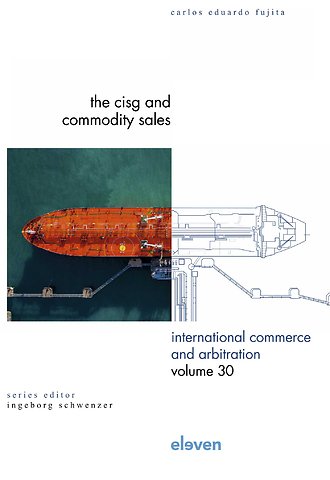
The CISG and Commodity Sales
Samenvatting
Much has been written about the UN Convention on the International Sales of Goods (CISG) and how it might not be an appropriate piece of legislation to govern commodity sales. This book is the first to address this issue from a broader and comprehensive perspective, covering in detail the strengths and shortcomings of the CISG when applied to such contracts.
The book discusses the effects of specific provisions of the CISG when applied to situations that are usual in the commodity markets, and provides a broader analysis of how the principles underlying the CISG compare to the legal practice in commodity markets.
Instruments of uniform commercial law such as the UNIDROIT Principles, the ICC Incoterms and the UCP 600, as well as standard terms that are well-known within the commodity trade are also considered.
Practitioners, judges, arbitrators and researchers dealing with international contract law and the commodity trade will find this book particularly useful.
Trefwoorden
Inhoudsopgave
Acknowledgements xi
List of Abbreviations 1
1 Introduction 3
1.1 Scope of the Work 3
1.2 Remarks on Methodology 5
1.3 The Concept of Commodity 8
1.4 Bias towards Certain Commodities and Markets 9
1.5 Contractual Typology of the Commodity Trade 10
1.5.1 Cash Contracts and Futures Contracts 10
1.5.2 Futures Contracts 12
1.5.2.1 Futures Contracts as Financial Instruments 12
1.5.2.2 Standardized Contracts 15
1.5.2.3 Clearing 16
1.5.2.4 FCMs as Agents Acting for Undisclosed Principals 17
1.5.3 Options 27
1.5.4 Commodity Swaps 28
1.5.5 Long-Term Contracts 29
1.5.6 Contract Farming Arrangements 31
1.6 The Economics of Commodities 32
1.6.1 Liquidity 32
1.6.2 Price Volatility 34
2 The Scope of Application of the CISG 37
2.1 The Concept of Goods 37
2.2 Documentary Sales and Transfers of Rights 38
2.3 The Concept of Sales Contracts 39
2.3.1 Cash Contracts 40
2.3.2 Futures Contracts 41
2.3.3 Sales Contracts Formed within Commodity Exchanges 43
2.3.4 Options and Swaps 46
2.4 Internationality 46
2.4.1 Cash Contracts 46
2.4.2 Commodity Exchange Sales 52
2.5 Exclusions Under Article 2 CISG 58
2.5.1 Generally 58
2.5.2 Commodity Exchanges and Auction Sales 64
2.6 Concluding Remarks: The CISG and Futures Contracts 67
2.7 Article 3 CISG 68
2.7.1 Goods to Be Produced in the Future 68
2.7.2 Services Associated with Sales Contracts 69
2.8 Retention of Title Provisions vis-à-vis Article 4(b) CISG 70
2.9 Commodity Sales and the PICC 71
2.9.1 Where the Parties Have Chosen the PICC 73
2.9.2 The Relationship between the PICC and the CISG 75
2.10 Commodity Sales and the PLACL 76
3 Gap-Filling 79
3.1 Contracts without an Agreed Price 79
3.2 Other Gaps: A Proposed Framework for Their Supplementation 82
3.2.1 Good Faith and Similar Doctrines 84
3.2.2 Implication of Terms in Common Law Jurisdictions 86
3.2.3 Common Ground between Both Approaches 86
3.2.4 Different Approaches in Uniform Law 87
3.2.5 Partial Conclusion 90
3.3 Implication of a Duty to Cooperate in Long-Term Contracts 91
3.4 Terms Left for Future Negotiation 94
4 Contract Formation 107
4.1 CISG Provisions That May Differ from Usual Contract Practices 107
4.1.1 Consideration and ‘Causa’ Are Not Required 107
4.1.2 The Price Need Not Be Agreed 108
4.2 Price, Quantity and Quality in Certain Forward Contracts 109
4.3 The Formation of Contracts in Commodity Exchanges 110
4.4 FCM as Agents: Agency and the CISG 117
4.5 Incorporation of Standard Terms by Reference 118
5 Obligations of the Parties 125
5.1 Implicit Quality Parameters 125
5.2 Take-or-Pay Provisions and the CISG 130
6 Fundamental Breach and Avoidance 139
6.1 Proposed Criterion of Assessment: Economic Rationale 140
6.2 Typical Cases for the Sale of Commodities 144
6.2.1 Fundamental Breach for Belatedness of Performance 144
6.2.1.1 Delayed Delivery of Goods 144
6.2.1.2 Delayed Performance in Documentary Sales 146
6.2.1.3 Delay in the Performance of Other Obligations 147
6.2.1.4 Elements Indicating the Essentiality of Timely Performance 147
6.2.1.5 Commodity Sales Where Time Is Not of the Essence 148
6.2.2 Fundamental Breach for Nonconformity 152
6.2.2.1 Nonconforming Goods 152
6.2.2.2 Nonconforming Documents 158
6.2.2.3 Breach of Term Regarding the Quantity of Goods 160
6.3 Nachfrist and Anticipatory Breach: Valero v. Greeni 163
6.4 Suspension of Performance, Stoppage in Transit and Anticipatory Breach 165
6.4.1 Suspension of Performance (Art. 71(1)) 166
6.4.2 Stoppage in Transit (Art. 71(2)) 171
6.4.3 Anticipatory Breach (Art. 72) 176
6.4.4 Anticipatory Breach in Installment Contracts (Art. 73) 182
6.5 Fundamental Breach in Long-Term Contracts 189
6.6 Fundamental Breach in the PICC 192
6.7 Avoidance Rights Derived from Domestic Law 193
6.8 Good Faith as a Restriction on the Right of Avoidance 197
7 Rules Regarding Assessment of Damages 199
7.1 Substitute (Cover) Transactions 199
7.2 Where a Substitute Transaction Cannot Be Identified 201
7.3 Foreseeability of Damages 203
8 Impediments, Force Majeure, Change of Circumstances, Economic Hardship 205
8.1 Article 79 CISG: Abstract Requirements 205
8.1.1 Event beyond the Control of the Obligor 206
8.1.2 Impediment Not Accounted for 208
8.1.3 Insurmountability 210
8.1.4 Cause-Effect Relationship 211
8.2 Economic Hardship and Article 79 CISG 211
8.2.1 Legislative History 211
8.2.2 Economic Hardship as an Impediment 213
8.2.3 The Threshold for Obtaining an Exemption on the Grounds of Hardship 215
8.2.4 Equilibrium of the Contract Is Not Relevant 221s
8.2.5 Hardship When the Value of the Performance Has Diminished 222
8.2.6 Frustration of Purpose 225
8.2.7 Supervening Market Disruption 227
8.2.8 The Time Element in Cases of Economic Hardship 228
8.2.9 Case Law Doctrine 229
8.3 Nonperformance Attributable to a Third Party 230
8.4 Issues That Are Likely to Surface in Commodity Sales 232
8.4.1 Fungibility of Goods 232
8.4.2 Governmental Regulations 234
8.4.3 Overcrowded Port 237
8.4.4 Import Quota, Export Permit 238
8.4.5 Take-or-Pay Provisions 238
8.4.6 Climate and Weather 239
8.4.7 Economic Situation of the Obligor 239
8.4.8 Inflation 241
8.4.9 Ethical Impediment 243
8.5 Article 79 CISG: Consequences of Its Application 244
8.5.1 In Cases of Impediment 244
8.5.2 In Case of Economic Hardship 247
8.5.3 Forced Renegotiation and/or Adaptation in Long-Term Contracts 254
8.5.3.1 Trends in Law 254
8.5.3.2 Trends in Contractual Practices 257
8.5.3.3 Implication of a Term 258
8.5.4 Adjustment of Contractual Provisions beyond the Price 263
8.6 Rules of Exemption under the PICC 264
8.6.1 Impediment (or Force Majeure) 264
8.6.2 Economic Hardship 265
8.6.3 Interplay between the PICC and Domestic Law 270
8.7 Force Majeure Clauses of Some Well-Known Standard Form Contracts 271
8.7.1 The GAFTA Contract No. 100 271
8.7.2 The ICE Futures US ‘Sugar 11’: 272
8.7.3 The Repsol Agreement 273
8.7.4 The Shell Agreement 276
8.7.5 The GIIGNL Agreement 278
8.7.6 General Analysis 280
8.8 Article 79 CISG and Preemption by Contractual Provisions 281
8.9 Practical Advice: Parties Should Draft Explicit Clauses 286
9 Suitability of the CISG for Governing Commodity Sales 291
9.1 The ‘Uncertainty Argument’ 291
9.2 Favor Contractus v. Perfect Tender 293
9.2.1 English Law and the CISG Are Not That Different 295
9.2.2 The Fundamentality Standard under the CISG Is Flexible 300
9.3 Rules Regarding the Passing of Risks 306
9.4 Assessment of Damages in Case of Breach 312
9.4.1 Notional Damages v. Actual Damages 312
9.4.2 Date of Reference for the Assessment of Damages 313
9.5 Specific Performance 314
9.6 Criticism Regarding Article 79 CISG 315
9.7 String Trading 317
9.8 Litigating in England Is Costly 318
9.9 The US and the CISG: A Case Study 320
9.10 A Partial Conclusion: The CISG Is Not Unsuitable for Commodity Sales 327
10 Towards an Increased Acceptance of the CISG among Commodity Traders 329
10.1 Network Effects and Collective Action Issue 329
10.2 Case in Point: The Exclusion of the CISG by an Australian Association 333
10.3 Private Legal Systems 335
10.4 The UK and the CISG 338
10.5 In Practice: Model Contracts or Clauses 341
11 Conclusions 347
Table of Cases 351
Bibliography 363
Anderen die dit e-book kochten, kochten ook
-
 W.J.M. van Veen€ 131,00
 -
Mariette Lokin€ 93,95
-
Arnoud Engelfriet€ 99,00
-
Simon Cornielje€ 57,50
-
Jac Hijma€ 62,00
-
Ton Hartlief€ 73,00